
Kunafa
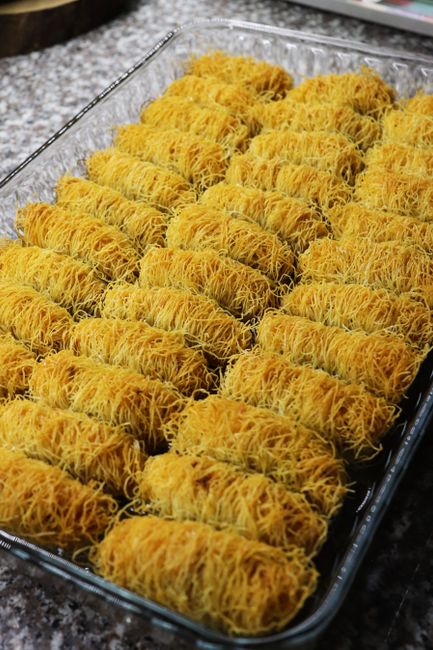
Kunafa (also spelled knafeh or kanafeh, and sold in stores as kataifi or kadaif) is a shredded wheat-flour pastry that looks like thin, dry vermicelli noodles. It's the base of the popular Middle Eastern dessert of the same name, where it's layered with cheese or cream filling, baked or pan-toasted until golden and crisp, then soaked in a sugar-rose or sugar-orange blossom syrup. The dough itself is flavorless and dry until cooked in butter or ghee, which is what turns it crisp and nutty.
Varieties
Kunafa dough (kataifi) is distinct from phyllo, even though both are Middle Eastern pastry staples: phyllo comes in flat, paper-thin sheets, while kunafa dough is already shredded into fine strands before packaging. There are also two main dessert styles: 'kunafa naameh' (fine dough, common in Levantine versions) and coarser semolina-based kunafa found in parts of Egypt and the Gulf, which uses no shredded dough at all.
Buying tips
Look for kunafa dough in the freezer section of Middle Eastern or Mediterranean grocery stores, usually labeled 'kataifi,' 'kadaif,' or 'kunafa dough,' sold in coiled blocks wrapped in plastic. Check that the strands look dry and separate easily rather than fused into a sticky mass, which signals it's been thawed and refrozen.
Substitutes
Phyllo dough, shredded by hand — 1:1 by weight
Stack phyllo sheets, roll tightly, and slice into thin threads with a sharp knife. It won't be as uniformly fine as true kunafa but crisps up similarly once buttered and baked.
Angel hair pasta, uncooked — 1:1 by weight
Break into shorter strands before tossing with melted butter. Produces a similar crisp, golden texture but a slightly denser bite since it's egg pasta, not shredded pastry.
Rice vermicelli noodles, uncooked — 1:1 by weight
A gluten-free option that crisps well in butter; texture is a bit more brittle and less springy than real kunafa dough.
Coarse semolina (for the 'ashta' or semolina-style kunafa) — Not a direct swap
Some regional versions of kunafa are made entirely from semolina batter instead of shredded dough; this changes the dish into a different texture (soft, cake-like) rather than crisp shreds, so it's a recipe substitution rather than a 1:1 ingredient swap.
Storage
Store raw kunafa dough in its original plastic wrap in the refrigerator for up to a week, or in the freezer for up to 3 months. Thaw frozen dough in the fridge overnight before shredding it apart by hand, since it clumps together when frozen solid. Once baked into a dessert, kunafa is best eaten the same day; it turns soggy after a day or two even when refrigerated.
How to use
Toss shredded kunafa dough with plenty of melted butter or ghee before using, working it apart with your fingers so every strand gets coated; this is what produces the shatter-crisp top layer. It's most often layered around a cheese filling (unsalted, low-moisture cheeses like Nabulsi or a mozzarella-ricotta blend work well) and baked at 375-400°F for 30-40 minutes until deep golden, then finished with a cooled sugar syrup poured over immediately after baking. It also shows up shredded and toasted as a crunchy topping for ice cream or layered into no-bake dessert cups.
What it pairs with
Pairs naturally with Nabulsi or Akkawi cheese, mascarpone, clotted cream (ashta), pistachios, and orange blossom or rose-scented sugar syrup. A squeeze of lemon in the syrup balances its sweetness well.
Nutrition
Plain kunafa dough is mostly refined wheat flour, similar to other pastry doughs, and carries minimal nutrition on its own. Once prepared as the finished dessert, most of its calories come from the butter used to coat the shreds and the sugar syrup poured over it, making it a rich, occasional dessert rather than an everyday food.
FAQ
Is kunafa dough the same as phyllo dough?
No. Phyllo is sold as flat, thin sheets, while kunafa dough is pre-shredded into thin strands before packaging. They're made from similar flour-based doughs but are processed differently and aren't interchangeable without extra prep.
Why is my kunafa soggy instead of crisp?
This usually means either too little butter was worked into the shredded dough before baking, or the hot syrup was poured on too early. Syrup should always be cold or room temperature and added right after the kunafa comes out of the oven hot, not the other way around.
Can I make kunafa without the shredded dough at all?
Yes, some regional recipes use a semolina-and-butter batter instead of shredded strands, giving a softer, cake-like result rather than the classic crisp, golden top.
Where can I buy kunafa dough if there's no Middle Eastern grocery nearby?
Many Middle Eastern and Mediterranean grocers sell it online frozen, and some well-stocked international aisles in larger supermarkets carry it under the 'kataifi' name.
Have kunafa on hand? Find recipes with our Recipe Generator →