
Lahmacun
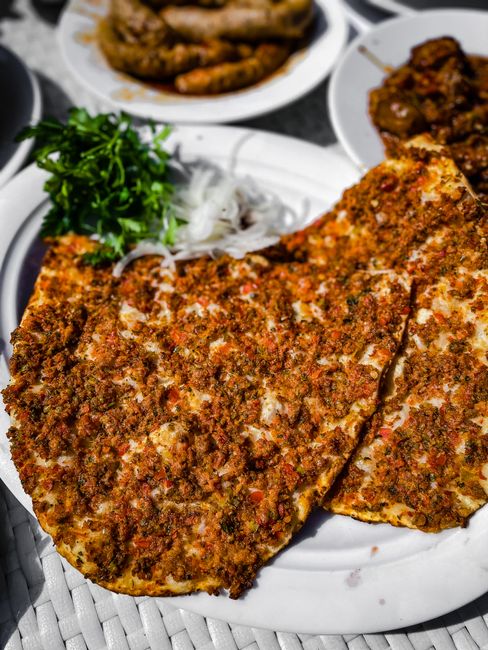
Lahmacun is a thin, crackery Turkish flatbread topped with a finely minced mixture of lamb or beef, tomato, onion, garlic, peppers, and spices, spread almost to the edge of the dough and baked at very high heat until the crust is crisp and the topping is cooked through. Despite the nickname 'Turkish pizza,' the dough carries no yeast rise and no cheese, and it's eaten rolled up with fresh parsley, onion, and a squeeze of lemon rather than sliced and eaten flat.
Varieties
Armenian lahmajoun is a close cousin made with a slightly thicker, more bread-like base and a meat topping that often includes red pepper paste and walnuts. Turkish pide differs in shape (boat-like, with raised edges) and dough thickness rather than topping style. Lebanese manakish is usually topped with za'atar and cheese rather than meat, though meat versions exist under names like sfiha.
Buying tips
Fresh lahmacun from a Turkish bakery should be pliable enough to roll without cracking, not stiff like a cracker. Frozen packaged versions vary widely in meat content; check the ingredient list for actual ground meat near the top rather than mostly filler, tomato paste, and breadcrumb.
Substitutes
Pita bread topped with spiced ground lamb — 1:1 by piece
Split a fresh pita, spread a thin layer of seasoned raw or lightly cooked ground lamb over it, and broil until the meat is cooked and the edges crisp. Thicker and chewier than real lahmacun but close in flavor.
Flour tortilla with minced meat topping — 1:1 by piece
A raw flour tortilla baked hot with a thin meat topping mimics the crisp, thin texture of lahmacun dough better than pita does.
Store-bought naan — 1:1 by piece
Too thick and soft on its own; roll it out thinner if possible before adding topping, or expect a softer, bread-forward result.
Turkish pide, split lengthwise and topped — 1 pide to 2 lahmacun
Pide is thicker and boat-shaped, so one piece covers roughly what two lahmacun would; cut into smaller wedges for serving.
Manakish dough with kefta-style meat spread — 1:1 by piece
Levantine manakish dough is closer in thinness to lahmacun than most other flatbreads and takes a meat topping well, though it's usually a bit doughier once baked.
Storage
Baked lahmacun keeps in the refrigerator for 2-3 days stacked between sheets of parchment or wax paper in an airtight bag so the layers don't stick. For longer storage, freeze the cooled, unrolled flatbreads flat in a single layer until solid, then stack them in a freezer bag for up to 2 months.
How to use
Lay a lahmacun flat, scatter it with chopped parsley, thin onion slices, and a squeeze of lemon, then roll it into a tight cylinder and eat it by hand. It also works cut into wedges as an appetizer, or torn up and used as a base for a quick flatbread salad.
What it pairs with
Serve alongside ayran (a salted yogurt drink), cacik or tzatziki-style yogurt dips, a simple shepherd's salad of tomato and cucumber, and lemon wedges for squeezing directly onto the topping.
Nutrition
A single lahmacun (about 8-9 inches across) typically runs 200-280 calories depending on the meat-to-dough ratio, with 10-14 grams of protein from the meat topping and moderate carbohydrate from the thin flatbread base.
FAQ
Is lahmacun the same as pizza?
No. The dough has no yeast rise, no cheese is used, and the meat topping is spread raw onto the dough before baking rather than added as a cooked topping afterward.
How do you reheat lahmacun so it doesn't turn soggy?
Reheat directly on a dry skillet or in a 400°F oven for 3-5 minutes rather than microwaving; the dry heat re-crisps the crust instead of steaming it soft.
Can lahmacun be made without meat?
Yes, vegetarian versions swap in finely chopped mushrooms, lentils, or walnuts mixed with the same tomato-pepper-onion base, though the texture ends up softer than the meat original.
Is there a gluten-free way to make lahmacun at home?
A thin gluten-free flatbread made from a rice flour and tapioca starch blend, rolled very thin and baked hot, can approximate the crisp texture, though it will be more fragile to roll.
Have lahmacun on hand? Find recipes with our Recipe Generator →