
Mango
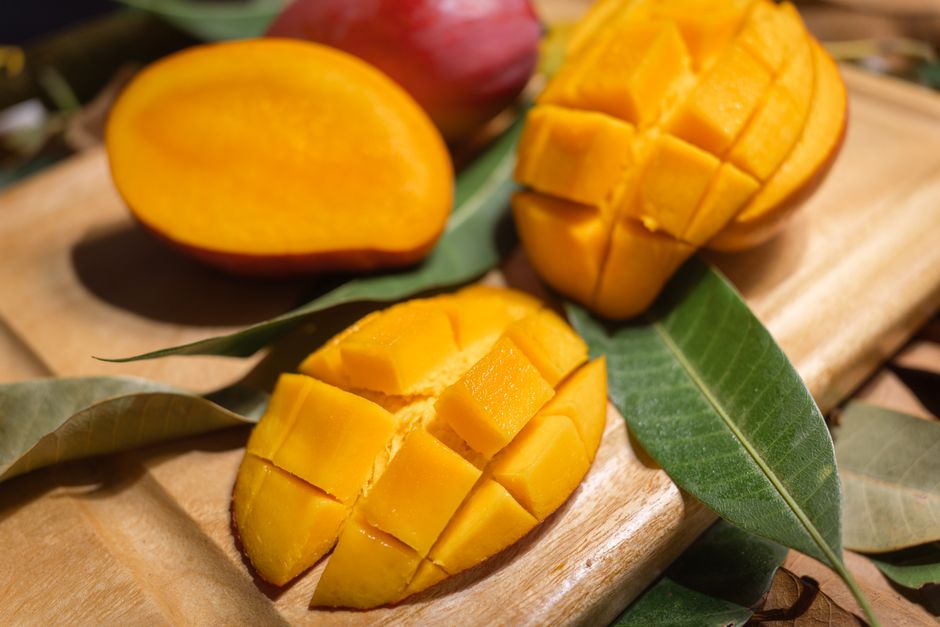
Mango (Mangifera indica) is a tropical stone fruit with smooth, fiberless flesh that ranges from pale yellow to deep orange depending on variety, wrapped around a large flat pit. Ripe mango is intensely sweet with a floral, slightly resinous edge, which makes it a common base for puddings, sticky rice, sorbets, mousses, and fruit salads. Ripeness matters more with mango than almost any other dessert fruit: underripe mango is fibrous and sour, while overripe mango turns mushy and ferments quickly.
Varieties
Ataulfo (Honey) mangoes are smaller, kidney-shaped, and less fibrous, with a very sweet, custardy flesh well suited to purees and mousse. Tommy Atkins, the most common supermarket variety, is firmer and more fibrous with a milder flavor. Kent and Keitt mangoes are large, mostly fiberless, and juicy, closer in texture to Ataulfo and good for slicing or dicing cleanly.
Buying tips
Judge ripeness by feel and smell, not color: a ripe mango gives slightly to gentle pressure near the stem end and smells sweet and fruity there. Skin color varies by variety and isn't a reliable ripeness indicator. Avoid mangoes with sunken, wrinkled, or dark soft spots on the skin.
Substitutes
Ripe peaches or nectarines, diced — 1:1 by volume
Less tropical and more tart, but a close texture match for diced fruit desserts and fruit salads.
Papaya, diced — 1:1 by volume
Milder and less sweet, works well in sticky rice or chilled dessert soups where mango's sweetness would otherwise dominate.
Pineapple, diced — 1:1 by volume
Adds acidity mango doesn't have, so cut back any added sugar or lime in the recipe slightly.
Frozen mango chunks, thawed and drained — 1:1 by volume
Nearly identical flavor to fresh; drain excess liquid first or purees and smoothies will turn out thinner than expected.
Sweetened canned mango pulp (Alphonso-style) — 3/4 cup pulp for every 1 cup fresh diced mango called for
Already sugared and pureed, so use less and reduce or skip any added sugar in the recipe.
Mango extract or flavoring — a few drops to taste
Only replaces aroma, not texture or bulk; not usable as a direct volume swap in diced fruit or puree recipes.
Storage
Ripen mangoes at room temperature out of the fridge; a paper bag speeds this up in a couple of days. Once ripe, a whole mango keeps in the refrigerator for 3-5 days. Cut mango should go in an airtight container in the fridge and used within 2 days, or frozen in a single layer on a tray before bagging for longer storage.
How to use
Dice for fruit salads, sticky rice, and salsas; puree for mousse, lassi, sorbet, or as a swirl through cheesecake batter; blend into smoothies; or slice thin for topping tarts and pavlova. Because mango releases a lot of liquid as it sits, add diced mango to baked goods or layered desserts as close to serving as possible.
What it pairs with
Pairs well with coconut milk, lime, chile, sticky rice, vanilla, and passion fruit. In desserts it balances rich dairy bases like cheesecake, panna cotta, and kulfi, and works alongside tart fruits like pineapple or passion fruit to cut its sweetness.
Nutrition
A cup of diced mango has about 99 calories and 25g of carbohydrate, mostly from natural sugar, along with a notably high dose of vitamin C and vitamin A. It's one of the sweeter common fruits, so recipes built around it usually need less added sugar than recipes using berries or citrus.
FAQ
Why is my mango dessert watery?
Diced ripe mango releases juice as it sits due to its high water and sugar content. Add it to layered desserts or fruit salads shortly before serving, or drain diced mango on a paper towel for a few minutes first.
Can I use unripe mango in a dessert?
Not for most sweet recipes; unripe mango is sour and fibrous and is better suited to savory or pickled preparations. Wait until it softens and smells fragrant near the stem before using it in dessert.
How do I get smooth mango puree without a fibrous texture?
Push the puree through a fine mesh strainer after blending. Fibrous varieties like Tommy Atkins need this step; fiberless varieties like Ataulfo or Kent usually don't.
Does frozen mango work as well as fresh for sorbet or mousse?
Yes, and it's often more consistent since frozen mango is picked and processed at peak ripeness. Thaw and drain any excess liquid before pureeing so the final texture isn't thinned out.
Have mango on hand? Find recipes with our Recipe Generator →