
Mild Salsa
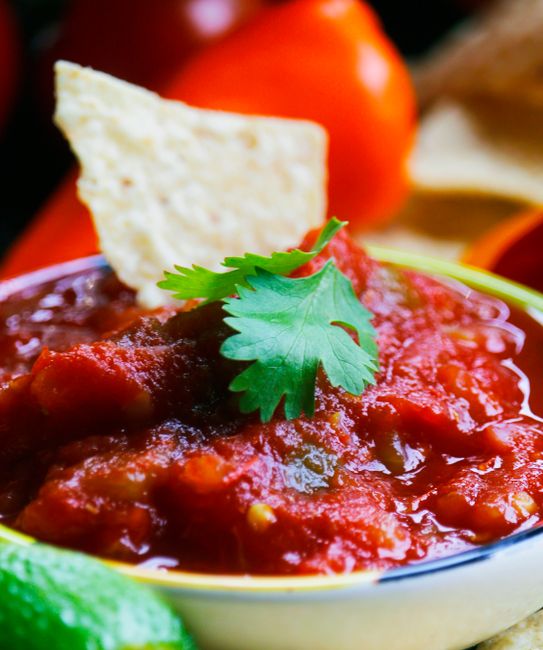
Mild salsa is a tomato-based salsa made with little to no hot chile heat, typically relying on bell peppers, small amounts of jalapeno with seeds and ribs removed, or none at all. It keeps the classic combination of tomato, onion, cilantro, and lime while staying accessible to people sensitive to spice. Store-bought jars labeled "mild" usually register near zero on the Scoville scale, while homemade versions vary depending on how much pepper is used and whether the seeds are left in.
Varieties
Restaurant-style salsa is typically thinner and blended smooth, while chunky salsa (sometimes labeled salsa fresca) keeps distinct pieces of tomato and onion. Both can be made mild; the texture difference doesn't affect heat level.
Buying tips
Check the label for chile content, some brands labeled "mild" still include jalapeno for background flavor. Refrigerated salsas near the produce section tend to taste fresher and less cooked than shelf-stable jarred versions, but have a shorter shelf life.
Substitutes
Pico de gallo (fresh, uncooked) — 1:1
Chunkier and less liquid than jarred salsa; drain slightly if using in a recipe that expects a saucier consistency.
Medium salsa, seeds strained out — 1:1
Works if mild isn't available; scoop out visible pepper flecks and stir in an extra squeeze of lime to soften the heat.
Diced canned tomatoes with a splash of lime juice and chopped onion — 1:1
Not a flavor match but a workable emergency stand-in for cooking applications like baked dishes or soups.
Salsa verde (mild tomatillo salsa) — 1:1
Tangier and greener in color, but a similar heat level; better suited to Mexican-style dishes than as a chip dip if a red color is expected.
Ketchup mixed with diced onion, lime juice, and a pinch of cumin — 3/4 cup mixture per 1 cup salsa
Sweeter and smoother; only recommended as a last resort for cooking, not for serving with chips.
Storage
Unopened jarred salsa keeps in the pantry until the printed date. Once opened, refrigerate and use within 1 to 2 weeks. Fresh homemade mild salsa should be refrigerated in a sealed container and used within 4 to 5 days, since diced tomato and onion break down and release liquid over time.
How to use
Serve cold with tortilla chips, spoon over scrambled eggs or omelets, layer into tacos and burrito bowls, stir into guacamole for extra moisture, or use as a quick braising liquid for chicken thighs simmered 20 to 25 minutes on the stovetop.
What it pairs with
Pairs well with avocado, melted cheese, black beans, grilled chicken, and scrambled eggs. A squeeze of extra lime or a spoonful of sour cream mellows any residual heat further for very spice-sensitive eaters.
Nutrition
Mild salsa is low in calories, generally 10 to 15 per 2-tablespoon serving, and contributes vitamin C and lycopene from the tomatoes. Jarred versions can be higher in sodium than homemade, often 150 to 250 milligrams per serving.
FAQ
Is mild salsa really spice-free?
Not always. Most mild salsas contain a small amount of pepper for flavor depth, so they carry faint warmth even though they're built to be far less spicy than medium or hot versions.
Can I make hot salsa mild by adding more tomatoes?
Diluting with extra tomato lowers the heat per bite but doesn't remove capsaicin, the compound behind the burn. Straining out seeds and pepper flesh is more effective than adding volume.
Why does my homemade mild salsa turn watery after a day in the fridge?
Salted tomatoes and onions release liquid as they sit. Drain excess liquid before serving, or salt the vegetables and let them drain in a colander for 10 minutes before mixing the salsa.
Does canning change how mild a salsa tastes?
Yes, the heat processing in canning mellows fresh capsaicin somewhat, which is part of why jarred salsas often taste milder than a fresh version made with the same peppers.
Have mild salsa on hand? Find recipes with our Recipe Generator →