
Mint Tea
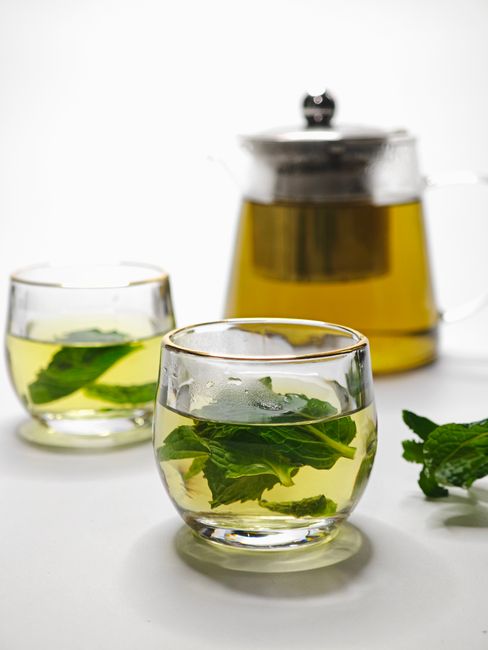
Mint tea is an infusion made by steeping fresh or dried mint leaves, most often spearmint or peppermint, in hot water. It contains no actual tea leaves (no caffeine) unless black or green tea is blended in, which is common in Moroccan-style mint tea. The flavor ranges from sweet and mellow (spearmint) to sharp and cooling (peppermint), depending on which variety is used.
Varieties
Spearmint (Mentha spicata) is sweeter and milder and is the variety most commonly used for mint tea, especially Moroccan-style. Peppermint (Mentha x piperita) is more intensely cooling with a sharper menthol edge and is more often used for digestive or medicinal teas. The two are not interchangeable without a noticeable change in the final flavor.
Buying tips
For fresh mint, look for perky, unwilted leaves without dark or slimy spots; smell it before buying since faded mint has little aroma left. For dried mint or tea bags, buy from a source with fast turnover since mint loses potency quickly on a shelf, and whole dried leaves generally hold flavor longer than pre-ground or crushed mint.
Substitutes
Fresh mint leaves (if you only have a mint tea bag called for) — 8-10 leaves per cup in place of 1 tea bag
Bruise the leaves lightly before steeping to release more oil; steep 5-7 minutes for a comparable strength.
Dried mint leaves — 1 teaspoon dried per 1 tablespoon fresh, per cup
Dried mint is more concentrated; steep for only 4-5 minutes or it turns bitter and grassy.
Peppermint tea bag in place of spearmint tea — 1:1
Sharper, more medicinal cooling flavor than spearmint; good in savory or digestive contexts, less good for sweet dessert pairings.
Lemon balm tea — 1:1
Milder, citrusy, and less cooling than true mint, but shares the same fresh herbal quality.
Chamomile tea with a few fresh mint leaves added — 1 bag chamomile plus 4-5 mint leaves per cup
Not a direct match but works well when the goal is a calming, aromatic hot drink rather than mint's specific flavor.
Storage
Fresh mint for tea keeps best standing upright in a jar of water like cut flowers, loosely covered with a plastic bag, in the refrigerator for up to a week, with the water changed every couple of days. Dried mint should be kept in a sealed jar away from light and heat, where it holds good flavor for about six months before it fades to mostly grassy and dusty.
How to use
Steep fresh or dried leaves in just-off-boil water (not a full rolling boil, which scorches the leaves and turns the tea bitter) for 5 to 7 minutes, then strain. Mint tea is drunk hot or iced, sweetened with honey or sugar, and is the base of Moroccan mint tea, where it's brewed with green tea and a generous amount of sugar.
What it pairs with
Pairs well with honey, lemon, ginger, and green tea. Works as a palate cleanser after rich or spicy meals, and pairs naturally with Middle Eastern and North African dishes, chocolate desserts, and fruit salads.
Nutrition
Mint tea is naturally calorie-free and caffeine-free (unless blended with black or green tea). It's traditionally used to ease digestion and nausea, though the amount of active compounds in a single cup is modest.
FAQ
Does mint tea have caffeine?
Pure mint tea made from just mint leaves has no caffeine. Moroccan mint tea and some commercial blends do contain caffeine because they mix mint with green or black tea.
Can I use mint tea bags to make fresh mint tea taste stronger, or vice versa?
Yes, combining a tea bag with a few fresh leaves in the same cup boosts aroma and color without oversteeping, since the fresh leaves add fragrance while the bag provides consistent strength.
Why does my mint tea turn bitter?
Bitterness usually comes from steeping too long (over 7-8 minutes), using boiling rather than just-off-boil water, or using bruised or old mint that has started to oxidize.
Can I make mint tea from mint that's starting to wilt?
Yes, wilted mint still has flavor and works fine for tea since it will be steeped in hot water anyway; just avoid leaves with black spots or a slimy texture, which indicate spoilage rather than simple dehydration.
Have mint tea on hand? Find recipes with our Recipe Generator →