
Moong Dal
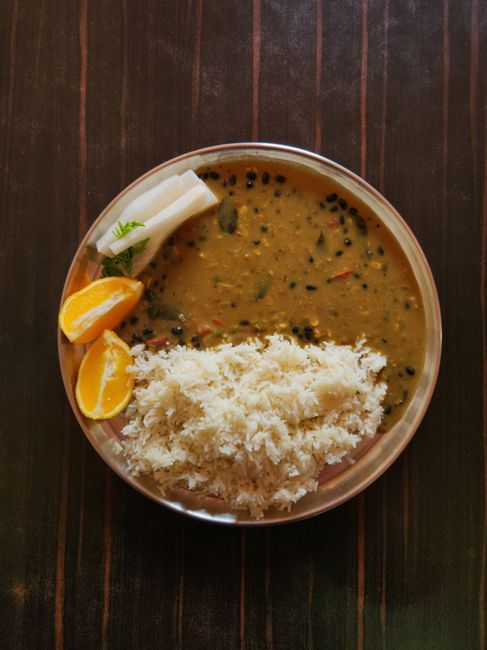
Moong dal is the dried, split, and hulled form of mung beans (Vigna radiata), sold as small, flat, pale yellow lentils. It cooks faster and digests easier than most other lentils and dried beans, with a mild, slightly sweet flavor that takes on spices well. It's a staple in Indian and South Asian cooking, used both split-and-yellow (moong dal) and whole-with-skin (sabut moong or green moong).
Varieties
Moong dal (yellow, split, and hulled) is the fastest-cooking form. Moong dal chilka is split but still has some green skin attached, giving it a mottled look and slightly firmer bite. Whole moong (sabut moong or green moong) keeps the full skin and round shape, cooks slower, and holds its shape better in salads and sprouted dishes.
Buying tips
Choose dal with a uniform pale yellow color and no dark spots, dust, or musty smell. Buy from a store with steady turnover, since older dal takes noticeably longer to cook. Whole moong dal (with the green skin still on) will look mottled green and yellow rather than solid pale yellow.
Substitutes
Split red lentils (masoor dal) — 1:1
Cooks even faster than moong dal and breaks down into a smoother puree; flavor is slightly more earthy and less sweet.
Toor dal (split pigeon peas) — 1:1
Heartier and starchier with a more pronounced, slightly bitter edge; needs about 5-10 extra minutes of simmering to fully soften.
Whole moong dal (sabut moong, with skin) — 1:1 by volume
Chewier texture and nuttier flavor since the skin stays on; needs a few hours of soaking and roughly double the cooking time to reach the same softness.
Storage
Store dried moong dal in an airtight container in a cool, dry pantry for up to a year; it stays fresh longest away from direct light and humidity. Cooked moong dal keeps refrigerated in a sealed container for 4-5 days, or freeze in portions for up to 3 months.
How to use
Used as the base for basic Indian dal (simmered with turmeric and tempered with cumin, garlic, and chile), stirred into khichdi with rice, ground into batter for dosa and pesarattu, or sprouted and eaten in salads. Because it cooks fast and holds its shape less than whole legumes, it's also common in thin, soupy preparations for children or anyone eating something easy to digest.
What it pairs with
Pairs naturally with turmeric, cumin, ginger, garlic, tomato, and a finishing tempering (tadka) of mustard seeds, curry leaves, and ghee or oil. Serve alongside steamed rice, roti, or as the lentil component in a simple khichdi with rice and vegetables.
Nutrition
Moong dal is high in plant protein and fiber, low in fat, and a good source of folate, magnesium, and potassium. It's often recommended as one of the easier-to-digest legumes, partly because the hulling and splitting process removes much of the tough outer skin.
FAQ
Does moong dal need to be soaked before cooking?
Split, hulled moong dal doesn't require soaking, though a 20-30 minute soak shortens cooking time. Whole moong dal (with the skin on) benefits from soaking for at least 2-4 hours to soften the tougher skin.
How long does moong dal take to cook?
Split moong dal simmers to soft in about 15-20 minutes on the stovetop, or 3 whistles in a pressure cooker. Whole moong dal takes closer to 35-40 minutes stovetop even after soaking.
Is moong dal the same as split peas or lentils?
No. Moong dal comes from mung beans, a different plant than split peas (from field peas) or masoor dal (from lentils), though all three cook similarly and can often substitute for one another in soups and dals.
Why does moong dal sometimes turn foamy while cooking?
The foam is released starch and saponins from the bean's surface. Skimming it off during the first few minutes of boiling keeps the dal cleaner-tasting and less bitter.
Have moong dal on hand? Find recipes with our Recipe Generator →