
Nopales
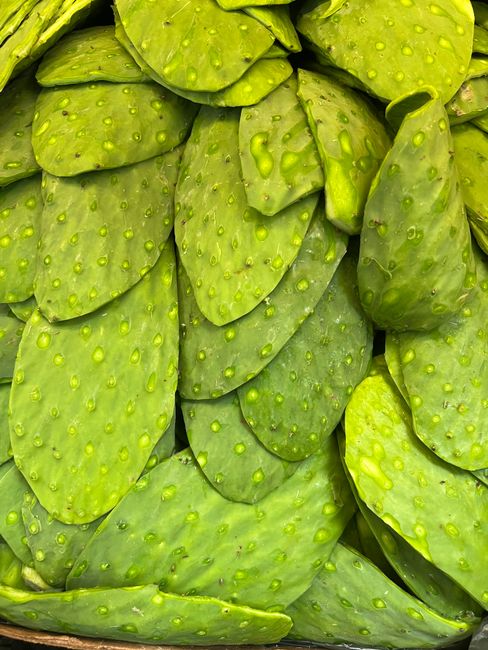
Nopales are the flat, paddle-shaped pads of the prickly pear cactus (Opuntia species), harvested young while still tender. Once the spines and thorny nodes are trimmed away, the flesh is diced or sliced and cooked down to a texture between green bean and okra, with a tart, slightly citrusy flavor and a mucilaginous (slippery) quality similar to okra when heated.
Varieties
Nopales sold fresh are typically from Opuntia ficus-indica or related prickly pear species; there is no meaningfully different culinary variety sold at retail, though wild-harvested paddles tend to be smaller and more tart than farmed ones.
Buying tips
Choose small to medium paddles, no longer than a hand's length, in bright uniform green with no yellow patches, wrinkling, or soft dark spots. Smaller paddles are more tender; large ones turn fibrous and sour.
Substitutes
Green beans, chopped — 1:1
Closest texture match once cooked, though beans lack the tartness and slipperiness of nopales.
Okra, sliced — 1:1
Shares the mucilaginous texture nopales develop when cooked; best in stews and braises where that quality is welcome.
Green bell pepper strips — 1:1
No sliminess and less tang, but works as a crisp-tender stand-in for tacos and scrambles.
Tomatillo, diced — add to taste
Not a texture match, but adds the same tart, acidic note nopales bring to salsas and salads; use alongside another vegetable for bulk.
Storage
Whole, untrimmed nopales keep in the refrigerator crisper drawer for up to two weeks; the spines protect the flesh. Once trimmed and cut, store in an airtight container for 3 to 4 days. Cooked nopales keep refrigerated for about 5 days and also freeze well for up to 6 months.
How to use
Trim the spines and the tough edge rim with a knife, then dice or slice into strips. Boil or grill first to cut the sliminess, then finish in scrambled eggs (nopales con huevos), tacos, salads with tomato and onion, or simmered into salsas and stews. Grilling whole trimmed paddles before slicing reduces sliminess more than boiling does.
What it pairs with
Pairs well with lime, white onion, cilantro, queso fresco, and tomato, and shows up naturally alongside eggs, grilled meats, and pinto or black beans in Mexican cooking.
Nutrition
Nopales are low in calories and carbohydrates, high in fiber, and provide vitamin C, calcium, and magnesium. Some research on their fiber and mucilage content links them to modest effects on blood sugar levels.
FAQ
How do you get rid of the slime when cooking nopales?
Boil the cut paddles for about 5 to 7 minutes in water with a pinch of baking soda or a copper penny (an old trick), then rinse well under cold water; grilling whole paddles before slicing also cuts down on sliminess.
Do you need to remove the spines from nopales?
Yes, always. Run a knife flat across the surface to shave off the small spine clusters (areoles) and trim the thicker outer rim, even on paddles labeled 'spineless,' since small prickles are often still present.
Can you eat nopales raw?
Yes, once the spines are removed; thinly sliced raw nopales are used in some salads and salsas, though the texture is firmer and more mucilage-free than cooked versions.
Are canned nopales as good as fresh?
Canned or jarred nopales are already cooked and de-sliced, and work fine in salads and scrambles, but they're softer and more acidic than fresh paddles cooked at home.
Have nopales on hand? Find recipes with our Recipe Generator →