
Oysters
● In season now
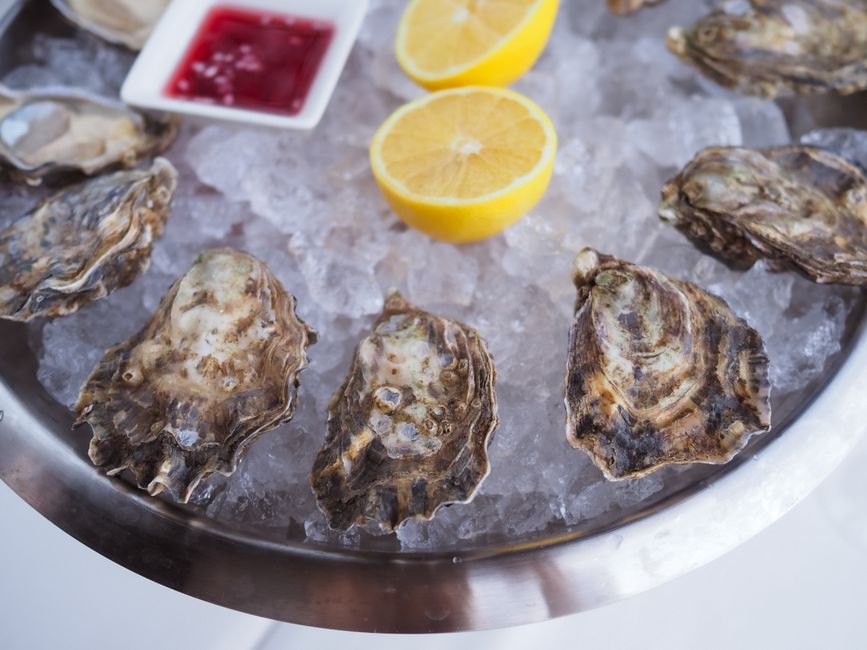
Oysters are bivalve mollusks harvested from coastal and estuarine waters, eaten raw on the half shell, grilled, fried, or baked. Flavor and texture vary significantly by region and species, briny and firm from cold Atlantic waters, milder and creamier from warmer Gulf waters.
Varieties
Flavor and size vary significantly by growing region, East Coast oysters (like Blue Points) tend to be brinier and firmer, while Pacific varieties (like Kumamotos) run sweeter and smaller. Neither is a straight substitute for a recipe built around the other's size.
Buying tips
Live oysters should be tightly closed, or close when tapped, discard any that stay open. Buy from a source with high turnover and keep them on ice, cup-side down, until shucking.
Substitutes
Clams — 1:1 by count
Similar brine and texture raw or cooked, though generally less plump.
Mussels — 1:1 by count
Works for cooked preparations (grilled, baked) but is a poor stand-in raw, different texture and flavor.
Storage
Store live oysters in the refrigerator, cup-side down, covered with a damp cloth (never sealed in an airtight bag or submerged in fresh water, both of which suffocate them). Use within 5-7 days of purchase, and discard any that are open and don't close when tapped.
How to use
Served raw on the half shell with mignonette or lemon, grilled with garlic butter, fried for po'boys, or baked (Oysters Rockefeller). Always cook thoroughly if not eating raw, raw oysters carry a real risk for people who are immunocompromised, pregnant, or have liver conditions.
What it pairs with
Classic raw-bar pairings are a simple mignonette (shallot, vinegar, cracked pepper), a squeeze of lemon, or hot sauce, all meant to accent, not mask, the oyster's own brine.
Nutrition
A significant source of zinc, vitamin B12, and iron, and relatively low in calories, roughly 50-70 calories per half-dozen raw oysters, depending on size.
FAQ
How can I tell if an oyster is bad before opening it?
A live oyster's shell should be tightly closed, or close when tapped. Discard any that are open and stay open, cracked, or smell strongly of anything other than clean brine.
Is it safe to eat oysters raw?
For most healthy adults, yes, from a reputable source with proper cold-chain handling. People who are pregnant, immunocompromised, or have liver disease are advised to eat oysters only fully cooked.
Have oysters on hand? Find recipes with our Recipe Generator →