
Paccheri
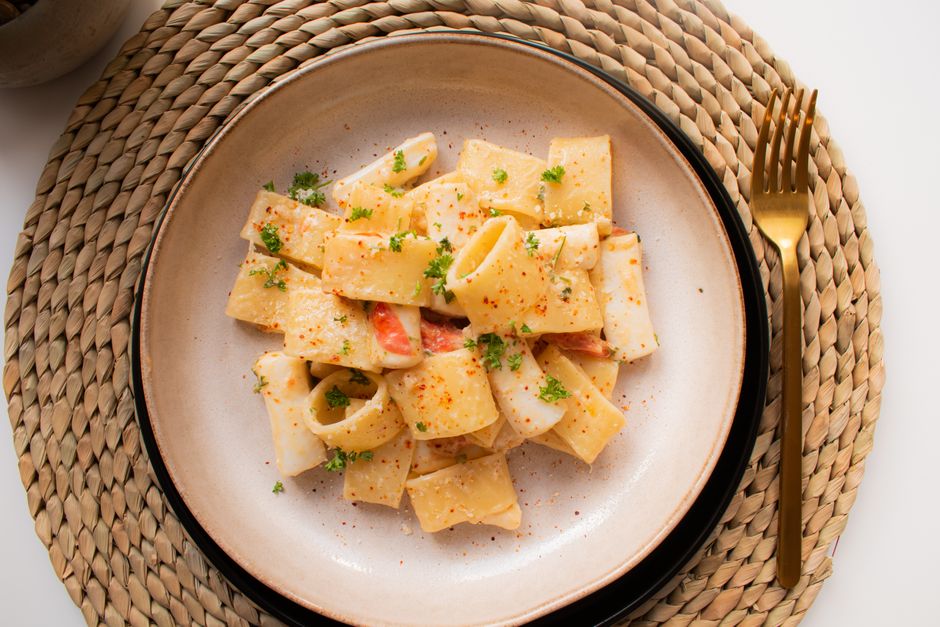
Paccheri is a large, smooth-walled tube pasta from Campania, Italy, most closely associated with Gragnano. Each tube runs roughly 2 to 3 centimeters wide and 4 to 5 centimeters long, cut straight across rather than tapered, with walls thick enough to stand up to long-simmered ragùs and chunky seafood sauces without collapsing. Unlike rigatoni, traditional paccheri has a smooth exterior rather than ridges, though a ridged version called paccheri rigati is also common.
Varieties
Mezzi paccheri is the same tube cut to about half the length, sold specifically for easier serving and slightly faster cooking. Paccheri rigati has ridges on the exterior for extra sauce grip, while traditional paccheri is smooth. Lumaconi are a related large-format shape but curved like a snail shell rather than a straight cylinder.
Buying tips
Look for bronze-die extruded paccheri, often labeled 'trafilata al bronzo,' which has a rougher, more porous surface that holds sauce better than the shinier Teflon-extruded kind. Gragnano IGP on the label indicates production in the traditional Campania region under specific drying standards.
Substitutes
Rigatoni — 1:1 by weight
Smaller diameter and ridged surface, but the closest widely available substitute; cooks a couple minutes faster.
Tortiglioni — 1:1 by weight
Twisted ridges grip sauce well; similar length to paccheri but noticeably narrower.
Calamarata — 1:1 by weight
A ring-shaped cut pasta from the same region, roughly the same diameter as paccheri, making it a near-identical stand-in for seafood dishes.
Mezzi paccheri — 1:1 by weight
Simply a shorter-cut version of the same tube; cooks a minute or two faster and is easier to portion.
Lumaconi (large snail shells) — 1:1 by weight
Curved rather than straight, but similar wall thickness and works well when the recipe involves stuffing or baking.
Manicotti or cannelloni tubes — 1:1 by weight
Much wider and meant for stuffing rather than tossing with sauce; use only for baked, filled preparations, not as a direct swap in a sauced pasta dish.
Storage
Dried paccheri keeps in a sealed container in the pantry for up to two years past packaging; keep it away from moisture since the wide tubes can absorb humidity and turn brittle unevenly. Fresh or artisanal paccheri (less common, sometimes sold refrigerated) should be used within a few days or frozen.
How to use
Boil in generously salted water for 12 to 14 minutes for al dente, a bit longer than most tube pastas because of the thick walls. The wide opening is built for chunky, clingy sauces: slow-cooked ragù napoletano, tomato and swordfish, or a simple sauce of cherry tomatoes and burrata spooned in at the end. Paccheri is also stuffed and baked, either filled raw with ricotta and meat before saucing and baking, or par-boiled and stuffed after.
What it pairs with
Pairs best with sauces that have some body: slow-braised beef or pork ragù, tomato sauces with seafood like clams or shrimp, or a simple butter and Parmigiano-Reggiano toss for stuffed versions. Also good baked with ricotta, mozzarella, and a light tomato sauce as an alternative to lasagna.
Nutrition
As a durum wheat pasta, paccheri has a similar nutritional profile to other dried pastas, roughly 200 calories and 7 grams of protein per 2-ounce dry serving. Because each piece is large, portions can look smaller by count but weigh the same as a bowl of a thinner shape, so measure by weight rather than by number of pieces.
FAQ
What is the difference between paccheri and rigatoni?
Paccheri is wider (about 2 to 3 centimeters versus rigatoni's roughly 1.3 centimeters) and traditionally smooth-walled, while rigatoni is always ridged. Paccheri also has thicker walls, giving it a chewier bite and a longer cook time.
How long does paccheri take to cook?
Typically 12 to 14 minutes in well-salted boiling water for al dente, a few minutes longer than most standard tube pastas due to the thickness of the walls.
Can paccheri be stuffed like manicotti?
Yes, its wide opening makes it a common choice for stuffed baked pasta with ricotta or meat fillings; par-boil for about 8 minutes first so it holds shape but still finishes cooking in the oven.
Is there a gluten-free version of paccheri?
Several Italian dried pasta brands make gluten-free paccheri from corn or rice blends; it behaves similarly but is more prone to breaking apart if overcooked, so check for doneness a minute or two early.
Have paccheri on hand? Find recipes with our Recipe Generator →