
Pani Puri
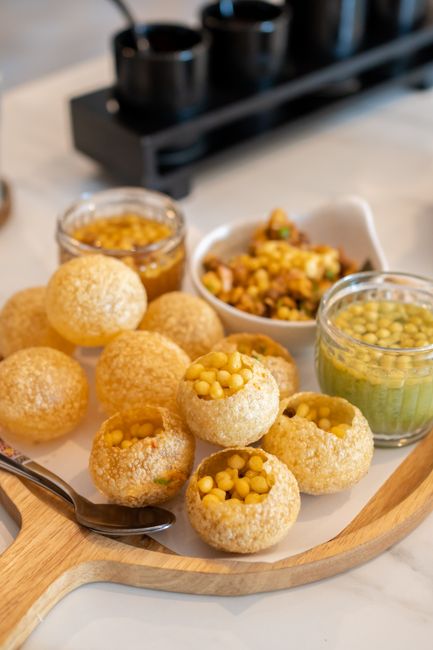
Pani puri is an Indian street snack built from small, round, hollow shells (also called puri, golgappa, or puchka depending on the region) that are deep-fried until crisp and puffed. Each shell is cracked open at the top, packed with a spiced potato-and-chickpea filling, then dunked in tangy, spicy "pani" (flavored water) made with mint, cilantro, tamarind, and roasted spices. The shells themselves are usually made from a stiff dough of semolina (sooji) or a wheat-semolina blend, rolled thin and fried in small batches so they trap air and blow up into hollow spheres.
Varieties
The same snack goes by different names across India: golgappa or gol gappa in North India, puchka in West Bengal (often made with tamarind pani and a mashed potato-mustard oil filling), and pani puri in Maharashtra and Gujarat. Puchka shells tend to be slightly thicker and less crisp than the paper-thin Mumbai-style puri, and the pani itself ranges from purely tangy-spicy to a sweeter jaggery-tamarind version depending on region.
Buying tips
Choose packaged shells that sound hollow and light when shaken and show no oil spots or cracks on the bag; heavier bags usually mean stale, oil-soaked shells. Fresh shells from a street vendor or Indian sweet shop should feel crisp, not leathery, and shatter cleanly when tapped.
Substitutes
Store-bought puri shells (packaged) — 1:1
Widely sold at Indian grocery stores in bags of 30-60; already fried and shelf-stable, just re-crisp in a dry pan or low oven before serving.
Mini phyllo or wonton cups, baked crisp — 1:1
Not hollow-shell puffed like a real puri, but small baked cups hold pani and filling in a pinch; texture is flakier, not crunchy-hollow.
Papdi (flat fried wheat crisps), broken into shards — 2 papdi per 1 puri
Works for a deconstructed version served as a chaat rather than a filled shell, since papdi doesn't hold liquid.
Homemade mini tortilla or roti cups, deep-fried — 1:1
Cut small rounds from thin roti dough, fry in hot oil while pressing into a small ladle to form a cup shape; sturdier but less crisp than semolina puri.
Storage
Unfilled, fried puri shells keep at room temperature in an airtight container for 2-3 weeks as long as no moisture gets in; they turn soggy fast once exposed to humidity. Do not refrigerate empty shells, since condensation softens them. Once filled with pani and potato filling, pani puri must be eaten within minutes; the shells collapse and go soft within 10-15 minutes of contact with the liquid.
How to use
Pani puri is eaten immediately after filling, never assembled ahead. Crack a small hole in the top of each shell with a thumb, stuff with a spoonful of mashed potato, boiled chickpeas, and chopped onion, then dunk briefly in the pani (or spoon pani in) and eat in one bite. Leftover shells that have gone slightly stale can be re-crisped in a 300°F (150°C) oven for 4-5 minutes before use.
What it pairs with
Serve alongside other chaat items like bhel puri or sev puri using the same tamarind and mint chutneys. A glass of chilled sweet lassi or jal jeera helps balance the pani's heat and tang.
Nutrition
A single filled pani puri is low in calories (roughly 30-40 calories each) since the shell is thin and the fillings are mostly potato, chickpeas, and water-based chutneys, but eating a plate of 6-8 adds up in sodium from the pani's black salt and chaat masala.
FAQ
What are pani puri shells made of?
A stiff dough of semolina (sooji), sometimes with a small amount of all-purpose flour or wheat flour, rolled into thin discs and deep-fried in hot oil until they puff into hollow spheres.
Why do my homemade puri shells not puff up hollow?
The dough needs to be rolled very thin and rested for at least 20-30 minutes before frying, and the oil needs to be hot enough (around 350-375°F/175-190°C) that steam trapped inside the dough expands quickly; dough that's too thick or oil that's too cool produces flat, dense puris instead of hollow ones.
Can pani puri be made ahead for a party?
The shells, pani, and fillings can each be prepped hours ahead and refrigerated separately, but the puris should only be filled and served at the moment of eating, since the shells lose their crunch within minutes of contact with liquid.
Is pani puri the same as golgappa?
Yes, they're the same snack with regional names; pani puri is common in western India while golgappa is the term used across much of North India.
Have pani puri on hand? Find recipes with our Recipe Generator →