
Pickled Sausage
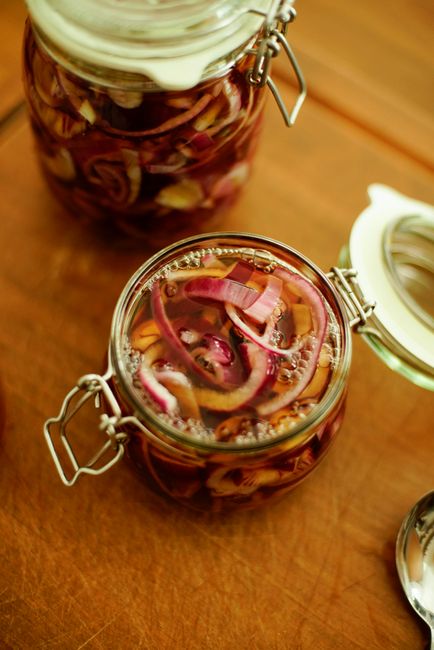
Pickled sausage is fully cooked pork (sometimes pork-and-beef) sausage links packed into jars with a vinegar brine, salt, sugar, and spices, then sealed and processed so the unopened jar is shelf-stable at room temperature. It's a longtime convenience-store and gas-station snack food across the American South and Midwest, sold alongside pickled eggs and pickled bologna. The links are usually dyed pink or deep red, have a firm, dense, almost rubbery bite from the curing and processing, and taste sharply sour and salty with a background of clove, mustard seed, or cayenne depending on the brand.
Varieties
Pickled sausage links are distinct from pickled bologna, which is sliced or chunked lunch meat rather than a whole-link sausage, and from Polish-style home-fermented kielbasa, which relies on natural fermentation rather than a commercial vinegar brine. 'Hot' versions use significantly more cayenne and red pepper flakes than 'original,' which leans more on clove and mustard seed.
Buying tips
Check that the jar seal is intact and the lid isn't bulging or leaking; the brine should look clear reddish, not cloudy or foamy. Sausages should look plump and hold their shape, not mushy or falling apart. Common brands like Penrose and Big Mama's sell both a mild 'original' and a cayenne-heavy 'hot' version, so check the label if you're heat-sensitive.
Substitutes
Pickled bologna, cut into chunks — 1:1 by weight
Same brine profile and similar tang, but softer and less dense than sausage links since bologna is finely emulsified rather than whole-muscle-and-fat sausage.
Pickled hot dogs (pickled franks) — 1:1 by piece
Milder pork flavor and a smoother, less fatty texture than pickled sausage, but the same sour-salty brine and snackable format.
Canned Vienna sausages splashed with pickle or dill brine — 1:1 by piece, plus 1 tbsp brine per 4 sausages
Vienna sausages aren't pickled on their own, so they lack the vinegar bite unless you toss them in leftover pickle or hot sausage brine for at least an hour before serving.
Homemade quick-pickled smoked kielbasa — Not a direct swap, cut kielbasa into 2-inch pieces and simmer in a vinegar-water-salt brine for 10 minutes, then chill in the brine overnight
Closest in size and fat content to real pickled sausage but needs a full overnight soak to pick up any real sourness.
Storage
Unopened jars are shelf-stable at room temperature for a year or more, check the printed date on the lid. Once opened, keep the sausages fully submerged in their own brine, seal tightly, and refrigerate; they stay good for 4 to 6 weeks. If the brine turns cloudy or develops a film, discard the jar.
How to use
Eaten cold straight from the jar as a snack with crackers, but also sliced thin into red beans and rice, chopped into dirty rice or cornbread for a vinegar kick, or added whole to a snack board with cheese cubes and hot sauce. Because they're already fully cooked and heavily salted, they don't need cooking, just draining if you're adding them to a hot dish.
What it pairs with
Pairs with saltine crackers, sharp cheddar cubes, boiled eggs, and hot sauce for a classic gas-station snack plate, or with cold beer as a bar snack. In cooked dishes, it works well with black-eyed peas, collard greens, and cornbread, where the vinegar cuts through the richness of the pot.
Nutrition
High in sodium from both the cure and the vinegar brine, often 300-400mg per link, with moderate protein and fat from the pork and minimal carbs unless the brine is sugar-heavy. Many commercial brands use Red 40 or a similar dye for the signature pink-red color rather than relying on the cure alone.
FAQ
Is pickled sausage safe to eat cold straight from the jar?
Yes. The sausage is fully cooked before jarring and the acidic vinegar brine, combined with commercial processing, keeps it shelf-stable and safe to eat unheated once opened and refrigerated.
What gives pickled sausage its pink or red color?
Most commercial brands add a food dye like Red 40 on top of the natural curing color; a few brands rely only on paprika or the brine ingredients for a duller, more natural reddish-brown tone.
Why is pickled sausage so much saltier than regular smoked sausage?
It's cured twice, once during the original sausage-making process and again by sitting in a salted vinegar brine, which is what gives it the dense, firm texture and sharp tang.
Can you refreeze pickled sausage after opening the jar?
It's not recommended. Freezing breaks down the texture of the brined meat and the vinegar brine doesn't refreeze well; refrigerated storage in the original brine is the better option.
Have pickled sausage on hand? Find recipes with our Recipe Generator →