
Pistachio Milk
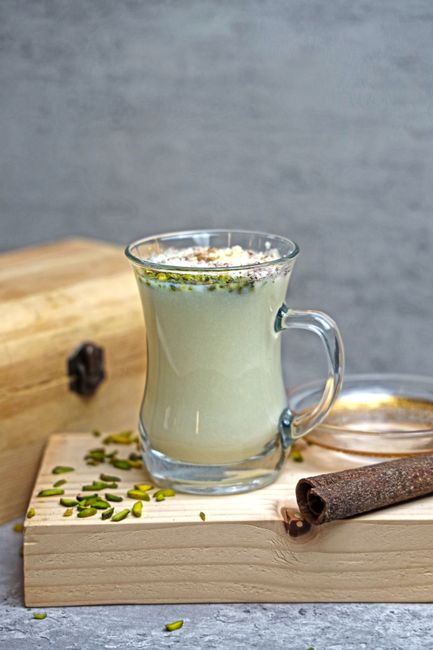
Pistachio milk is a plant-based milk made by blending soaked pistachios with water and straining out the solids, sometimes with added sweetener or salt. It has a naturally faint green tint, a rich, slightly sweet, nutty flavor closer to almond milk than oat milk, and a thicker mouthfeel than most nut milks because pistachios carry more fat than almonds but less than cashews.
Varieties
Some brands sell pistachio milk blended with almond or oat milk to cut cost and improve froth, which changes both flavor and nutrition compared to pistachio-only versions; check labels if a pure pistachio flavor matters for a recipe.
Buying tips
Check the ingredient list for pistachio content; some commercial brands use only 2-3% pistachios with the rest water, sugar, and gums, which shows up as a thin, watery texture. Unsweetened versions are worth seeking out for cooking so you control sweetness.
Substitutes
Almond milk — 1:1
Much more widely available and cheaper, though noticeably thinner and less sweet; add a pinch of sugar to get closer to pistachio milk's natural sweetness.
Cashew milk — 1:1
Closest in richness and creaminess, especially in coffee and sauces, but lacks the faint green color and distinct pistachio flavor.
Oat milk — 1:1
Better for frothing in coffee drinks and naturally sweeter, but has an oat flavor and none of the nutty character.
Homemade pistachio milk (raw pistachios blended with water) — 1 cup shelled pistachios to 3 cups water
Soak pistachios 4-8 hours, blend with water, and strain through a nut milk bag for a fresher, less processed version with no stabilizers.
Storage
Unopened shelf-stable cartons keep at room temperature until the printed date; once opened, refrigerate and use within 7-10 days. Homemade pistachio milk separates naturally, keeps refrigerated for 3-4 days, and needs a good shake before each use.
How to use
Use in coffee and lattes, where its natural sweetness and fat content help it froth reasonably well, in smoothies, over cereal, or in baking as a 1:1 swap for dairy milk. It also works well in savory applications like creamy pasta sauces or soups where a subtle nutty note is welcome.
What it pairs with
Pairs well with cardamom, rosewater, honey, and dark chocolate in desserts, and with coffee, cinnamon, or vanilla in drinks. In savory cooking it complements lemon, mint, and roasted vegetables.
Nutrition
A cup of unsweetened pistachio milk typically runs 60-80 calories with 3-5g fat, less protein than dairy or soy milk (usually 1-2g), and depending on the brand, added calcium and vitamin D. Pistachios themselves contribute some potassium and vitamin B6, but blending and straining removes most of the fiber found in whole nuts.
FAQ
Does pistachio milk taste like pistachios?
Yes, though milder than eating the nut itself; the flavor comes through most clearly in unsweetened, higher-pistachio-content brands and in homemade versions.
Can pistachio milk be heated for coffee without curdling?
Yes, it generally holds up well when heated slowly, but adding it to very acidic coffee or espresso too quickly can cause slight separation; steaming gently rather than boiling helps.
Is pistachio milk a good substitute for dairy milk in baking?
It works fine in most quick breads, pancakes, and muffins at a 1:1 ratio, though its natural sweetness means you may want to slightly reduce added sugar in the recipe.
Why is pistachio milk more expensive than almond or oat milk?
Pistachios cost significantly more per pound than almonds or oats, and yields are lower per nut, which pushes up the retail price of commercial pistachio milk.
Have pistachio milk on hand? Find recipes with our Recipe Generator →