
Pork Rinds
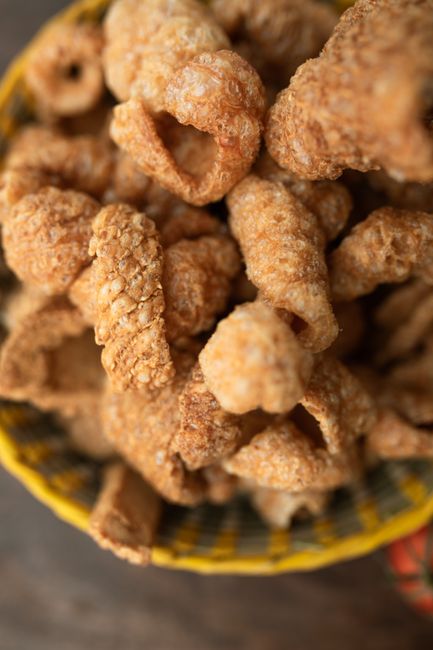
Pork rinds are pieces of pork skin that have been fried or roasted until the skin puffs up into a light, brittle, airy snack. In Latin American cooking the same basic product is called chicharrones, though those are often left with a thin layer of fat or meat attached, giving a chewier bite than the bagged American version. Ground into fine crumbs, pork rinds become a zero-carb stand-in for breadcrumbs or flour in low-carb and keto cooking.
Varieties
American-style pork rinds are pure fried skin with almost no fat, giving them their light, airy puff. Chicharrones, especially those sold in Mexican and Central American markets, often retain a thin fat layer, making them denser and chewier. Cracklings are a related product made by rendering pork fat with the skin still attached, resulting in a richer, meatier bite traditionally used in Southern cornbread.
Buying tips
Check the bag bottom before buying; a pool of oil usually means the rinds have gone stale and lost their crispness. For a meatier, chewier product, look for chicharrones at Latin markets rather than the airy bagged American style. Plain, unseasoned rinds work better than flavored ones when crushing for breading, since seasoning blends can burn or overpower the dish.
Substitutes
Store-bought pork rind crumbs ("pork dust") — 1:1
Pre-ground pork rinds sold specifically for breading; behaves identically to crushing whole rinds yourself, just finer and more consistent.
Finely grated Parmesan cheese — 1:1 by volume
Keto-friendly and browns to a similarly crisp crust on fried or baked chicken and fish, but adds a sharper, salty flavor and won't puff the way pork rinds do.
Almond flour — 1:1 by volume
Low-carb and neutral tasting, but produces a softer, sandier crust rather than a shattering crunch; mixing in a little grated Parmesan helps close the gap.
Panko breadcrumbs — 1:1 by volume
Not low-carb, but the closest texture match for a light, crisp breading if carbs aren't a concern.
Crushed pork rinds substituted for flour in chili or gravy (reverse case) — 2 tbsp crushed rinds per 1 tbsp flour
Use this ratio when a recipe calls for flour as a thickener and pork rinds are being substituted in for a low-carb version; they thicken less efficiently than flour so more is needed.
Storage
Keep unopened bags in the pantry; once opened, press out excess air and reseal or transfer to an airtight container to slow staleness. Use within about a week of opening, since exposure to moisture makes them go soft and chewy rather than crisp. Never refrigerate them, as condensation ruins the texture.
How to use
Eaten straight from the bag as a snack, crushed into fine crumbs for breading chicken, fish, or pork chops in place of flour or panko, sprinkled over salads, casseroles, or deviled eggs for crunch, stirred into cornbread-style batters for texture, and crushed as a light thickener in keto chili or gravy.
What it pairs with
Pairs well with hot sauce, lime juice, guacamole, and queso as a snack, and with chili, gumbo, or taco toppings when crushed for crunch.
Nutrition
Pork rinds are essentially pure protein and fat with zero carbohydrates, making them a common keto and low-carb snack, but they're also high in sodium, so portion size matters for anyone watching salt intake.
FAQ
Are pork rinds keto-friendly?
Yes, plain pork rinds have zero carbohydrates and are almost entirely protein and fat, making them one of the few crunchy snacks that fit strict keto diets.
What's the difference between pork rinds and cracklings?
Pork rinds are fried skin with the fat trimmed away, giving a light, brittle texture, while cracklings keep a layer of fat attached and are denser and chewier.
Can pork rinds replace breadcrumbs in every recipe?
Not exactly. Crushed pork rinds absorb less moisture than breadcrumbs and brown faster, so they work best in shorter cook times or as a coating rather than a binder in dishes like meatballs.
Can pork rinds be made at home?
Yes. Dried pork skin is deep-fried in batches at high heat until it puffs, or the skin can be slow-rendered with attached fat in an oven to make cracklings instead.
Have pork rinds on hand? Find recipes with our Recipe Generator →