
Prawns
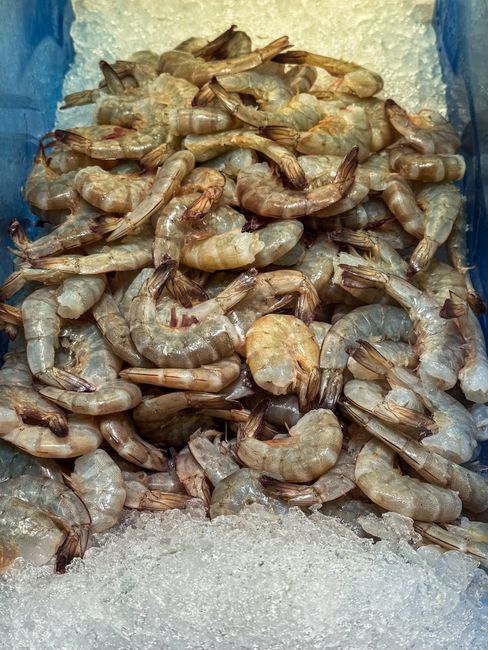
Prawns are large decapod crustaceans related to shrimp, prized for their firm, slightly sweet meat and, in many species, their edible heads and roe. In everyday cooking and most markets outside the US, the word is used interchangeably with shrimp, but true prawns (like the giant tiger prawn or freshwater prawns) have a distinct body structure with claws on more leg pairs and tend to grow noticeably larger.
Varieties
True prawns include species like the giant tiger prawn and giant river (freshwater) prawn, distinguished by claws on three pairs of legs versus shrimp's two, and generally larger size. In the US, "prawn" and "shrimp" are used loosely and often mean the same product on menus and in stores; in the UK, Australia, and much of Asia, "prawn" is the default term regardless of the biological distinction.
Buying tips
Look for prawns that smell like the ocean, not fishy or like ammonia. Shells should be firm and translucent, not gritty, gapped, or slimy at the joints. Frozen prawns are often higher quality than the "fresh" ones at the counter, since most fresh prawns sold in stores were previously frozen and thawed anyway; buying them still frozen and thawing at home avoids extra time sitting on ice.
Substitutes
Large shrimp — 1:1
The closest substitute in flavor and texture; adjust cook time down slightly since shrimp are usually smaller.
Langoustine tails — 1:1 by weight
Sweeter and more delicate than prawns, with a lobster-like flavor; good in butter-based sauces and pasta.
Crawfish tails — 1:1 by weight
Smaller and more intensely flavored; works well in boils, gumbo, and etouffee where prawns would otherwise be used.
Scallops — 1:1 by weight
Different texture (softer, more buttery) but a reasonable stand-in in stir-fries and pasta when shellfish-adjacent flavor is the goal.
Firm white fish, cubed — 1:1 by weight
Not a flavor match, but a practical substitute in curries and stir-fries for anyone avoiding shellfish; cod or monkfish hold up best.
Storage
Fresh raw prawns keep for one to two days in the coldest part of the refrigerator, stored on ice or in a sealed container set inside a bowl of ice. Cooked prawns keep three to four days refrigerated. For longer storage, freeze raw prawns in their shells (the shells slow freezer burn) for up to six months; thaw overnight in the fridge or under cold running water for a quick thaw.
How to use
Prawns cook fast, usually two to four minutes per side depending on size, and turn from translucent gray to opaque pink-white when done. Use them in stir-fries, curries, pasta, garlic butter saute, skewers on the grill, and shellfish boils. Leave shells on when grilling or boiling for extra flavor and easier peeling at the table; peel and devein first for stir-fries and pasta where you want to eat them whole without fuss.
What it pairs with
Pairs well with garlic, chile, lime, cilantro, coconut milk, and butter. Works in dishes built around white wine, tomato, or coconut-based sauces, and stands up to bold spices like paprika, cumin, and curry blends.
Nutrition
Prawns are high in protein and low in fat and calories, with a 3-ounce cooked serving providing roughly 20 grams of protein for about 85 calories. They're also a good source of selenium, vitamin B12, and iodine, though they contain more dietary cholesterol than most other proteins, largely balanced by their very low saturated fat content.
FAQ
What's the actual difference between prawns and shrimp?
Biologically, prawns have branching gills and claws on three pairs of legs, while shrimp have plate-like gills and claws on only two pairs. In practice, most seafood sold as "prawns" in restaurants and markets is the same product labeled "shrimp" elsewhere.
Should I devein prawns before cooking?
The dark line is the digestive tract, not harmful to eat, but removing it improves texture and appearance, especially in larger prawns where it's more noticeable. Run a small knife along the back and lift it out with the tip.
Can you eat prawn heads?
Yes, and many cooks consider the head the best part, since it holds the tomalley (fat and flavor) used to enrich stocks and sauces. Grilled or fried whole, the shell and head become crisp enough to eat entirely.
How do I know when prawns are overcooked?
Overcooked prawns curl into a tight C-shape and turn rubbery. Properly cooked prawns form a loose C or gentle curl and stay tender; pull them from heat as soon as they turn opaque.
Have prawns on hand? Find recipes with our Recipe Generator →