
Pumpernickel
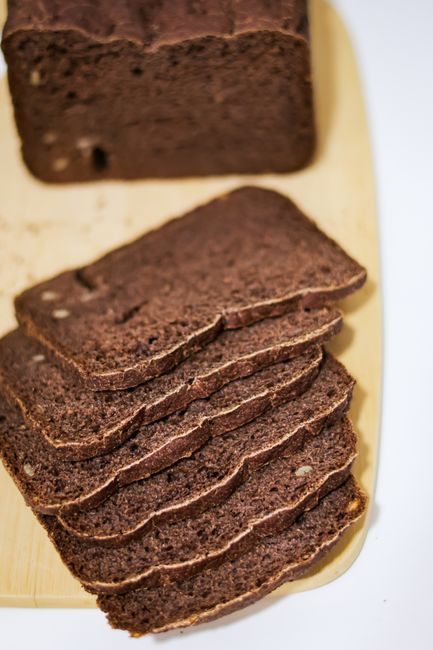
Pumpernickel is a dense, dark rye bread that originated in the Westphalia region of Germany. It's traditionally made from coarsely ground whole rye berries (rye meal) rather than fine rye flour, baked at low temperatures for a long time, which is what gives it a dark color, moist dense crumb, and slightly sweet, faintly sour, malty flavor. Most versions eaten outside Germany today, the sliced sandwich-loaf style, get their dark color partly from molasses, cocoa powder, or coffee rather than the traditional long low-temperature bake alone.
Varieties
Traditional German pumpernickel (Westphalian style) is baked for 16 to 24 hours at low heat with no added sweeteners or coloring, relying on a long Maillard and caramelization process for its color. American-style pumpernickel, sold sliced in most grocery stores, is a faster wheat-and-rye blend colored with molasses, cocoa powder, or coffee and often has caraway seeds added, which isn't traditional in the German version.
Buying tips
Read the ingredient list before the label. Authentic pumpernickel lists rye meal or whole rye flour as the first ingredient; if wheat flour comes first, it's a wheat loaf dyed and flavored to resemble pumpernickel. German-style loaves sold vacuum-sealed and pre-sliced (often labeled Vollkornbrot or Schwarzbrot) are usually closer to the traditional version than bakery-case pumpernickel.
Substitutes
Dark rye bread — 1:1
The closest substitute in flavor family; less dense and less sweet than true pumpernickel, but built from the same rye base.
Light rye bread with a tablespoon of molasses brushed on before baking or toasting — 1:1
Approximates the color and sweetness of pumpernickel when the real thing isn't available; flavor is milder and less tangy.
Whole wheat bread with 1 teaspoon caraway seeds added per loaf — 1:1
Not a rye bread at all, so the sour tang is missing, but caraway gets close on aroma for sandwiches where texture matters more than authenticity.
Marble rye (rye and pumpernickel swirl) — 1:1
Contains actual pumpernickel dough swirled with lighter rye, so it works well anywhere pumpernickel is used for sandwiches.
Storage
Because pumpernickel is dense and moist, it stays fresh longer than white bread but molds faster if left in a warm, humid spot. Keep it in its original bag or wrapped tightly at room temperature for up to 5 days, or freeze sliced for up to 3 months. Avoid refrigerating it unsliced, refrigeration actually speeds up staling in bread through starch retrogradation.
How to use
Classic in Reuben sandwiches, with pastrami or corned beef, and as a base for open-faced Scandinavian smorrebrod topped with butter, herring, or smoked fish. Also cubed and toasted for dense, malty croutons, or crumbled into stuffing for a deeper flavor than white bread gives.
What it pairs with
Pairs well with strong, salty, or fatty toppings that can stand up to its malty sweetness: butter and smoked salmon, sharp cheddar, corned beef and mustard, or cream cheese and cucumber. Also good alongside strong beers or a bowl of borscht.
Nutrition
Whole rye pumpernickel is higher in fiber than most white or even standard whole wheat bread, and has a lower glycemic impact because of its dense structure, which slows digestion. Check labels though: many commercial 'pumpernickel' loaves are made mostly from wheat flour with rye flour and coloring added for a small fraction of the dough.
FAQ
Is pumpernickel bread the same as rye bread?
No. Rye bread can be made with light, medium, or dark rye flour and varies widely in color and sourness. Pumpernickel is a specific, denser style of dark rye bread traditionally made from coarse whole rye meal and baked slowly at low heat.
Why is pumpernickel so dark?
Traditionally the color comes from a long, low-temperature bake (often overnight) that caramelizes the rye's natural sugars. Most commercial loaves shortcut this with added molasses, caramel color, or cocoa powder.
Does pumpernickel taste sour like sourdough?
Traditional pumpernickel has a mild tang from fermentation, but it's balanced by a noticeable sweetness from caramelized rye sugars or added molasses, so it reads as malty-sweet rather than sharply sour.
Can pumpernickel be made gluten-free?
Not authentically. Rye contains gluten, so a true gluten-free version has to substitute other flours (like sorghum or buckwheat) plus molasses and cocoa for color, which changes the texture significantly from real pumpernickel.
Have pumpernickel on hand? Find recipes with our Recipe Generator →