
Quelites
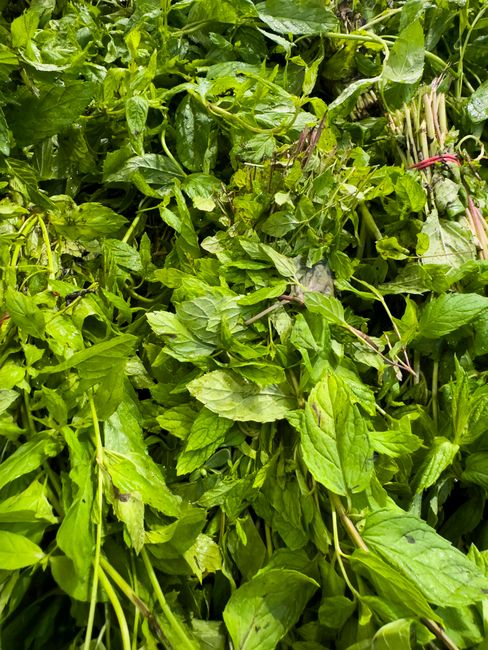
Quelites is a Mexican Spanish umbrella term, not one specific plant. It covers a wide range of wild and semi-wild edible greens gathered or grown for their leaves, including verdolagas (purslane), quintoniles (amaranth greens), huauzontle, malva, and lambsquarters. What they share is a slightly mineral, grassy flavor and a long history in Mexican home cooking, especially in central and southern Mexico, where they show up in soups, sautes, and tacos rather than as a salad base.
Varieties
The term covers several distinct plants: verdolagas (purslane) have thick, slightly succulent oval leaves and a lemony tang; quintoniles are amaranth greens with a soft, spinach-like leaf; huauzontle looks more like a small broccoli-adjacent flowering stalk and is usually battered and fried; malva has rounder, softer leaves and a milder flavor; romeritos are needle-thin and traditionally cooked in a mole for special occasions. A recipe calling simply for 'quelites' is usually flexible about which of these is used.
Buying tips
Look for them at Mexican markets or farmers markets rather than standard grocery produce sections. Leaves should be crisp and deep green with no slimy or yellowing patches; stems should snap rather than bend. Because they're often wild-harvested, expect some grit and rinse thoroughly in a few changes of water before cooking.
Substitutes
Baby spinach, fresh — 1:1 by volume
Much milder and softer in texture than most quelites, so cook it a minute or two less to avoid mush.
Swiss chard, leaves and stems chopped — 1:1 by volume
Closer in earthiness and slight bitterness than spinach; strip the toughest part of the stem first.
Lambsquarters, fresh — 1:1 by volume
Actually one of the wild greens sold as quelites in Mexican markets, so this is close to a true match if you can find it growing or at a farmers market.
Dandelion greens, young leaves — 3:4, use slightly less
More bitter than most quelites, so blanch for a minute before sauteing to soften the edge.
Mustard greens, chopped — 1:1 by volume
Sharper and peppery where quelites are more grassy; good in soups where the greens simmer down anyway.
Storage
Quelites wilt fast because they're thin-leaved and often sold unwashed with sandy roots still attached. Trim roots, wrap the bunch loosely in a damp paper towel, and keep in an unsealed or lightly sealed bag in the crisper drawer. Use within 2 to 3 days; they don't hold like sturdier greens such as kale.
How to use
Most quelites are sauteed with onion, garlic, and a chile like serrano, often finished with epazote, and folded into eggs, quesadillas, or tacos. They also go straight into brothy soups (caldo de quelites) and simmer until tender, or get mixed into masa for tamales. They're rarely eaten raw in large amounts since the texture and slightly bitter, mineral flavor are better tamed by heat.
What it pairs with
Pairs well with epazote, lime, crumbled queso fresco, pork, and beans. Also works folded into scrambled eggs with a bit of onion, or added to a pot of pinto or black beans in the last 10 minutes of cooking.
Nutrition
As a category, quelites are low in calories and notably high in vitamin A, vitamin C, calcium, and iron for a leafy green, though exact values shift depending on which specific green (verdolagas, quintoniles, etc.) is being used.
FAQ
Is quelites one specific vegetable?
No. It's a category name for a range of wild and semi-wild edible greens, including purslane, amaranth greens, lambsquarters, and huauzontle, among others.
Can quelites be eaten raw?
Some, like purslane and young amaranth greens, can be eaten raw in small amounts, but most quelites are traditionally cooked to soften their texture and mellow their bitterness.
Why are quelites often gritty when bought at a market?
Many are gathered wild or grown without the intensive washing done for commercial greens, so soil clings to the leaves and roots. Rinse in several changes of water before cooking.
What's the difference between quelites and quintoniles?
Quintoniles are one specific type of quelite, the tender leaves of the amaranth plant, while quelites is the broader umbrella term covering quintoniles along with verdolagas, huauzontle, and other wild greens.
Have quelites on hand? Find recipes with our Recipe Generator →