
Raclette Cheese
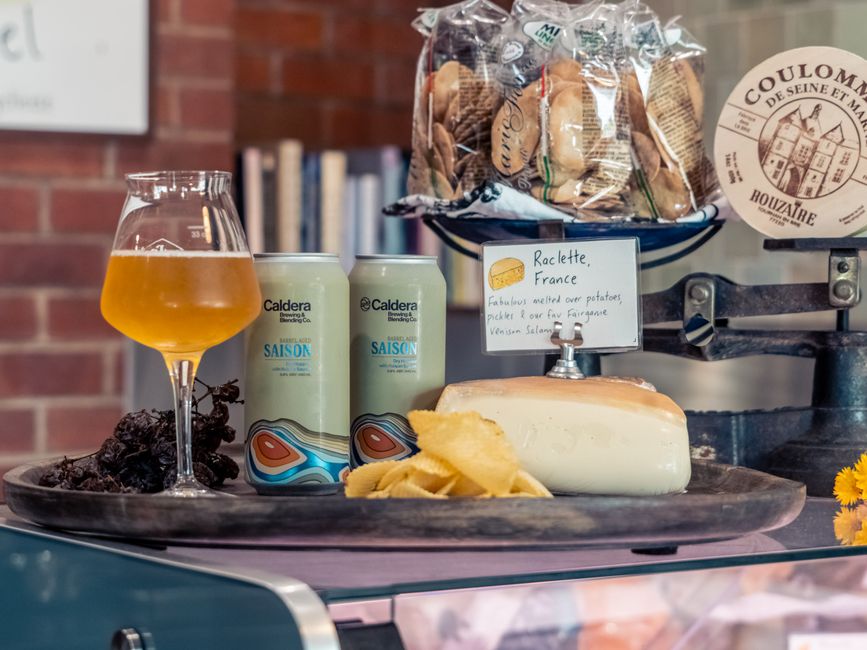
Raclette is a semi-firm, washed-rind cow's milk cheese originally from the Valais region of Switzerland, also produced widely in France's Savoie region. It's made specifically to melt: dense enough to hold its shape cold, but capable of turning into a smooth, nutty, slightly funky pool of melted cheese when heated. The name refers both to the cheese and to the meal built around it, where a wheel or half-wheel is heated and scraped (racler means "to scrape" in French) directly onto plates.
Varieties
Raclette du Valais AOP is the protected Swiss original, made from raw or thermized milk in the canton of Valais. French raclette, often labeled simply Raclette, is generally milder and more widely available outside Europe. Smoked raclette, with a light smoky finish, is a common variation sold specifically for grilling.
Buying tips
Look for wedges labeled Raclette du Valais AOP for the authentic Swiss original, or a French Savoie raclette as a widely available alternative. The rind should look washed and slightly damp, tan to orange in color, not dry or cracked. Buy it whole or in a thick block rather than pre-sliced or shredded, since pre-cut raclette dries out fast and melts less evenly.
Substitutes
Gruyère — 1:1
Nuttier and less funky than raclette, but melts with the same smooth, stretchy texture. The most common stand-in for a raclette dinner.
Fontina (Italian, Val d'Aosta style) — 1:1
Softer and milder, with a similar washed-rind tang. Melts very easily, sometimes needs a slightly lower heat to avoid separating.
Comté — 1:1
Firmer and more complex, with caramel notes instead of raclette's barnyard funk. Excellent melter, works well in gratins.
Taleggio — 1:1
Much stronger and more pungent, with a soft, almost creamy interior. Use less than the recipe calls for if raclette's mildness matters.
Havarti — 1:1
Mild and buttery with none of the funk, but melts smoothly and works fine for a kid-friendly version of a raclette-style meal.
Emmental — 1:1
Nutty and slightly sweet with more pronounced holes; melts a bit more elastically than raclette but is a reasonable everyday swap.
Storage
Wrap tightly in wax paper or cheese paper (not plastic wrap, which traps moisture and speeds spoilage) and refrigerate in the crisper drawer. Rewrap after each use with fresh paper. Properly wrapped, an opened wedge keeps for 2 to 3 weeks. Freezing changes the texture, making it grainy when melted, so it's best avoided.
How to use
The classic use is a raclette dinner: a wedge or half-wheel is melted under a dedicated raclette grill or in small individual pans, then scraped over boiled potatoes, cornichons, pickled onions, and cured meats. Without special equipment, thick slices melt well under a broiler on top of potatoes or in a cast-iron skillet. It also works in grilled cheese, quesadillas, and potato gratins wherever a strong, reliably smooth melt is needed.
What it pairs with
Pairs traditionally with boiled new potatoes, cornichons, pickled pearl onions, and cured meats like dried beef or jambon cru. A dry white wine such as Fendant or Chasselas cuts through the richness, and a light black tea is the traditional non-alcoholic pairing served at raclette dinners in Switzerland.
Nutrition
Raclette is a full-fat cheese, roughly 25 to 28 grams of fat and 400 to 550 milligrams of sodium per 100 grams, along with a solid dose of calcium and protein. Because a raclette meal centers on the cheese itself, portions add up quickly compared to using cheese as a topping.
FAQ
What does raclette cheese taste like?
It's nutty and slightly tangy when cold, with a stronger, almost barnyard funk that comes out once it melts, a result of the washed rind that's regularly rubbed with brine during aging.
Can raclette cheese be eaten cold, without melting it?
Yes, thin slices work on a cheese board, but its texture is rubbery and its flavor much flatter cold. Nearly all traditional uses call for it melted.
What's the difference between raclette and fondue?
Fondue blends multiple cheeses with wine and cornstarch into a communal dipping pot, while raclette is a single cheese melted directly and scraped onto individual plates, without wine or thickener.
Do you need a raclette machine to cook with it?
No. A broiler, a small cast-iron skillet, or even a toaster oven can melt thick slices of raclette over potatoes just as effectively, though the tabletop grill makes serving a group easier.
Have raclette cheese on hand? Find recipes with our Recipe Generator →