
Ramen Bowl
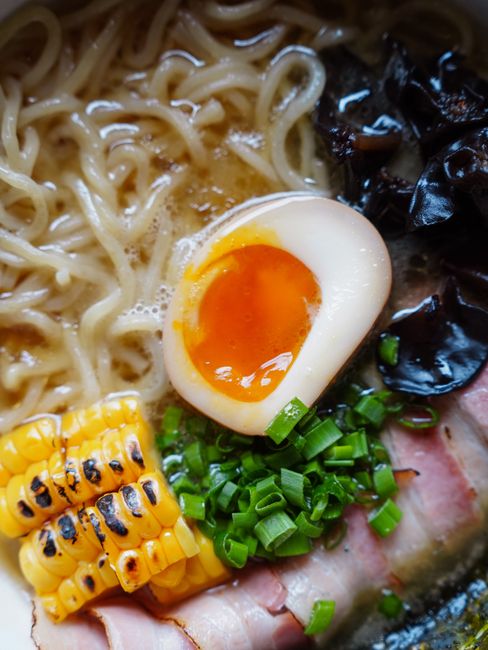
A ramen bowl is built from four parts: broth, noodles, protein, and toppings. The broth (shoyu, shio, miso, or tonkotsu) sets the flavor base, springy alkaline wheat noodles carry it, and toppings like soft-boiled egg, chashu pork, scallions, and nori add texture and contrast. It's less a single recipe than a format, which is why it adapts easily to whatever broth or protein is on hand.
Varieties
Shoyu broth is soy-based and clear brown, shio is salt-based and the lightest in color, miso broth uses fermented soybean paste for a heartier flavor, and tonkotsu is simmered pork bone broth, cloudy and rich. Each style is traditionally paired with a different noodle thickness, thinner noodles for shio and shoyu, thicker for tonkotsu and miso.
Buying tips
Fresh refrigerated ramen noodles (curly, slightly sticky to the touch) cook in 1 to 2 minutes and hold their texture in broth longer than dried instant blocks. Check the ingredient list for kansui or 'alkaline water,' which is what gives real ramen noodles their yellow tint and springy chew.
Substitutes
Udon noodles — 1:1 by weight
Thicker and chewier than ramen noodles, best with heavier broths like tonkotsu or miso since they can stand up to a rich liquid.
Soba noodles — 1:1 by weight
Thinner and more delicate, cook fast and go soft quickly in hot broth, so add them right before serving rather than letting the bowl sit.
Thin dried rice noodles — 1:1 by weight
A gluten-free option with a softer, less springy bite; soak according to package directions rather than boiling them like wheat noodles.
Spaghetti with a pinch of baking soda — 1:1 by weight, plus 1/2 teaspoon baking soda per quart of boiling water
The baking soda raises the pH of the cooking water and mimics the alkaline texture of real ramen noodles; still not a perfect match but noticeably closer than plain pasta.
Storage
Store broth, noodles, and toppings in separate airtight containers rather than combined. Broth keeps 4 to 5 days refrigerated or up to 3 months frozen. Cooked noodles keep about 2 to 3 days but absorb liquid and turn mushy fast once submerged, so combine only right before eating.
How to use
Works as a fast weeknight dinner base: reheat broth, cook noodles separately, then layer in whatever protein and vegetables are on hand, chashu pork, tofu, bok choy, corn, bean sprouts, and a spoon of garlic or chili oil for aromatics.
What it pairs with
Marinated soft-boiled egg (ajitama), menma (fermented bamboo shoots), nori strips, sliced scallions, and a drizzle of chili oil round out most bowls. Gyoza or a quick cucumber salad on the side balance the richness of the broth.
Nutrition
A standard bowl with broth, noodles, a soft-boiled egg, and sliced pork runs roughly 500 to 700 calories with 20 to 30 grams of protein. Most of the sodium comes from the broth itself, often 1,500 to 2,000 milligrams per bowl, so taste before adding extra soy sauce or salt.
FAQ
What's the difference between ramen noodles and regular wheat noodles?
Ramen noodles are made with kansui, an alkaline mineral water, which gives them their yellow color, springy bite, and ability to hold up in hot broth longer without turning mushy the way standard wheat pasta does.
Can I use the seasoning packet from instant ramen for a homemade bowl?
Yes, but the packets are usually very salt-heavy. Use about half the packet and build the rest of the flavor with fresh aromatics like garlic, ginger, or scallion oil rather than salt.
How do I keep leftover noodles from getting soggy?
Store the noodles and broth in separate containers and combine only when reheating. Even a few hours sitting together causes the noodles to overabsorb liquid and lose their bite.
What size bowl is actually meant for ramen?
Traditional ramen bowls hold about 20 to 24 ounces (600 to 700 milliliters), which leaves enough room for noodles, broth, and toppings without the liquid spilling when you stir.
Have ramen bowl on hand? Find recipes with our Recipe Generator →