
Ribeye Roast
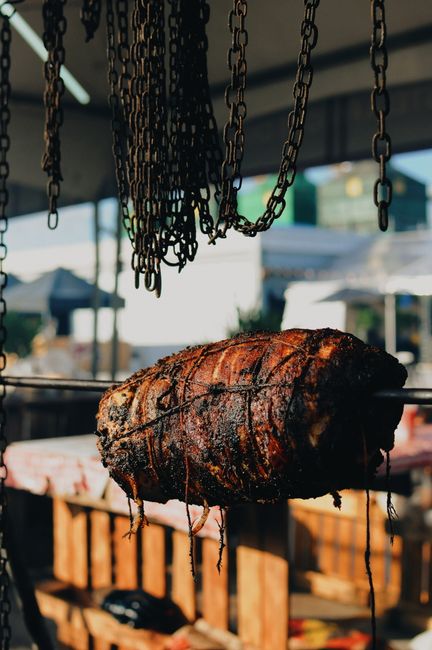
A ribeye roast is a large, well-marbled cut taken from the rib primal, the same muscle group that produces individual ribeye steaks. Sold either bone-in (often labeled standing rib roast) or boneless, it's prized for heavy internal fat marbling that bastes the meat as it cooks, giving a rich, beefy flavor and tender texture without needing a marinade or long braise.
Varieties
"Ribeye roast" and "prime rib" often get used interchangeably, but they're not identical: prime rib traditionally refers to the bone-in version and doesn't necessarily mean USDA Prime grade. A boneless ribeye roast is the same muscle with the ribs removed, sometimes called a ribeye roll.
Buying tips
Look for even, fine marbling throughout the muscle rather than just a thick fat cap on the edge; that internal fat is what keeps the roast moist. A boneless roast is easier to carve and slightly less expensive per pound than bone-in, while bone-in (prime rib) holds its shape better during long roasting and makes for a more impressive presentation at the table. Ask the butcher to tie a boneless roast if it isn't already, so it cooks evenly.
Substitutes
Prime rib (bone-in rib roast) — 1:1 by weight
Essentially the same cut with the bones left in; expect slightly longer cook time and more dramatic presentation, but the bones also add flavor during roasting.
Boneless strip roast (top loin roast) — 1:1 by weight
Leaner and firmer with less marbling, so it cooks a bit faster and can dry out sooner; pull it from the oven a few degrees earlier than a ribeye roast.
Tri-tip roast — 1:1 by weight
Much leaner and smaller, with a looser grain; works for a smaller dinner but lacks the fat cap and marbling that make ribeye roast self-basting.
Individual ribeye steaks, seared and reverse-seared as a group — Use equivalent total weight in steaks
Not a true substitute for a whole roast but a practical fix if a butcher can't cut one to order; cook each steak separately rather than trying to roast them stacked.
Storage
Keep a fresh ribeye roast in its original vacuum packaging in the coldest part of the refrigerator and cook within 3 to 5 days of purchase. For longer storage, freeze tightly wrapped for up to 6 months; thaw in the refrigerator for 24 to 48 hours depending on size before cooking. Cooked leftovers keep refrigerated in an airtight container for 3 to 4 days.
How to use
Best suited to dry-heat roasting: a low oven (250 to 275°F) followed by a hot sear, or reverse-seared the opposite way, brings the interior to an even medium-rare without overcooking the exterior. A 4 to 6 pound roast typically needs 2.5 to 3.5 hours at 250°F to reach 120 to 125°F internal for medium-rare, then a 10 to 15 minute rest before carving. Leftovers slice well for sandwiches or get diced into hash.
What it pairs with
Pairs well with horseradish cream, red wine pan jus, roasted root vegetables, and Yorkshire pudding. A bold red wine like Cabernet Sauvignon or Syrah stands up to the richness of the fat.
Nutrition
Ribeye is one of the more heavily marbled cuts of beef, so it's higher in fat and calories than leaner roasts like top round or sirloin, but it's also a good source of protein, iron, zinc, and B12.
FAQ
Is a ribeye roast the same thing as prime rib?
They come from the same section of the cow, but prime rib specifically refers to the bone-in roast, while ribeye roast can mean either bone-in or boneless. Neither name guarantees USDA Prime grade; that's a separate quality designation.
How much ribeye roast do I need per person?
Plan on about 3/4 to 1 pound per person for a bone-in roast (the bones add weight without adding servings), or about 1/2 to 3/4 pound per person for boneless.
Should I sear a ribeye roast before or after roasting?
Both work. Searing first in a hot pan builds a crust before a long slow roast, while reverse-searing (roasting low first, then blasting under a hot broiler or in a very hot oven at the end) gives more even color and is harder to overcook.
What internal temperature should a ribeye roast reach for medium-rare?
Pull it at 120 to 125°F, since the temperature will climb another 5 to 10 degrees during the rest, landing around 130 to 135°F, which is medium-rare.
Have ribeye roast on hand? Find recipes with our Recipe Generator →