
Rice Cakes
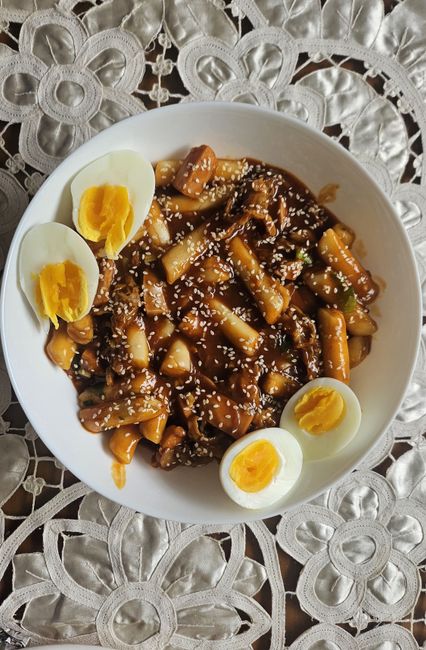
"Rice cakes" covers two very different foods. In Korean, Japanese, and other East Asian cooking, rice cakes (tteok, mochi, nian gao) are chewy, dense cakes or cylinders made from pounded or milled glutinous or short-grain rice, used in savory dishes like tteokbokki and soups. In Western grocery stores, "rice cakes" usually means the flat, crisp, air-puffed discs eaten as a low-calorie cracker substitute. Both start with rice, but the texture, use, and preparation have almost nothing in common.
Varieties
Korean tteok comes in several shapes: garae-tteok (long white cylinders for tteokbokki and soup), tteokbokki-tteok (shorter, pre-cut cylinders), and injeolmi or songpyeon (sweet, filled versions for desserts). Japanese mochi is stickier and often used sweet, wrapped around red bean paste. Chinese nian gao is denser and sweeter, associated with Lunar New Year. None of these are interchangeable with the crisp Western snack rice cake, which is a modern, unrelated puffed-grain product.
Buying tips
For Korean cooking, buy tteok from the refrigerated or frozen section of an Asian grocery store rather than shelf-stable versions, which tend to be gummier. Check that cylindrical rice cakes aren't stuck together in a solid block, a sign they've dried out or been frozen and thawed repeatedly. For snack rice cakes, check the ingredient list; some brands add oil or sugar coatings that roughly double the calorie count of a plain rice cake.
Substitutes
Fresh mochi or shaped glutinous rice dough (for Korean-style tteok) — 1:1
Softer and stickier than machine-cut tteok, but works in soups and stir-fries if simmered briefly to firm up.
Wide rice noodles or udon (for tteokbokki-style dishes) — 1:1
Different chew and no rice-flour flavor, but absorbs the same spicy sauce and fills the same role in the dish.
Puffed corn cakes or plain crackers (for snack-style rice cakes) — 1:1
Similar crunch and neutral base for toppings, though they lack the faint sweetness of puffed rice.
Popcorn (for snack-style rice cakes) — 2 cups popped : 1 rice cake
Much lighter and less dense, best when you just want a low-calorie crunchy base for something else.
Storage
Fresh or vacuum-packed Korean-style rice cakes (tteok) should go in the refrigerator if using within a few days, or the freezer for longer storage; they harden quickly at room temperature. Frozen tteok doesn't need thawing before cooking, just add a minute or two of simmering time. Packaged snack-style rice cakes stay crisp for weeks unopened in a cool, dry pantry, but go stale within a couple days once the bag is opened, so reseal tightly or transfer to an airtight container.
How to use
Cylindrical or sliced tteok are simmered in broths and stews (tteokguk, tteokbokki), pan-fried with vegetables, or grilled on skewers. Sticky nian gao is sliced thin and pan-fried, often with egg, or steamed for New Year celebrations. Snack-style puffed rice cakes are topped with nut butter, avocado, or cream cheese and eaten cold as a quick base, never cooked further.
What it pairs with
Savory tteok pairs with gochujang, sesame oil, scallions, fish cakes, and hard-boiled eggs in Korean stews and stir-fries. Snack rice cakes pair well with nut butters, sliced banana, smashed avocado with chili flakes, or cottage cheese and honey.
Nutrition
Korean-style rice cakes are dense and calorie-heavy for their size since they're compacted rice starch with little water or air; a cup of sliced tteok runs well over 200 calories. Puffed snack rice cakes are the opposite: mostly air, so a single cake is often under 40 calories, though they offer little fiber or protein on their own and spike blood sugar quickly without a topping.
FAQ
Why are my Korean rice cakes hard after cooking?
They were likely frozen and added directly to a sauce that didn't simmer long enough, or they sat too long after cooking and cooled. Simmer frozen tteok for at least 5-7 minutes in liquid before serving, and eat soon after cooking since they firm up as they cool.
Are rice cakes gluten-free?
Both types generally are, since they're made from rice rather than wheat. Always check packaging on flavored or seasoned varieties, since sauces and coatings sometimes contain wheat-based soy sauce or barley malt.
Can I make tteokbokki with the crunchy snack rice cakes?
No, they'll disintegrate into mush the moment they hit sauce. Tteokbokki requires the dense, chewy cylindrical tteok, not puffed snack cakes.
How do I keep tteok from sticking together while cooking?
Soak refrigerated or slightly dried tteok in warm water for 10-15 minutes before cooking to loosen the pieces and soften the exterior, then separate by hand before adding to the pan.
Have rice cakes on hand? Find recipes with our Recipe Generator →