
Rosette de Lyon
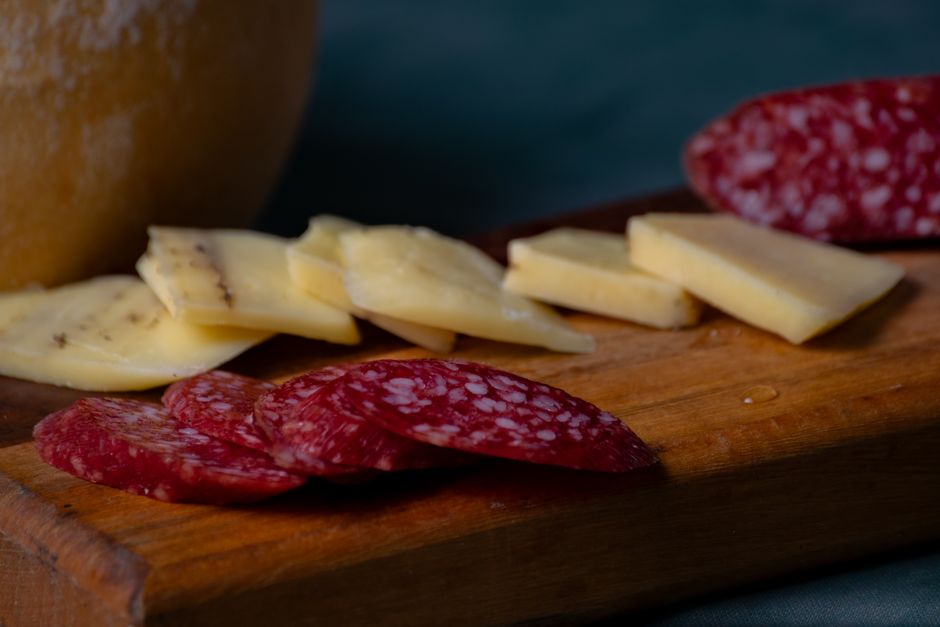
Rosette de Lyon is a large, air-dried pork sausage from the Lyon region of France, a type of saucisson sec. It's coarsely ground, seasoned simply with salt, pepper, and sometimes a touch of garlic, stuffed into a natural casing (traditionally a hog bung), and hung to dry for one to three months until firm enough to slice paper-thin. Cut crosswise, each slice shows a marbled swirl of lean meat and fat, which is where the name comes from: the round slices resemble a flower rosette.
Varieties
Rosette de Lyon is often confused with jésus de Lyon, a related sausage from the same region that uses a wider, shorter casing and is typically fattier and eaten slightly younger; jésus is milder and softer than a fully dried rosette. Both differ from saucisson sec from other French regions, such as Arles or the Auvergne, which use different spice blends (fennel, herbs, or chestnut in some Corsican versions).
Buying tips
Buy from a butcher or French specialty deli that can slice it fresh on a machine rather than a pre-sliced supermarket package, since rosette dries out and loses its texture quickly once pre-cut. The whole sausage should feel firm and evenly dense, not soft or squishy in the middle, which can signal uneven drying.
Substitutes
Saucisson sec (other French dry sausage) — 1:1
Closest match in category and eating style, though most other saucissons sec are finer-ground and slightly less fatty than rosette de Lyon.
Soppressata — 1:1
Similar large-format, coarsely ground dry salami; Italian spicing (fennel, chili in some versions) changes the flavor profile.
Genoa or Milano salami — 1:1
Milder and more finely ground, works fine on a charcuterie board but lacks the coarse fat marbling rosette is known for.
Coppa (capocollo) — 1:1 by weight, sliced thinner
Different cut entirely (cured pork shoulder, not sausage), but a reasonable stand-in for the same board-and-baguette use.
Storage
An uncut whole rosette keeps for weeks in a cool, dry pantry (55-60°F) wrapped loosely in cloth or paper, not plastic. Once cut, press plastic wrap tightly against the exposed end, refrigerate, and use within two to three weeks. A thin white or grey bloom on the casing is normal mold from curing and can be wiped off with a dry cloth before slicing; fuzzy green or black mold means it should be discarded.
How to use
Sliced as thin as possible and served on charcuterie boards, in a jambon-beurre style sandwich with butter and cornichons, or folded into a simple salade lyonnaise. Leftover ends too small to slice neatly can be diced small and stirred into warm lentils or a rustic pasta.
What it pairs with
Pairs with cornichons, whole-grain or Dijon mustard, crusty baguette, and unsalted butter. On the wine side, a light, fruity red like Beaujolais or a chilled Côtes du Rhône rosé complements the fat without overwhelming it.
Nutrition
As a cured, fatty pork sausage, rosette de Lyon is high in saturated fat and sodium; a typical 1-ounce serving (a few slices) runs around 100-120 calories with 5-7 grams of protein. It's meant to be eaten in small quantities, not as a main protein.
FAQ
Why is it called 'rosette'?
The name comes from the appearance of the slices, not the sausage itself: the marbled pattern of fat and lean meat in each thin round resembles the petals of a rosette or flower.
Is rosette de Lyon the same thing as salami?
It's in the same broad family of dry-cured sausages, but rosette is typically coarser-ground, made with a simpler salt-and-pepper seasoning, and dried longer than most Italian salamis.
Do you cook rosette de Lyon?
No, it's a fully cured, ready-to-eat sausage meant to be sliced and served raw. Cooking it would ruin the texture that months of air-drying create.
How thin should it be sliced?
As thin as possible, ideally near-translucent. Because of the coarse fat marbling, thick slices taste greasy and chewy rather than delicate.
Have rosette de lyon on hand? Find recipes with our Recipe Generator →