
Rump Roast
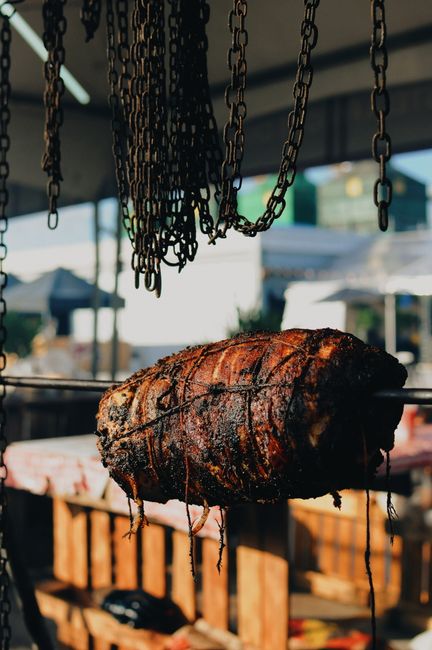
Rump roast is a boneless cut from the round primal, taken from the upper hindquarter near the rump. It's a working muscle, so it's lean with a fairly coarse grain and very little marbling. That leanness makes it easy to dry out with fast, high-heat cooking, but it turns tender and flavorful with a low, slow braise or a careful low-temperature roast.
Varieties
Rump roast should not be confused with rump cap, also called picanha, which is a triangular cut with a thick fat cap prized for grilling. Rump roast is the leaner, boneless interior muscle meant for slow cooking rather than quick high-heat searing.
Buying tips
Choose a roast with deep red, firm-looking flesh and only a thin, even layer of surface fat. Avoid roasts that look grayish or have excess liquid pooled in the packaging. A roast of even thickness cooks more evenly than one with a tapered end.
Substitutes
Bottom round roast — 1:1
Same round primal, similarly lean and coarse-grained. Works interchangeably in pot roast and braises.
Top round roast — 1:1
A touch more tender than rump roast. Good for oven roasting to medium-rare and slicing thin for sandwiches.
Sirloin tip roast — 1:1
Leaner and slightly quicker cooking. Holds up well to braising but can dry out if roasted past medium.
Chuck roast — 1:1
More marbled and fattier, so it stays juicier during long braises even though it isn't a lean substitute.
Eye of round roast — 1:1
Even leaner and more uniform in shape. Best roasted low and slow, then sliced very thin against the grain.
Storage
Keep fresh, unopened rump roast in its original packaging in the coldest part of the refrigerator for 3 to 5 days, or wrap tightly and freeze for up to 12 months. Thaw frozen roast in the refrigerator for a day or two before cooking. Cooked leftovers keep 3 to 4 days refrigerated in a sealed container.
How to use
Best suited to pot roast, Dutch oven braises, and slow cooker meals where liquid and time break down the connective tissue. Also works roasted low (around 275°F) to an internal temperature of 130 to 135°F for medium-rare, then rested and sliced thin against the grain for roast beef sandwiches.
What it pairs with
Pairs well with root vegetables like carrots and potatoes braised in the same pot, a red wine or beef stock braising liquid, and condiments like horseradish or Dijon mustard when served sliced.
Nutrition
Rump roast is one of the leaner beef roasts, providing a solid amount of protein, iron, and vitamin B12 per serving with less fat than chuck or brisket.
FAQ
Is rump roast the same as chuck roast?
No. They come from different primals; chuck is from the shoulder and has more fat and marbling, while rump roast comes from the round and is noticeably leaner.
How do you keep rump roast from turning out dry?
Either braise it low and slow in liquid for 3 to 4 hours until fork-tender, or roast it gently to no higher than medium-rare and slice it thin against the grain.
Can rump roast be grilled like a steak?
It's not a good candidate. The lack of marbling and coarse grain make it tough and dry under direct high heat; braising or slow roasting gives better results.
What's the difference between rump roast and rump cap?
Rump roast is the lean interior muscle used for braising, while rump cap (picanha) is a separate, fattier cut with a fat cap that's typically grilled or roasted whole.
Have rump roast on hand? Find recipes with our Recipe Generator →