
Salmon Sashimi
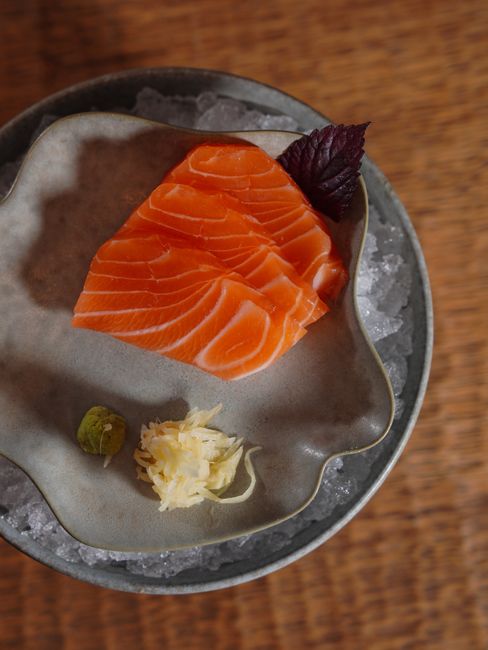
Salmon sashimi is raw salmon fillet sliced thin and served without rice, usually with soy sauce, wasabi, and pickled ginger. Because it's eaten raw, it has to come from fish that's been handled and frozen specifically to kill parasites, a standard usually labeled "sashimi-grade" or "sushi-grade," a term with no official legal definition in the US but that signals the fish was blast-frozen and handled at sashimi-level cold-chain standards from catch to counter.
Varieties
Farmed Atlantic salmon tends to be fattier and more uniformly pink-orange due to controlled feed, while wild king or sockeye salmon is leaner with a deeper, more variable red color and a firmer bite. Both require the same freezing treatment before being served raw; "wild-caught" is not a safety guarantee on its own.
Buying tips
Look for fish explicitly labeled "sashimi-grade" or "sushi-grade" and ask whether it's been previously frozen to FDA parasite-destruction standards; if a fishmonger can't answer, don't eat it raw. The flesh should look bright and glossy with no dulling, no strong fishy odor, and no gapping between muscle segments.
Substitutes
Yellowfin tuna (ahi), sashimi-grade — 1:1 by weight
Leaner and firmer than salmon with a cleaner, less fatty ocean flavor; slices hold their shape better for nigiri.
Yellowtail (hamachi), sashimi-grade — 1:1 by weight
Closest fat content and buttery mouthfeel to salmon; common substitution at izakayas and the easiest swap for texture matching.
Cold-smoked salmon — 1:1 by weight
Not technically raw, so it's a safer option for anyone avoiding true raw fish, but it's saltier, firmer, and lacks the clean fatty melt of raw sashimi.
Seared salmon (tataki-style) — 1:1 by weight
Torch or sear only the outside for 10-15 seconds per side, keeping the center raw; a middle ground for people uneasy with fully raw fish.
Watermelon "sashimi" (vegan alternative) — 1:1 by slice thickness
Compressed or seared watermelon mimics the color, glossiness, and sliced presentation of salmon sashimi but has none of its flavor, protein, or fat, so it's a visual substitute only.
Storage
Keep sashimi-grade salmon in the coldest part of the refrigerator, ideally set directly on a bed of ice in a container with drainage, and use it within 24 hours of purchase. If it was previously frozen for parasite safety, keep it frozen until the day it will be sliced and served; once thawed, don't refreeze it.
How to use
Slice against the grain into pieces about 1/4 inch thick using a long, sharp knife in a single smooth pull rather than a sawing motion. Serve immediately with soy sauce, wasabi, and pickled ginger, or use in poke bowls, nigiri, or salmon tataki.
What it pairs with
Pairs with soy sauce, wasabi, pickled ginger, a squeeze of yuzu or lemon, thinly sliced scallion, toasted sesame oil, and avocado.
Nutrition
Raw salmon is high in protein and rich in long-chain omega-3 fatty acids (EPA and DHA), with a typical 3-ounce sashimi portion providing around 175 calories, 19 grams of protein, and 10 grams of fat, most of it unsaturated.
FAQ
Can I use regular grocery store salmon for sashimi?
Not unless it's labeled sashimi-grade or sushi-grade or the seller confirms it was frozen to parasite-killing standards. Fresh, never-frozen salmon sold for cooking can carry parasites that only die at sustained sub-zero freezing.
What does "sashimi-grade" actually mean?
There's no official US grading system for raw fish; the term is a handling promise from the seller that the fish was frozen at -4°F for at least 7 days, or -31°F for 15 hours, and kept at sashimi-level cold-chain conditions throughout.
Is it safe to eat salmon sashimi while pregnant?
Most guidance advises against raw fish during pregnancy due to listeria risk, regardless of freezing status, since freezing kills parasites but not all bacteria.
Why does my sashimi taste fishy instead of clean and mild?
That usually means the fish is past its prime or wasn't kept cold enough. Properly fresh, correctly stored sashimi-grade salmon should taste clean and slightly sweet, not sharp or ammonia-like.
Have salmon sashimi on hand? Find recipes with our Recipe Generator →