
Sisig
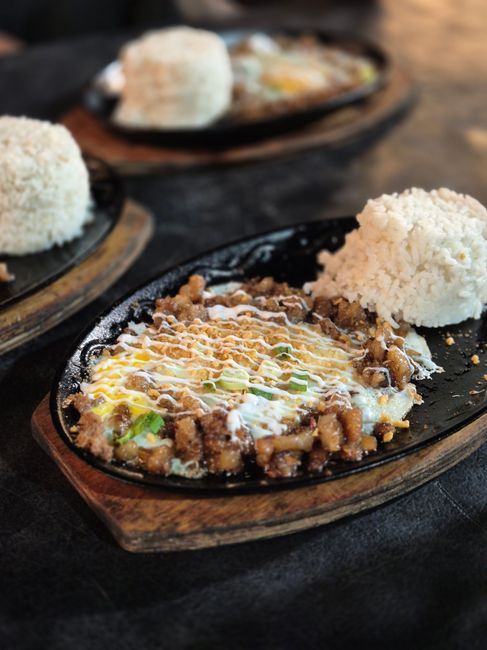
Sisig is a Filipino dish of chopped, seasoned pork, traditionally made from pig's head and liver, that is boiled or braised, then grilled or seared, minced fine, and mixed with onion, chili, calamansi juice, and often mayonnaise or a raw egg stirred in tableside. It's served on a sizzling cast iron plate so it keeps cooking and crackling at the table. The name comes from the Kapampangan word for something sour or tangy, a reference to the calamansi and vinegar that cut through the richness of the pork.
Varieties
Sisig varies widely by region and cook: Pampanga-style sticks closest to pig's head, ears, and liver; Manila bar versions often lean on pork belly and mayonnaise for a creamier, milder result; seafood sisig (pusit or bangus/milkfish) swaps the pork out entirely but keeps the same onion-chili-calamansi base.
Buying tips
If buying pre-made sisig from a Filipino grocery or restaurant, look for one that's freshly seared rather than sitting in liquid, since sisig loses its crisp edges quickly once it's wet. If sourcing pig's head or ears to cook it yourself, ask the butcher to clean and split it, which saves significant prep time.
Substitutes
Chicken sisig (thigh meat, skin, and cartilage) — 1:1 by weight
Uses the same seasoning and searing method with chopped chicken thigh and skin instead of pork head; lighter and cooks faster, but loses the gelatinous chew of the original.
Pork belly and pork liver, chopped — 1:1 by weight
A common home-cook shortcut when pig's head isn't available; belly gives fat and char, liver adds the mineral depth the original relies on.
Tofu sisig (firm tofu, pressed and pan-fried) — 1:1 by weight
A vegetarian version; press tofu well and fry until the edges are crisp before adding the same onion, chili, and calamansi mix so it doesn't turn watery.
Canned tuna or pusit (squid) sisig — 1:1 by weight
Common bar-food variants in the Philippines; drain canned tuna well and sear briefly so it doesn't go mushy under the sauce.
Storage
Cooked sisig keeps in an airtight container in the refrigerator for 3 to 4 days. Keep any mayonnaise or raw egg mixed in only for the portion being served immediately, since dressed sisig turns watery and doesn't reheat well.
How to use
Serve straight off the sizzling plate with rice and calamansi, or use cooled leftovers as a filling for tacos, a topping for fries or nachos, a mix-in for fried rice (sisilog-style with garlic rice and a fried egg), or stuffed into a burrito or gyoza wrapper.
What it pairs with
Pairs with steamed or garlic-fried rice, a cold pilsner-style beer, and extra calamansi or spiced vinegar on the side for dipping.
Nutrition
Traditional pork sisig is rich in protein and fat from pork skin, liver, and cheek, and can run high in sodium and cholesterol depending on how much liver and mayonnaise are used; chicken or tofu versions cut fat significantly while keeping the same seasoning profile.
FAQ
What part of the pig is traditionally used in sisig?
Classic sisig uses boiled pig's head (cheek and ear) and pig liver, which are then grilled and minced fine before being mixed with the seasonings.
Why is sisig served on a sizzling plate?
The hot cast iron keeps searing the meat at the table, crisping the edges further and keeping a raw egg cracked on top cooking as diners mix it in.
Is sisig always spicy?
It's typically seasoned with sliced siling labuyo (bird's eye chili), but the heat level varies by cook and can easily be left out or served on the side.
Can sisig be made without mayonnaise?
Yes, mayonnaise is a modern addition used mainly in Manila-style versions; traditional Kapampangan sisig relies on calamansi juice, vinegar, and pork liver for richness instead.
Have sisig on hand? Find recipes with our Recipe Generator →