
Smoked Ribs
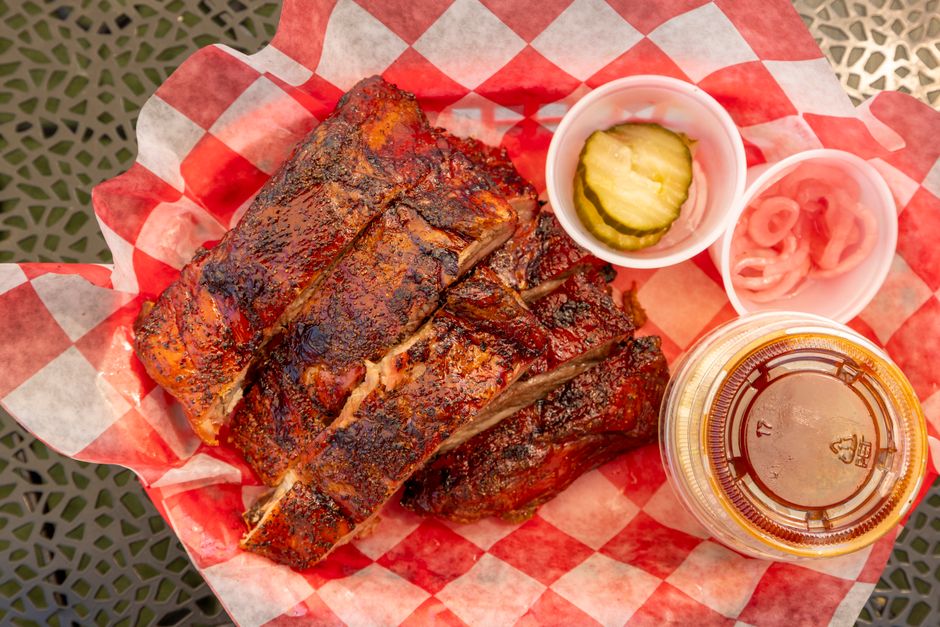
Smoked ribs are pork ribs, most often baby back or spare ribs, cooked low and slow (225-250°F) over indirect heat with wood smoke for several hours until the connective tissue breaks down and the meat pulls cleanly from the bone. The slow cook builds a dark, seasoned crust called bark on the outside and a pink band just beneath it, the smoke ring, caused by a chemical reaction between smoke and myoglobin in the meat.
Varieties
Baby back ribs come from the top of the rib cage near the loin, are shorter and more curved, cook faster, and are leaner. Spare ribs come from the belly area, are longer, flatter, and fattier with more connective tissue, giving a richer flavor but needing a longer smoke. St. Louis-style ribs are spare ribs trimmed into a neat rectangle with the rib tips removed. Country-style ribs aren't true ribs at all, they're cut from the shoulder blade end and are meatier, more like a pork chop.
Buying tips
Look for racks with meat covering most of the bones rather than mostly bone showing through, and check for even marbling without large hard fat deposits. Avoid packages sitting in a pool of pink liquid, which usually signals the ribs were previously frozen and thawed. Ask the butcher to remove the thin membrane on the bone side, or do it yourself with a paper towel for grip.
Substitutes
Oven-baked ribs with liquid smoke — 1:1 by weight, plus 1/4 tsp liquid smoke per rack
Bake wrapped in foil at 300°F for about 2.5 hours, then finish uncovered under the broiler with sauce. Won't build real bark, but gets close on flavor.
Grilled ribs with a wood chip packet — 1:1 by weight
Set up a charcoal or gas grill for indirect heat, add a foil packet of soaked wood chips, and cook covered at 250°F. Closer to true smoked flavor than an oven, though total cook time is usually shorter than a dedicated smoker.
Store-bought pre-smoked ribs, reheated — 1:1 by weight
Fully cooked ribs sold in the meat case just need reheating, not cooking. Wrap in foil with a splash of broth and warm at 250°F for 30-40 minutes.
Smoked pulled pork shoulder — 1:1 by weight
Works in recipes that call for shredded or chopped smoked rib meat, such as baked beans or sandwiches, but the texture is shreddy rather than sliced off the bone.
Storage
Refrigerate cooked ribs wrapped tightly in foil or an airtight container for 3-4 days. For longer storage, wrap racks or portions in plastic then foil and freeze for up to 3 months; thaw overnight in the refrigerator before reheating.
How to use
Serve whole with barbecue sauce on the side, chop the meat for sandwiches and tacos, pull it into baked beans or mac and cheese, or toss chunks into fried rice and ramen for smoky depth.
What it pairs with
Pairs well with vinegar-based coleslaw, cornbread, baked beans, and dill pickles to cut the richness. A tangy or bourbon-spiked barbecue sauce, cold beer, or sweet tea rounds out the meal.
Nutrition
Ribs are calorie-dense and high in protein, with fat content depending on the cut, spare ribs run fattier than baby backs. Dry rubs and barbecue sauce add significant sodium and sugar, so a 3-4 rib serving with sauce can easily run 600-800 calories.
FAQ
How long does it take to smoke ribs?
At 225-250°F, baby back ribs typically take 4-5 hours and spare or St. Louis-cut ribs take 5-6 hours. Many pitmasters use the 3-2-1 method for spare ribs (3 hours smoking, 2 hours wrapped in foil, 1 hour unwrapped to firm the bark) or 2-2-1 for baby backs.
What temperature should smoked ribs be pulled at?
Ribs are safe to eat at 145°F, but they're tough at that point. Pull them between 195-203°F internal, when the connective tissue has broken down enough that the meat bends and cracks slightly when lifted with tongs (the bend test).
Do you need a smoker to get smoked ribs?
A dedicated smoker gives the longest, most even smoke exposure, but a charcoal or gas grill set up for indirect heat with a wood chip packet can produce a similar bark and smoke flavor in a shorter cook.
How do you reheat smoked ribs without drying them out?
Wrap the ribs in foil with a splash of broth or apple juice and reheat in a 250°F oven for 25-35 minutes. Avoid the microwave, which toughens the meat and breaks down the bark.
What's the difference between baby back and spare ribs for smoking?
Baby back ribs are leaner and cook faster with a milder flavor, while spare ribs have more fat and connective tissue, giving a richer, juicier result but requiring a longer cook time to become tender.
Have smoked ribs on hand? Find recipes with our Recipe Generator →