
Steelhead Trout
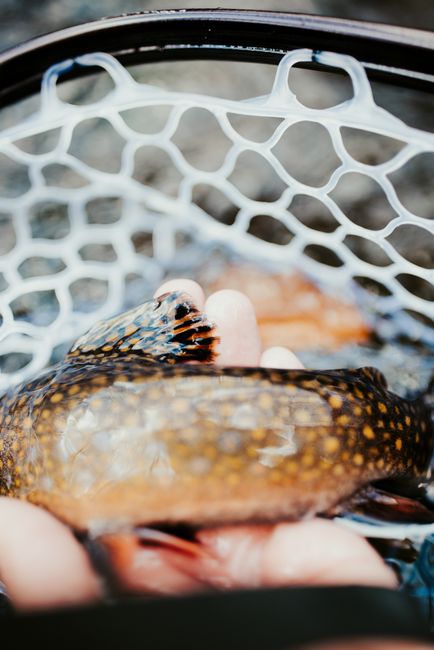
Steelhead trout (Oncorhynchus mykiss) is a rainbow trout that migrates to the ocean and back to freshwater to spawn, which gives its flesh a color and richness much closer to salmon than to typical freshwater trout. The flesh ranges from pale pink to deep orange-red depending on diet, with a milder, less fishy flavor than most salmon and a finer, more delicate flake.
Varieties
Steelhead trout and rainbow trout are genetically the same species; the difference is entirely lifestyle. Steelhead migrate to the ocean (or a large lake, for landlocked strains) and return to freshwater to spawn, which builds up fat and pigment that gives the flesh its salmon-like color. Rainbow trout spend their whole lives in freshwater and stay smaller and paler. Steelhead is not a salmon, though it's in the same genus and often shelved near salmon for its similar look and use.
Buying tips
Look for firm, moist flesh with a bright, even color and no browning at the edges; the skin should be shiny and intact. Most steelhead sold in the U.S. is farm-raised (often labeled 'steelhead' or 'ocean trout'), which is typically consistent in quality and a more sustainable choice than many farmed salmon options.
Substitutes
Sockeye or coho salmon — 1:1 by weight
Closest flavor match; sockeye is leaner and slightly stronger-tasting, coho is milder and closer to steelhead's richness.
Arctic char — 1:1 by weight
Very similar color, fat content, and mild flavor; often sold at a similar price point and cooks the same way.
Farmed rainbow trout — 1:1 by weight
Milder and paler than steelhead since it never migrates to saltwater, but works fine in any recipe calling for steelhead, just expect less richness.
King (chinook) salmon — 1:1 by weight
Fattier and more assertive in flavor than steelhead, so best in dishes where a bolder, richer fish is welcome.
Storage
Fresh steelhead trout keeps in the coldest part of the refrigerator, wrapped tightly or set on ice, for 1 to 2 days. For longer storage, freeze in an airtight, vacuum-sealed bag for up to 3 months; thaw overnight in the refrigerator rather than at room temperature.
How to use
Cooks the same as salmon: pan-sear skin-side down for a crisp finish, roast at 400°F for 12 to 15 minutes per inch of thickness, or grill on cedar planks. Its thinner flesh cooks faster than most salmon, so check for doneness a few minutes early. Also good raw as sashimi or cured for gravlax if labeled sushi-grade.
What it pairs with
Pairs well with lemon, dill, capers, and brown butter, and with sides like roasted asparagus, farro, or a cucumber-yogurt salad. Holds up to bolder glazes such as miso or maple-soy without losing its delicate texture.
Nutrition
Steelhead trout is a strong source of omega-3 fatty acids, high-quality protein, and vitamin D, with a fat content similar to coho salmon, generally leaner than farmed Atlantic salmon.
FAQ
Is steelhead trout the same as salmon?
No. Steelhead is a trout species (Oncorhynchus mykiss) that happens to migrate like salmon do, which is why its flesh looks and cooks similarly, but it's not a salmon species.
Why is steelhead trout pink like salmon?
Its ocean-going diet of krill and small crustaceans is rich in astaxanthin, the same pigment that colors salmon flesh; landlocked rainbow trout lack this diet and stay pale.
Is farmed steelhead trout a sustainable choice?
Most farmed steelhead in the U.S. is raised in freshwater net pens or recirculating systems with lower environmental impact than many open-ocean salmon farms, and it's commonly rated a 'best choice' by seafood sustainability guides.
Can steelhead trout be eaten raw?
Yes, if it's labeled sushi-grade or has been previously frozen to eliminate parasites, which is standard practice for farmed steelhead sold for raw preparations.
Have steelhead trout on hand? Find recipes with our Recipe Generator →