
Stilton
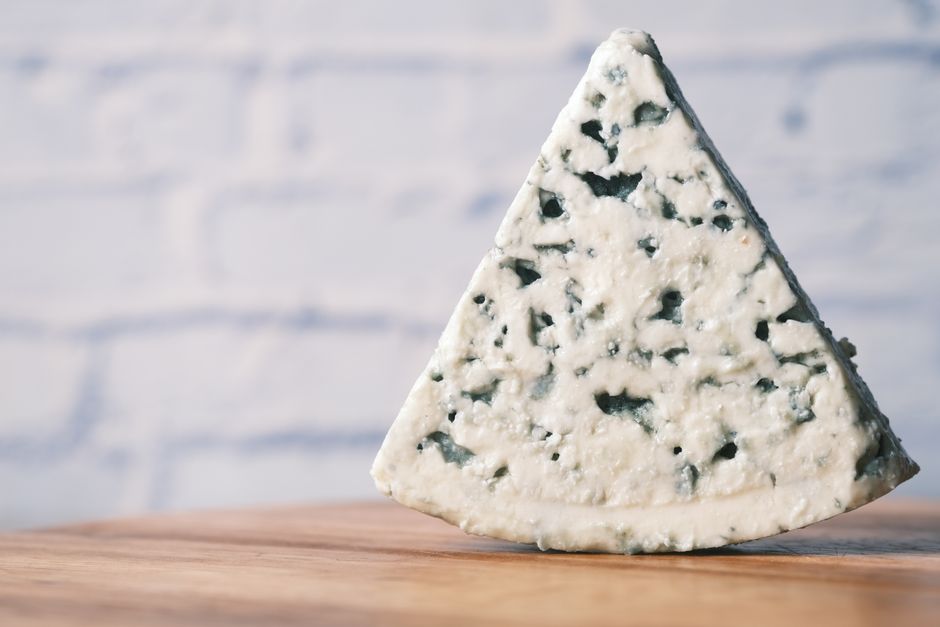
Stilton is an English blue cheese made from pasteurized cow's milk, protected by law so that only cheese made in Derbyshire, Leicestershire, or Nottinghamshire can carry the name. Blue Stilton has a firm, crumbly ivory paste threaded with blue-grey veins from Penicillium roqueforti, giving it a sharp, salty, slightly metallic tang that's milder than Roquefort but stronger than Gorgonzola. White Stilton, made from the same recipe without the blue mold, is a younger, crumbly, mild cheese often sold studded with fruit or nuts.
Varieties
Blue Stilton is the familiar veined version; White Stilton is the same base recipe left unblued, resulting in a younger, milder, crumbly cheese often flavored with fruit like apricot or cranberry. Despite the name, White Stilton is not a lower-fat or diet cheese, just a different aging process.
Buying tips
Look for Stilton with visible, evenly distributed blue veining and a firm but slightly moist paste, not dry or crumbling apart. Buy from a cheese counter with good turnover if possible, since pre-cut wedges dry out on the edges within days. Genuine Stilton will carry the PDO mark; cheeses labeled "blue Stilton-style" made outside the protected region are legally barred from using the name.
Substitutes
Roquefort — 1:1
Sharper, saltier, and creamier since it's made from sheep's milk; reduce quantity slightly if the recipe is sensitive to salt.
Gorgonzola (piccante) — 1:1
Similar veining and a comparable tang, though somewhat softer and less crumbly than Stilton.
Danish Blue (Danablu) — 1:1
Softer and more assertively salty; good in dressings and melted sauces where texture matters less.
Blue cheese crumbles (generic supermarket blue) — 1:1
Milder and more uniform in flavor; add a pinch of extra salt to compensate.
Feta plus a pinch of blue cheese powder — 1:1
A workaround for a milder, tangy crumble when no blue cheese is on hand; won't replicate the veining or full flavor depth.
Storage
Wrap Stilton in wax or cheese paper rather than plastic, which traps moisture and speeds mold growth beyond the intended veining. Store in the refrigerator's cheese or vegetable drawer and use within one to two weeks of opening. It also freezes reasonably well for cooking use, crumbled and sealed in a freezer bag for up to two months, though texture suffers for a cheese board.
How to use
Serve Blue Stilton on a cheese board with port, walnuts, and pears, or crumble it into salads, over steak, or into a cream sauce for pasta. It melts well into soups (classic Stilton and broccoli soup) and sauces but can turn grainy if boiled hard, so stir it in off the heat or over low heat. White Stilton with apricots or cranberries is typically eaten on its own or in a cheese board rather than cooked.
What it pairs with
Pairs classically with port, especially tawny or vintage port, and also works with sweet dessert wines, dark honey, walnuts, celery, and ripe pears or figs. In cooking, it partners well with beef, broccoli, leeks, and cream-based sauces.
Nutrition
Stilton is calorie-dense and high in saturated fat and sodium, with about 100-110 calories per ounce. It's a good source of calcium and protein, and like most blue cheeses contains live mold cultures, so it's generally not recommended for pregnant women unless it's been cooked thoroughly.
FAQ
Is Stilton the same as blue cheese in general?
Stilton is one specific type of blue cheese, legally restricted to production in three English counties using a defined recipe. All Stilton is blue cheese, but not all blue cheese is Stilton.
Can you eat the rind of Stilton?
The rind is edible but has a much stronger, earthier flavor and drier texture than the paste; most people trim it off before eating or cooking with the cheese.
Why does my Stilton sauce turn grainy?
High heat causes the cheese's proteins to seize and separate. Add crumbled Stilton to a sauce off the heat or over low heat, stirring until just melted, rather than boiling it.
Is Stilton safe to eat while pregnant?
Standard advice is to avoid raw Blue Stilton during pregnancy due to its mold cultures and moisture content, but it's considered safe once thoroughly cooked into a hot dish.
Have stilton on hand? Find recipes with our Recipe Generator →