
Suadero
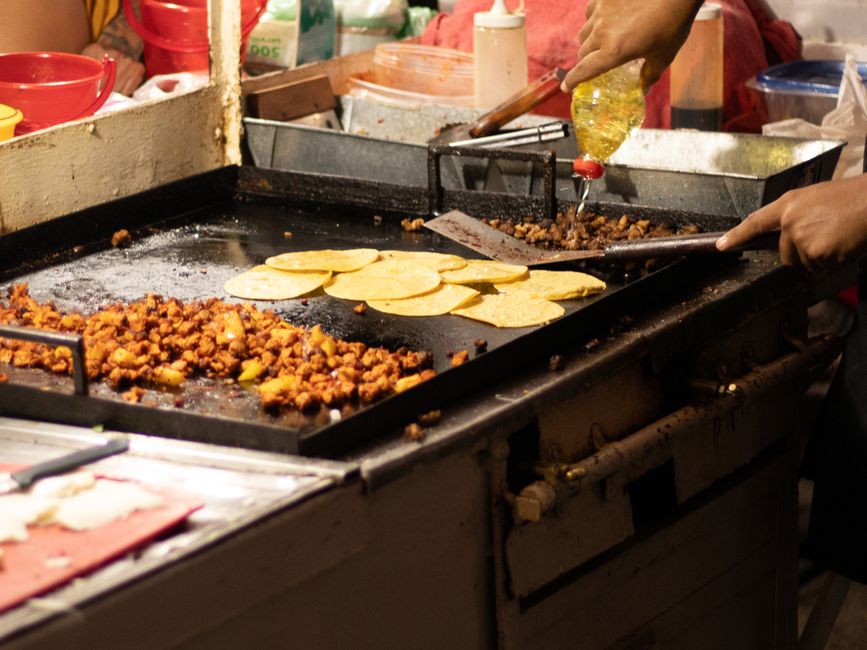
Suadero is a Mexican beef cut and preparation taken from the thin, well-marbled flap of muscle between the belly (flank) and the hind leg, sometimes called the beef flap or thin skirt. It's simmered low and slow in water and its own rendered fat until fork-tender, then chopped and fried on a hot griddle (plancha) until the edges crisp while the inside stays juicy. It's the defining meat of tacos de suadero, a staple of Mexico City taquerias.
Varieties
In parts of the U.S., "suadero" is sometimes used loosely to describe any beef flap or skirt-style taco meat, but the traditional Mexico City cut refers specifically to the thin muscle between the flank and the leg, distinct from skirt or flank steak proper.
Buying tips
Ask for suadero by name at a carniceria or Mexican market butcher counter since it isn't a cut most American grocery stores stock or label. Look for pieces with a visible fat cap and some marbling running through the meat; a piece that's too lean won't render enough fat to self-fry properly on the griddle.
Substitutes
Beef brisket (point cut) — 1:1 by weight
Fattier than lean brisket flat, which matches suadero's marbling; needs a longer simmer (about 2.5 to 3 hours) before it's ready to chop and crisp.
Skirt steak — 1:1 by weight
Thinner and cooks faster than true suadero; simmer time drops to around 1.5 hours and it still crisps well on the griddle.
Beef cheek — 1:1 by weight
Higher in natural gelatin, so it turns almost shreddable rather than sliceable; chop coarsely before griddling to get some crisp edges.
Flank steak — 1:1 by weight
Leaner than suadero, so it renders less of its own fat; add a spoonful of lard or oil to the griddle so the edges still crisp instead of drying out.
Pork shoulder — 1:1 by weight
Not authentic (this shifts the taco toward a carnitas style), but the fat content and texture after simmering are close if beef isn't available.
Storage
Raw suadero keeps 3 to 4 days in the coldest part of the refrigerator and up to 3 months frozen, tightly wrapped. Cooked suadero holds in the fridge for 3 to 4 days; reheat in a hot skillet with a little of its own fat or a splash of oil so the edges re-crisp instead of steaming soft.
How to use
Simmer whole or in large pieces in water seasoned with salt, garlic, and bay leaf until tender, then chop and finish on a very hot griddle or cast-iron skillet in some of the rendered fat until the edges brown and crisp. Serve on small warmed corn tortillas with diced white onion, cilantro, and salsa. It's specific to tacos and rarely used in stews or roasts since the whole point of the cut is the braise-then-crisp technique.
What it pairs with
Pairs with the classic taco garnishes: diced white onion, chopped cilantro, salsa verde or salsa roja, and a squeeze of lime. Works well alongside refried beans, rice, or a simple cucumber and radish salad to cut the richness.
Nutrition
Suadero comes from a fatty section of the animal, so it's more calorie-dense than leaner cuts like flank or top round, but it's still a solid source of protein and iron. Portion control matters more than cut choice if fat intake is a concern; leaner substitutes like flank steak cut calories noticeably.
FAQ
What part of the cow is suadero?
It comes from the thin flap of muscle located between the belly (flank area) and the hind leg, sometimes referred to as the beef flap or thin skirt.
Is suadero the same as brisket?
No, they're different cuts, but brisket point has similar fat marbling and is one of the closest common substitutes when suadero isn't available.
Why is suadero cooked in two stages instead of just grilled?
The simmering stage breaks down the connective tissue so the meat is tender, and the griddle stage in the leftover fat crisps the exterior; skipping either step gives either a tough taco or a dry one.
Can suadero tacos be made without a flat griddle?
Yes, a wide cast-iron or stainless skillet over medium-high heat works the same way; the key is enough surface contact and hot fat to crisp the chopped meat rather than steam it.
Have suadero on hand? Find recipes with our Recipe Generator →