
Szechuan Beef
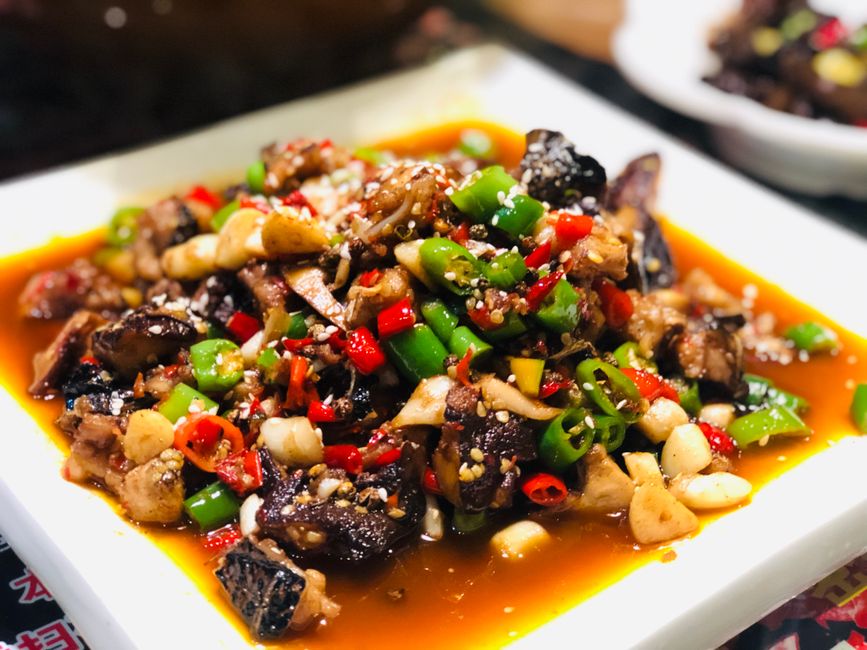
Szechuan beef is a stir-fried dish of thinly sliced beef (usually flank or flap steak) cooked with dried red chilies, garlic, ginger, and often Szechuan peppercorns, finished in a sauce built from soy sauce, vinegar, sugar, and chili oil. The defining trait is 'ma la,' the numbing-and-spicy combination that comes from Szechuan peppercorns paired with dried chilies, which sets it apart from the sweeter, sticky-glazed beef dishes common on Chinese-American menus.
Varieties
Szechuan beef is distinct from General Tso's or orange beef, which are sweeter, battered, and deep-fried; Szechuan beef is typically unbattered, stir-fried, and built around dried chilies and peppercorns rather than a sugar-forward glaze. Hunan beef is a close cousin but usually skips the numbing peppercorns and leans more purely spicy and vinegary.
Buying tips
For homemade versions, buy flank or flap steak with visible marbling and slice it thin against the grain while partially frozen for cleaner cuts. Whole dried Szechuan chilies and Szechuan peppercorns are sold at Asian grocery stores and keep far longer, and taste fresher, than pre-ground versions.
Substitutes
Flank steak swapped for skirt steak or sirloin tip — 1:1 by weight
Skirt steak has more grain and needs to be sliced thinner against the grain; sirloin tip is leaner and cooks slightly faster.
Szechuan peppercorns replaced with a pinch of black pepper plus a few drops of lemon juice — 1/2 teaspoon black pepper per 1 teaspoon Szechuan peppercorns
This won't reproduce the tingling numbness, but it approximates the peppery bite; there's no true one-to-one substitute for the numbing effect.
Dried chilies replaced with red pepper flakes — 1 teaspoon flakes per 3-4 whole dried chilies
Flakes distribute heat more evenly through the dish but lose the visual and textural element of whole chilies; add toward the end of cooking to avoid scorching.
Chili oil replaced with neutral oil plus extra red pepper flakes — 1 tablespoon oil plus 1/2 teaspoon flakes per 1 tablespoon chili oil
Loses some of the toasted, slightly numbing flavor chili oil carries from steeping with Szechuan peppercorns.
Storage
Refrigerate leftover Szechuan beef in an airtight container for up to 3 days. The beef toughens as it cools, so reheat gently in a covered skillet with a splash of water or broth rather than the microwave on high, which dries it out further.
How to use
Served over steamed white or brown rice to soak up the sauce, tossed with lo mein noodles, or spooned over stir-fried bok choy or green beans to balance the heat. Leftover beef also works chopped into fried rice the next day.
What it pairs with
Pairs well with something cooling to offset the heat, like cucumber salad, plain steamed rice, or a mild broth-based soup. A crisp lager or unsweetened iced tea also cuts through the numbing spice better than sweeter drinks.
Nutrition
A typical restaurant portion is high in sodium from soy sauce and chili oil, and the beef itself is a good source of protein and iron. Made at home, sodium and oil can be scaled back significantly by using low-sodium soy sauce and measuring oil rather than pouring freehand.
FAQ
What makes Szechuan beef spicy in a different way than other hot dishes?
Szechuan peppercorns contain hydroxy-alpha-sanshool, a compound that triggers a tingling, numbing sensation on the tongue rather than pure heat, which is why the dish is described as 'ma la' (numbing-spicy) instead of just spicy.
Is Szechuan beef the same as Szechuan chicken with a different protein?
The sauce and technique are usually the same, but beef is cut thinner and often velveted (coated in cornstarch and briefly marinated) to stay tender through the high-heat stir-fry, a step chicken doesn't need as urgently.
Why does restaurant Szechuan beef taste more tender than homemade versions?
Restaurants typically velvet the beef, marinating thin slices in a mixture of cornstarch, egg white, and a little oil or wine before a quick pass through hot oil, which seals in moisture before the final stir-fry.
Can Szechuan beef be made without any numbing peppercorns at all?
Yes, though it becomes closer to a standard spicy stir-fried beef; the dish will still taste good with dried chilies and garlic alone, it just loses the signature tingling sensation that defines authentic Szechuan cooking.
Have szechuan beef on hand? Find recipes with our Recipe Generator →