
Tocino
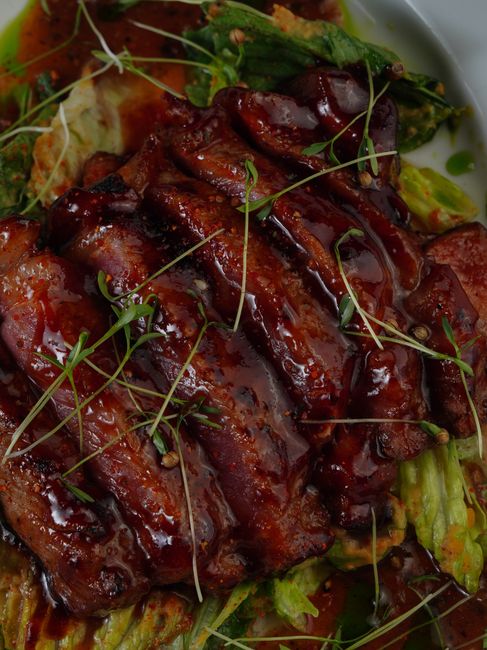
Tocino is a Filipino cured pork product, thin slices or cubes of pork marinated in sugar, salt, garlic, and often a curing salt or annatto that gives it a signature pink-red color. It's sweet rather than smoky, and it's cooked by simmering in a little water until the liquid evaporates, then frying in the rendered fat until the sugar caramelizes into a sticky, slightly charred glaze.
Varieties
Pork tocino is the traditional version, but chicken tocino and beef tocino are common leaner alternatives sold alongside it. Some regional recipes swap plain sugar for pineapple juice, which adds sweetness and helps tenderize the meat during curing.
Buying tips
Find tocino frozen or vacuum-packed at Filipino and Asian grocery stores. Look for visible lean meat marbled through the fat rather than mostly fat trimmings, and check the ingredient list if avoiding added nitrites or artificial coloring.
Substitutes
Filipino longganisa (sweet garlic sausage) — 1:1 by weight
Already in sausage form rather than sliced meat, but shares the same sweet, garlicky cure and caramelizes the same way in a pan.
Chinese sausage (lap cheong) — 1:1 by weight
Sweeter and fattier than tocino, with a firmer, drier texture. Slice thin and fry the same way; works well in fried rice.
Canadian bacon or ham glazed with brown sugar — 1 lb ham plus 3 tablespoons brown sugar and 1 teaspoon garlic powder per 1 lb tocino called for
Simmer sliced ham with the sugar and garlic powder until the liquid reduces to a glaze; it won't have tocino's chew but gets close on flavor.
Homemade quick-cured pork shoulder — not a fixed ratio
Marinate thin pork shoulder strips overnight in brown sugar, soy sauce, minced garlic, and a splash of pineapple juice, then cook the same way as store-bought tocino.
Storage
Raw marinated tocino keeps in the refrigerator for 3 to 4 days or in the freezer for up to 3 months; freeze in a flat layer so pieces separate easily. Cooked tocino keeps refrigerated for 3 to 4 days in a sealed container.
How to use
Simmer sliced or cubed tocino in a skillet with a few tablespoons of water over medium heat until the water cooks off, then let it fry in its own fat until browned and caramelized on both sides, about 10 to 15 minutes total. Serve with garlic fried rice and a fried egg (tocilog), tuck into a pandesal sandwich, or chop into fried rice.
What it pairs with
Pairs with garlic fried rice (sinangag), a fried egg, and a vinegar-garlic-chili dipping sauce to cut the sweetness. Also good in a simple pandesal sandwich with a slice of tomato.
Nutrition
Tocino is high in sodium and added sugar from the cure, and fat content varies widely depending on whether it's made from pork shoulder, belly, or trimmed leaner cuts.
FAQ
What cut of pork is tocino usually made from?
Pork shoulder or pork belly, sliced thin or cut into cubes before curing, since both have enough fat to stay moist through the simmer-then-fry cooking method.
Is tocino the same thing as bacon?
No. Bacon is smoked and savory, cured with salt and sometimes sugar, while tocino is sweet-forward, unsmoked, and cooked by simmering then pan-frying rather than baking or pan-frying raw slices.
Why is tocino pink or red?
The color traditionally comes from curing salt (saltpeter) or added annatto, sometimes just food coloring in commercial versions. It doesn't affect flavor, only appearance.
Do you need to add water when cooking tocino?
Most recipes add a few tablespoons of water to the pan first so the meat cooks through gently before the water evaporates and the sugars start to caramelize in the rendered fat; skipping the water risks burning the sugar before the meat is cooked.
Have tocino on hand? Find recipes with our Recipe Generator →