
Tuile
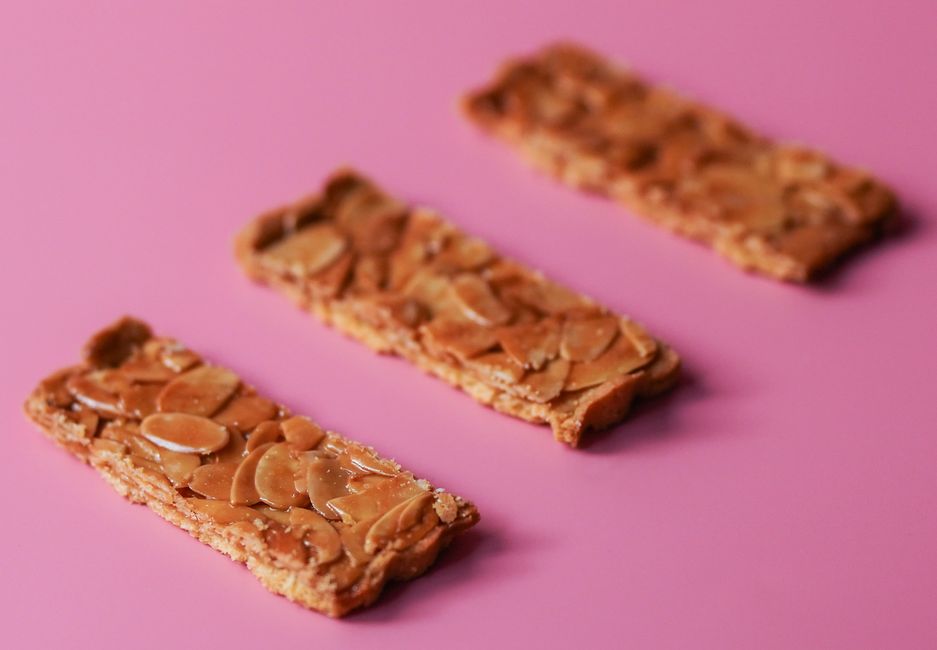
A tuile is a very thin, crisp wafer, usually sweet, made from a simple batter of butter, sugar, egg whites, and flour (often with sliced almonds folded in). The name comes from the French word for roof tile, because the classic version is shaped over a rolling pin or curved mold while still warm from the oven so it hardens into a gentle curve. Tuiles are almost never eaten alone; they're built as a textural garnish, a crisp element set against something soft like mousse, panna cotta, or ice cream.
Varieties
Classic tuile aux amandes uses a batter with enough flour to hold together in a solid sheet studded with sliced almonds. Lace tuiles (also called tejas or florentine-style lace cookies) use less flour and more butter and sugar, so the batter spreads thin and caramelizes into a web of holes, making them thinner and more brittle than a standard tuile. Savory tuiles swap the sugar for cheese or seed-based batters and are a modern addition built for plated savory courses rather than dessert.
Buying tips
Premade tuiles are rarely sold outside specialty bakeries because they're too fragile to ship or shelf-stock. If buying, look for ones packaged flat with a moisture absorber and no visible condensation inside the wrapper; otherwise, they're one of the few garnishes better made fresh at home since the batter itself takes only a few minutes to mix.
Substitutes
Brandy snap or florentine lace cookie — 1:1 by piece
Also thin and shatteringly crisp and can be shaped warm the same way, but tends to be chewier at the center and has a more caramelized, buttery flavor than a plain tuile.
Sugared phyllo crisp — 1:1 by piece
Layer phyllo sheets with melted butter and a dusting of sugar, bake flat until golden. Much faster than making tuile batter, though the texture is flakier and less glassy.
Parmesan crisp (for savory plating) — 1:1 by piece
Only suitable where the dish calls for a savory tuile, such as soup or salad garnishes; melted and baked parmesan sets into a similarly thin, brittle disc.
Store-bought pizzelle, broken into shards — 1:1 by piece
The fastest fix when there's no time to bake. Pizzelle are thicker and often anise-flavored, so they read as a rustic stand-in rather than a true match.
Storage
Tuiles are highly hygroscopic and start softening within an hour of exposure to air, faster in humid kitchens. Store them in an airtight container at room temperature, separated by layers of parchment, ideally with a silica gel packet or a few grains of uncooked rice to absorb moisture. They're best used the same day they're baked; even sealed, most lose their snap within 24 to 48 hours.
How to use
Used almost entirely as a plated garnish rather than a stand-alone snack. Warm tuiles can be draped over a rolling pin for a curved shape, pressed into a small bowl to form a cup for mousse or sorbet, or rolled around a dowel into a cigarette shape for piping cream inside. Savory versions (parmesan, black sesame, squid ink) are shaped the same way but garnish soups, salads, or seafood plates instead of desserts.
What it pairs with
Almond or plain tuiles pair naturally with creamy, cold desserts like panna cotta, mousse, and ice cream, and with stone fruit or citrus components. Savory tuiles made with parmesan, sesame, or cracked pepper pair with pureed soups, seared scallops, or composed salads where a crisp contrast is needed.
Nutrition
A classic tuile batter is mostly butter, sugar, egg whites, and flour, so it's calorie-dense by weight. In practice a single tuile weighs only a few grams and is eaten as garnish, so its actual contribution to a dish's nutrition is minor compared to the main component it accompanies.
FAQ
Why does a tuile go soft so fast?
Sugar is hygroscopic and pulls moisture straight out of the air, so an unprotected tuile can lose its crispness within an hour, especially in a humid kitchen.
How do you shape a tuile while it's hot?
Batter needs to be draped over a rolling pin, bottle, or curved mold within a few seconds of coming out of the oven; it sets firm within about 30 to 60 seconds, so shaping has to happen fast and usually one piece at a time.
Can tuiles be made a day ahead?
Yes, if stored airtight with a moisture absorber like silica gel or rice, but expect some softening within 24 to 48 hours even under good conditions.
What's the actual difference between a tuile and a lace cookie?
Lace cookies use a batter with less flour relative to butter and sugar, so they spread thinner and caramelize into a web of holes, making them more fragile and less structurally solid than a classic tuile.
Have tuile on hand? Find recipes with our Recipe Generator →