
Tuna Tataki
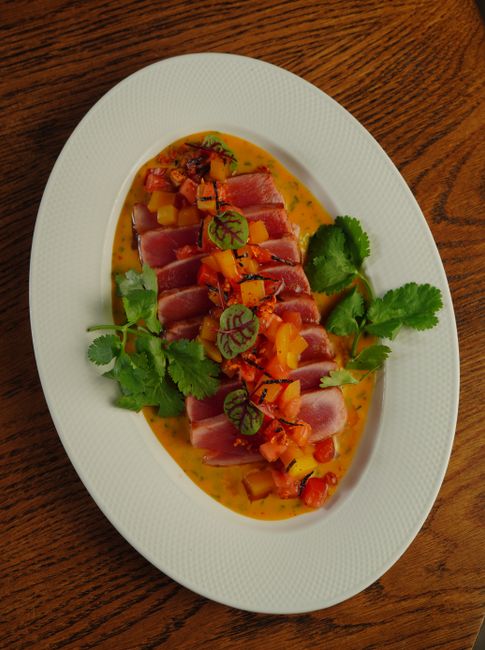
Tuna tataki is a Japanese preparation in which a block of sushi-grade tuna (usually ahi/yellowfin or bigeye) is seared very briefly on the outside, just seconds per side over high heat, while the interior stays raw and cool. The seared block is chilled quickly, then sliced thin against the grain. The name comes from the Japanese verb tataku, to pound or strike, referring to the traditional method of lightly pounding the fish with the flat of a knife or scoring it before searing, though most home versions skip that step and just sear and slice.
Varieties
Tataki is often confused with sashimi and poke. Sashimi is entirely raw with no searing at all; poke is raw tuna cut into cubes and tossed with a marinade rather than seared and sliced. Tataki specifically refers to the sear-then-slice method, regardless of the fish used.
Buying tips
Buy tuna specifically labeled sushi-grade or sashimi-grade from a fishmonger you trust; this labeling isn't an official USDA grade but signals the fish was handled and often flash-frozen to standards safe for raw consumption. Choose a block (loin) rather than pre-cut steaks so you get clean, even slices, and look for deep red color without brown edges or a strong fishy smell.
Substitutes
Sushi-grade salmon — 1:1 by weight
Milder and fattier than tuna; sears the same way but the interior color turns more pink-orange than red once chilled.
Sushi-grade albacore tuna — 1:1 by weight
Paler flesh and a milder, almost creamy flavor compared to yellowfin or bigeye; sears and slices the same way.
Hamachi (yellowtail) — 1:1 by weight
Richer and fattier than tuna; a common substitution in Japanese restaurants for a tataki course.
Firm tofu, pressed and marinated — 1:1 by weight
Not a flavor match, but a workable vegetarian version of the seared-outside, cool-inside format; marinate in soy sauce and mirin before searing.
Storage
Raw tuna intended for tataki should be used the day it's bought, or within a day of freezing and thawing if it was previously frozen for sushi safety. Once seared and sliced, tataki doesn't keep well; the raw center continues to lose texture in the refrigerator and should be eaten within a few hours, not stored overnight.
How to use
Serve tataki thin-sliced with a dipping sauce of soy sauce, rice vinegar, and grated ginger or garlic, often called ponzu when citrus juice is added. It works as an appetizer plated with microgreens or shredded daikon, over a rice bowl in place of poke, or tossed into a simple salad with sesame oil and cucumber.
What it pairs with
Pairs well with soy-based dipping sauces, wasabi, pickled ginger, sesame oil, scallions, and citrus like yuzu or lime. A crisp, acidic side such as cucumber salad or shredded daikon balances the richness of the seared crust.
Nutrition
Tuna is a lean, high-protein fish; a typical 4-ounce (115 g) serving of tataki has around 25-30 grams of protein and under 3 grams of fat, plus meaningful amounts of selenium and vitamin B12. Because the interior is raw, it carries the same mercury and food-safety considerations as any raw tuna preparation.
FAQ
Do I need special equipment to make tuna tataki at home?
A very hot cast iron or stainless skillet and an ice bath are the only real requirements. The sear needs to happen fast, about 10-15 seconds per side, so the pan must be smoking hot before the fish goes in.
Is tuna tataki safe to eat if I'm not using a sushi-grade label?
It carries real risk. Tataki still has a raw or barely-cooked interior, so it should only be made with fish that's been previously frozen at very low temperatures (commercial flash-freezing, not a home freezer) to kill parasites, which is what sushi-grade labeling is meant to indicate.
Why does my seared tuna turn gray instead of staying red inside?
This usually means the fish was seared too long or the pan wasn't hot enough, letting heat travel further into the flesh. Sear in a very hot pan for only a few seconds per side, then transfer immediately to an ice bath to stop the cooking.
Can I make tataki with frozen tuna from the grocery store?
Yes, as long as it's labeled for raw consumption or previously frozen to sushi-safety standards; thaw it slowly in the refrigerator, never at room temperature, and use it within a day of thawing.
Have tuna tataki on hand? Find recipes with our Recipe Generator →