
Turkish Tea
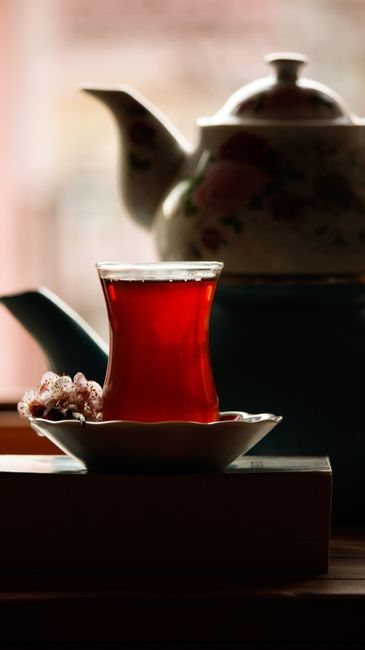
Turkish tea, known as çay, is a strong black tea grown mainly around Rize on Turkey's Black Sea coast. It's brewed using a çaydanlık, a stacked double teapot where a small pot of concentrated tea sits on top of a larger pot of simmering water, then diluted glass by glass to the drinker's preferred strength. The result is a deep amber-red tea served in small tulip-shaped glasses, unsweetened by the pot but usually taken with a cube or two of sugar and never milk.
Varieties
Rize-grown tea is the standard for Turkish çay and tends to be more full-bodied than Ceylon-style black teas used elsewhere; within Rize tea itself, first-flush spring leaves are considered more delicate than later summer harvests, which brew darker and more astringent.
Buying tips
Look for tea labeled from Rize or simply 'Turkish çay' with small, uniform, dark leaves rather than dusty fannings. Vacuum-sealed bags hold aroma better than tins that have already been opened at the store.
Substitutes
Assam loose-leaf black tea — 1:1 by volume
Similarly bold and malty with a strong reddish liquor, the closest match for both color and body when brewed strong in a double pot.
Ceylon loose-leaf black tea — 1:1 by volume
Brighter and slightly less malty than Rize tea, but still holds up well to the concentrate-and-dilute brewing method.
English Breakfast tea bags — 1.5:1 (use half again as many bags)
Convenient but generally milder than loose Turkish tea, so more bags are needed per pot to reach the same strong red color and intensity.
Russian caravan tea — 1:1 by volume
A blend that often includes a lightly smoky component, so it changes the aroma noticeably even though strength and color are close.
Instant black tea powder — to taste
Dissolves differently than steeped leaves and produces a flatter, less tannic cup, so it can't be measured against loose tea by a fixed ratio.
Storage
Keep loose Turkish tea in an airtight tin or resealable bag away from light, heat, and moisture. It stays fresh for 6 to 12 months; after that the leaves still work but the aroma fades noticeably.
How to use
Traditionally brewed only as a drink: black tea steeped strong in the top pot of a çaydanlık for 15 to 20 minutes, then diluted with hot water from the bottom pot to taste and served in small glasses with sugar cubes on the side. Strongly brewed Turkish tea can also stand in for strong black tea in iced tea, tea-based marinades, or tea-smoked dishes.
What it pairs with
Served alongside simit, börek, baklava, or a simple breakfast spread of cheese, olives, and bread. The tannic strength cuts through rich, buttery pastries well.
Nutrition
Brewed Turkish tea itself is essentially calorie-free; any calories in a served glass come from added sugar. Like other black teas it contains caffeine (roughly 40-70mg per glass depending on strength) and tannins that can bind to iron if drunk with iron-rich meals.
FAQ
Why is Turkish tea brewed in two stacked pots?
The top pot holds a small amount of water steeped with a large quantity of tea leaves to make a strong concentrate, while the bottom pot keeps plain water simmering; each glass is then built by pouring concentrate and diluting it with hot water, so guests can control strength.
Is Turkish tea stronger than regular black tea?
As typically served, yes. The concentrate itself is far stronger than a standard cup of steeped tea, but it's diluted with hot water at serving time, so the final glass can range from very strong to quite light depending on how much water is added.
Can Turkish tea be made with tea bags?
It can, though the flavor and color will be lighter than with loose Rize tea. Use extra bags and steep them directly in a small amount of near-boiling water for 10 to 15 minutes to approximate the concentrate step.
Why is Turkish tea never served with milk?
The tea is brewed specifically to be tannic and reddish, and milk would mute both the color and the astringency that sugar and a squeeze of lemon are meant to balance instead.
Have turkish tea on hand? Find recipes with our Recipe Generator →