
Veal
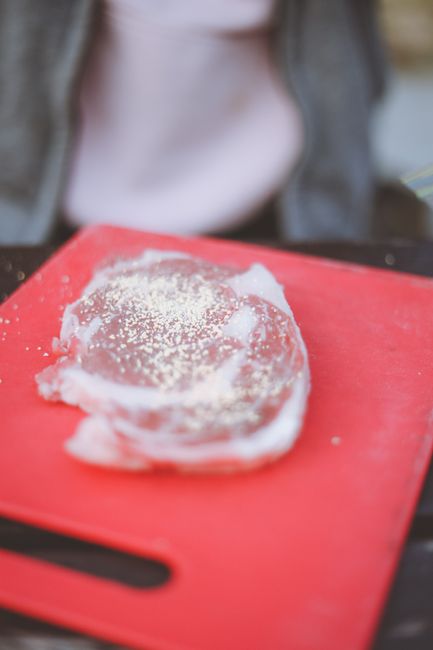
Veal is the meat of young cattle, typically slaughtered between a few weeks and a few months of age, before the muscle has developed the deeper color and stronger flavor of beef. It's pale pink to rosy red, very fine-grained, and low in fat, which makes it cook fast and go rubbery if overdone. Common cuts include scaloppine (thin pounded cutlets from the leg), chops, shank (used for osso buco), breast, and ground veal.
Varieties
'Milk-fed' or 'formula-fed' veal comes from calves raised on a milk diet and has very pale, almost white meat with a mild flavor. 'Grain-fed' or 'pasture-raised' veal comes from slightly older calves given some solid feed, resulting in a rosier color and more pronounced flavor closer to young beef.
Buying tips
Look for pale pink to light rose flesh with a fine, smooth grain and little visible fat marbling; deep red color usually means an older animal and a stronger flavor. Cutlets should feel moist but not wet or slimy, and shank bones should have visible marrow.
Substitutes
Chicken cutlets (breast, pounded thin) — 1:1 by weight
Closest substitute for veal scaloppine or piccata; pound to the same 1/4-inch thickness and reduce cook time slightly since chicken cooks a bit faster.
Turkey cutlets — 1:1 by weight
Very similar texture to veal once pounded thin; slightly more assertive flavor but works well in breaded or pan-fried preparations.
Pork loin cutlets — 1:1 by weight
Sweeter and slightly fattier than veal, but a good stand-in for schnitzel or scaloppine; pound thin and don't overcook.
Beef shank — 1:1 by weight
For osso buco or braises, beef shank gives a deeper, beefier flavor and needs a longer braise, often 30-45 minutes more, to reach the same fall-apart tenderness.
Ground turkey or ground chicken — 1:1 by weight
Substitute for ground veal in meatballs or meatloaf; add an extra egg or a splash of milk since these are leaner and can dry out.
Storage
Keep raw veal wrapped tightly in the refrigerator at or below 40°F (4°C) and use within 1-2 days for cutlets and ground veal, or 3-5 days for larger cuts like shanks and chops. Freeze for up to 6 months for cuts, 3 months for ground veal; thaw in the refrigerator overnight, never at room temperature.
How to use
Thin cutlets (scaloppine) are dredged and quickly pan-seared for dishes like veal piccata or Wiener schnitzel, usually just 1-2 minutes per side. Shanks are braised low and slow, 1.5 to 2 hours, for osso buco. Ground veal goes into meatballs, meatloaf, and bolognese, often blended with pork and beef for more fat and flavor.
What it pairs with
Pairs well with lemon, capers, white wine, sage, and butter for pan-fried preparations, or with tomato, garlic, and gremolata for braised dishes like osso buco. A dry white wine such as Pinot Grigio or a light Chianti complements most veal preparations.
Nutrition
Veal is lean and high in protein, roughly 24g per 3-ounce cooked serving, with less fat and fewer calories than most beef cuts. It's also a good source of B12 and zinc.
FAQ
Why does veal cost more than beef?
Veal calves are slaughtered young, so ranchers get less usable meat per animal and carry higher feed and labor costs relative to yield, which pushes the price per pound above most beef cuts.
Can I use veal and beef interchangeably in recipes?
Not directly for quick-cooking cuts. Veal cutlets are thinner and more delicate and will toughen with the longer cook times beef cutlets need; for braises like osso buco, beef shank works but needs extra braising time to break down.
Why does veal turn rubbery so easily?
Veal has very little intramuscular fat and fine muscle fibers, so proteins tighten and squeeze out moisture fast once the internal temperature climbs much past 145°F (63°C), especially in thin cutlets.
What's the difference between veal scaloppine and veal cutlets?
They're the same cut of meat, usually from the leg, but scaloppine refers specifically to cutlets pounded very thin (about 1/4 inch) for quick pan-frying, while 'cutlet' can describe a slightly thicker, unpounded slice.