
Wagyu Beef
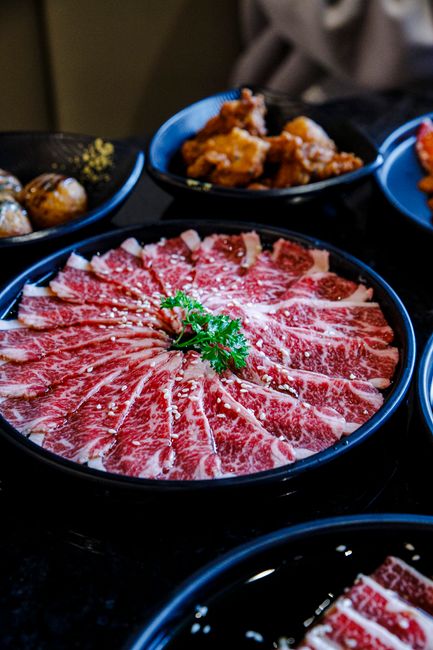
Wagyu refers to specific Japanese cattle breeds (and their American crossbred descendants) prized for intense intramuscular marbling, the white fat streaked through the muscle rather than sitting only around the edges. For burgers, ground wagyu typically comes from trim of chuck, brisket, or short rib and runs 25-35% fat by weight, noticeably higher than the 15-20% in standard ground beef. That extra fat melts at a lower temperature than regular beef fat, which is why a wagyu patty bastes itself as it cooks and stays juicy even at higher doneness.
Varieties
Japanese Wagyu (including the Kobe brand, which is legally restricted to cattle raised in Hyogo Prefecture) is full-blood and carries the most extreme marbling and cost. American Wagyu is typically a cross between Japanese wagyu and Angus cattle, giving a marbling boost over regular beef without the Kobe price tag, and it's what most wagyu burgers at restaurants and grocery stores actually use.
Buying tips
Check the package for a marbling or BMS (Beef Marbling Score) grade if it's American Wagyu; higher numbers mean more fat and a richer patty. Full-blood Japanese wagyu ground beef is expensive and arguably wasted in a burger with heavy toppings, so it's usually better value to save it for a simple preparation and use an American Wagyu blend for burgers instead.
Substitutes
80/20 ground chuck — 1:1 by weight
The closest practical substitute. Fat content is close enough that cook times barely change, though the flavor is beefier and less buttery.
70/30 ground chuck with 1 tablespoon cold butter worked in per pound — 1:1 by weight
Mimics wagyu's higher fat percentage and softer bite. Grate the butter frozen and fold it in just before forming patties so it doesn't melt into the meat prematurely.
Ground brisket, 25-30% fat — 1:1 by weight
Brisket has a similar fat-to-meat ratio to wagyu trim and a deeper, more mineral flavor. Grinds slightly coarser, so pack patties gently to avoid a crumbly texture.
American Wagyu blend (not full-blood) — 1:1 by weight
A crossbred wagyu-Angus blend, widely sold at grocery chains, that gets most of the marbling benefit at a fraction of the cost of Japanese wagyu.
Storage
Keep raw ground wagyu refrigerated at or below 40°F and use within 1-2 days, or freeze in flat, airtight packets for up to 3 months. Because of the higher fat content, it turns rancid faster than lean ground beef once thawed, so don't refreeze it after thawing.
How to use
Form patties loosely and season only with salt and pepper right before cooking; overworking wagyu meat smears the soft fat and makes patties dense. Cook over high, dry heat (cast iron or a hot grill) for a short time, since the fat renders quickly and can flare up or turn the patty greasy if cooked too slowly. Most cooks pull wagyu burgers at medium rather than well-done to keep the fat from cooking out entirely.
What it pairs with
Keep toppings simple so the fat isn't fighting other rich flavors: a plain bun, a slice of sharp cheddar or American cheese, and something acidic like pickles or a mustard-based sauce cuts through the richness better than bacon or extra cheese.
Nutrition
Wagyu's fat is higher in monounsaturated fat than standard beef fat, which is part of why it has a lower melting point and softer mouthfeel, but a wagyu burger is still calorie-dense: roughly 300-350 calories per 4-ounce raw patty before the bun and toppings.
FAQ
Is a wagyu burger worth the extra cost?
For flavor and juiciness, yes, especially with an American Wagyu blend; the fat renders into the meat instead of dripping away, so the patty stays moist even without heavy sauces. Full-blood Japanese wagyu is harder to justify in a burger format since toppings and bun mute its subtler qualities.
Why does my wagyu burger shrink so much on the grill?
placeholder
Have wagyu beef on hand? Find recipes with our Recipe Generator →