
Wild Salmon
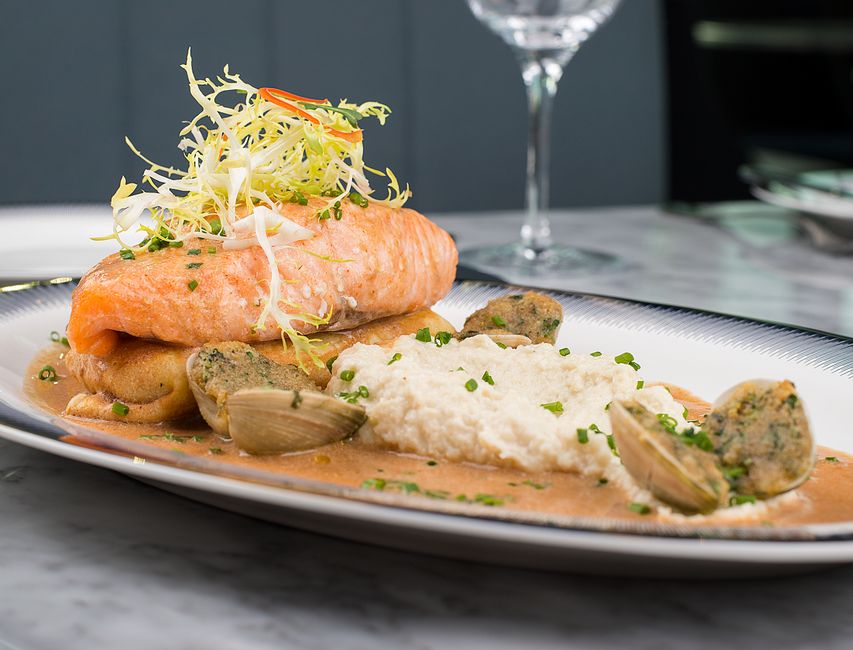
Wild salmon refers to any of several Pacific salmon species (Chinook/King, Sockeye, Coho, Pink, and Chum) caught in open water rather than raised in net pens. Because wild fish swim long distances and eat a natural diet of krill and smaller fish, the flesh is leaner, firmer, and more deeply colored than farmed Atlantic salmon, with a more pronounced, slightly briny flavor.
Varieties
The five common wild Pacific species differ meaningfully. King (Chinook) is the richest and fattiest, best for simple high-heat cooking. Sockeye has the deepest red color and a firm, slightly assertive flavor, and holds up well to grilling. Coho is milder and leaner than King or Sockeye. Pink and Chum are the mildest and leanest, most often canned rather than sold fresh.
Buying tips
Look for flesh that's firm and springs back when pressed, with no gapping between muscle segments and no strong fishy smell. Wild salmon's color varies naturally by species, from pale pink (Pink and Chum) to deep red (Sockeye), so color alone doesn't indicate freshness; check the sell-by date and ask if it was previously frozen, since most wild salmon sold outside peak season (roughly May through September) has been frozen and thawed.
Substitutes
Farmed Atlantic salmon — 1:1
Fattier and milder, cooks a bit more forgivingly since the extra fat guards against drying out, but lacks the firmer texture and deeper flavor of wild fish.
Arctic char — 1:1
Close in color and richness to sockeye, with a similarly firm texture; a good stand-in in any recipe calling for wild salmon.
Steelhead trout — 1:1
Same family as salmon, pink-orange flesh, slightly milder flavor, and usually cheaper.
Canned wild pink or sockeye salmon — 1 (6 oz) can per 6 oz fresh fillet
Works for salmon cakes, salads, and dips, not for dishes where a seared or roasted fillet is the point.
Storage
Keep fresh wild salmon in its original wrapping or a sealed container over a bed of ice in the coldest part of the refrigerator, and cook within one to two days. For longer storage, wrap tightly in plastic then foil and freeze for up to three months; vacuum-sealed portions hold well for six months without freezer burn.
How to use
Best suited to methods that don't overcook it: searing skin-side down in a hot pan, roasting at 400-425°F for 10-15 minutes depending on thickness, grilling over direct heat, or poaching gently in stock. Because wild salmon has less fat than farmed, pull it a few degrees earlier, around 120-125°F internal for medium, since it dries out faster past that point.
What it pairs with
Pairs well with acidic, bright flavors that cut the fish's richness: lemon, dill, capers, and a simple vinaigrette. Also stands up to bolder treatments like miso glaze, soy-ginger marinades, or a hard sear with just salt and butter.
Nutrition
Wild salmon is high in protein and a strong source of omega-3 fatty acids, though typically lower in total fat than farmed salmon because it carries less marbling. Sockeye and King tend to have the highest fat and omega-3 content among the wild species.
FAQ
Is wild salmon healthier than farmed salmon?
Wild salmon generally has less total fat and fewer contaminants tied to feed, but farmed salmon often has more omega-3s per serving because of its higher overall fat content. Both are nutritious; the meaningful differences are more about texture, flavor, and sustainability than a clear health advantage either way.
Why does wild salmon dry out faster than farmed?
Wild salmon carries less intramuscular fat, so there's less internal moisture buffering the proteins as they cook. Pulling it off heat a few degrees earlier than you would farmed salmon helps prevent this.
Can I tell wild from farmed salmon just by looking at it?
Not reliably by color alone, since farmers add astaxanthin to farmed feed to match wild color. Texture is a better clue: wild salmon has visibly tighter, more defined muscle striations and firmer flesh.
Is frozen wild salmon as good as fresh?
Yes, and often better, since most wild salmon is flash-frozen on the boat within hours of catch, which locks in quality better than salmon sold as 'fresh' after days in transit.
Have wild salmon on hand? Find recipes with our Recipe Generator →