
Yellow Rice
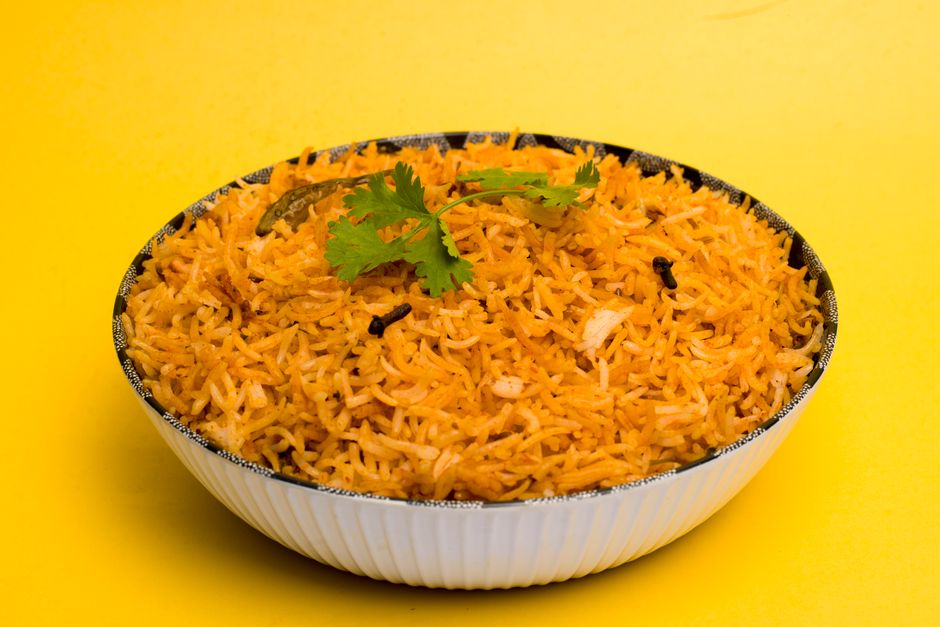
Yellow rice isn't one specific ingredient but a family of rice dishes colored and flavored with turmeric, saffron, or annatto (achiote). It shows up under different names across cuisines: arroz amarillo in Spanish and Caribbean cooking, turmeric rice in Indian and Southeast Asian cooking, and the boxed "yellow rice" mixes (Vigo, Goya, Zatarain's) sold in most U.S. grocery stores, which lean on turmeric and annatto for color plus a seasoning packet of garlic, onion, and chicken flavoring.
Varieties
Spanish and Caribbean yellow rice usually relies on annatto or turmeric plus a sofrito base of onion, garlic, and pepper. Indian turmeric rice is often tempered with mustard seeds, curry leaves, and sometimes coconut. Persian saffron rice (steamed basmati with a saffron-butter mixture) is a separate, more delicate tradition built around the crisp tahdig layer, not the sofrito-style savory versions found in Latin cooking.
Buying tips
For saffron, buy whole threads (deep red-orange) rather than pre-ground powder, which is easier to adulterate with cheaper coloring. For boxed yellow rice, compare sodium per serving across brands since it varies significantly. Ground turmeric loses potency after about a year, so check that it still smells sharp and earthy rather than dusty.
Substitutes
Turmeric (in place of saffron) — 1/2 teaspoon ground turmeric per generous pinch (about 20 threads) of saffron
Gives the same golden color for a fraction of the cost, but the flavor is earthier and slightly bitter instead of saffron's floral sweetness. Best in savory, spice-forward versions rather than delicate saffron rice.
Saffron threads (in place of turmeric) — A pinch of 15-20 threads steeped in the hot cooking liquid per 1/2 teaspoon turmeric called for
More expensive and more subtle. Steep the threads in a few tablespoons of warm broth or water for 10 minutes before adding so the color and aroma actually release into the rice.
Annatto (achiote) oil or seeds — 1 tablespoon annatto oil, used to saute the aromatics, per 1/2 teaspoon turmeric
Common in Puerto Rican and Dominican arroz amarillo. Produces a more orange hue and a faint peppery, nutty flavor rather than turmeric's sharper earthiness.
Homemade seasoning blend (in place of a boxed yellow rice mix) — For one 6-8 oz box: 2 cups rice, 1 teaspoon turmeric, 1 teaspoon ground cumin, 1/2 teaspoon garlic powder, 1 tablespoon tomato paste, 2 cups chicken broth
Controls sodium since boxed mixes are often 500+ mg per serving. Saute the tomato paste and spices in a little oil for a minute before adding rice and broth to deepen the flavor.
Storage
Cooked yellow rice keeps in an airtight container in the refrigerator for 4-5 days. It freezes well for up to 2 months; spread it on a tray to cool completely before freezing so the grains don't clump. Unopened boxed mixes and dry spices like turmeric and saffron store in a cool, dark pantry for a year or more.
How to use
Serve as a base under stewed beans, roast or fried chicken, grilled fish, or fried plantains. It's also common stuffed into peppers, folded into rice salads once cooled, or used as the starch component in one-pot pilafs where the turmeric or saffron liquid is added straight to the pot with the rice.
What it pairs with
Pairs well with black beans or pigeon peas, roast or fried chicken, grilled white fish, and fried plantains. In Persian-style saffron rice, it's typically paired with grilled kebabs or braised meat with a crisp tahdig crust on the bottom of the pot.
Nutrition
Nutritionally close to plain white or long-grain rice, with turmeric contributing a small amount of curcumin, though curcumin is poorly absorbed unless paired with black pepper and some fat. Boxed mixes tend to be higher in sodium than homemade versions due to the seasoning packet.
FAQ
What actually makes yellow rice yellow?
Most often turmeric, sometimes saffron, and in Caribbean and Latin cooking frequently annatto (achiote) oil or seeds, all of which color the rice as it cooks without needing artificial dye.
Is yellow rice the same thing as saffron rice?
Not usually. Most yellow rice, including boxed mixes, uses turmeric because it's far cheaper than saffron; true saffron rice is a more specific, pricier dish with a distinct floral aroma.
Can yellow rice be made without a boxed seasoning mix?
Yes. Rice, turmeric, garlic powder, a spoonful of tomato paste, and broth in place of water reproduce the flavor and color of most boxed mixes closely.
Does yellow rice taste different from plain white rice?
Yes. Turmeric adds a mild earthy, slightly bitter edge, annatto contributes a faint peppery nuttiness, and saffron brings a floral sweetness, all distinct from the neutral flavor of plain steamed rice.
Is the turmeric in yellow rice good for you?
It contributes a small amount of curcumin, the compound linked to turmeric's anti-inflammatory reputation, but the amount used to color a pot of rice is modest and curcumin is poorly absorbed without black pepper and some fat.
Have yellow rice on hand? Find recipes with our Recipe Generator →