
Yuca Fries
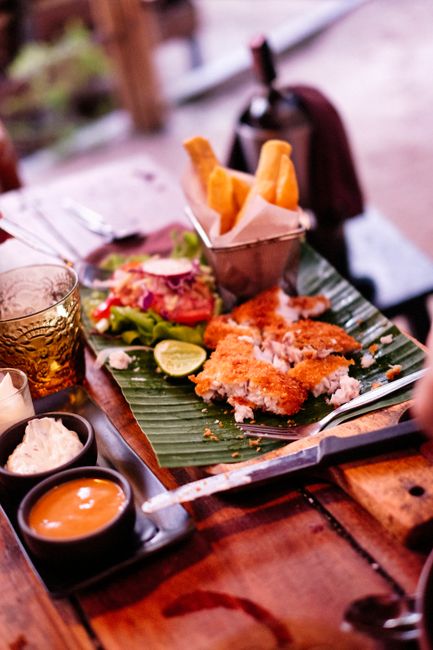
Yuca fries are made from cassava root (Manihot esculenta), a starchy tuber peeled, cut into batons, boiled or steamed until tender, then fried until the exterior blisters and crisps. The interior stays dense, chewy, and slightly waxy, closer to a firm mashed potato than a regular fry, because yuca contains almost no water compared to a russet potato. Fresh yuca is sold as a long, bark-skinned root; frozen peeled yuca chunks are the more common starting point for home cooks since they're already cleaned and cut.
Varieties
Yuca (also called cassava or manioc) comes in sweet and bitter varieties. The sweet variety sold in grocery stores for cooking is what's used for fries; bitter yuca contains higher levels of cyanogenic compounds and requires extensive processing before it's safe to eat, so it's not something home cooks typically buy whole. Tapioca is a separate product made by extracting and drying starch from the root, not a variety of yuca itself.
Buying tips
Choose fresh yuca roots that feel heavy and firm with tight, unblemished bark-like skin; avoid any with soft spots, mold, or a sour smell, since the flesh underneath is usually already spoiled. Frozen peeled yuca is a reliable shortcut and fries up just as well once thawed and patted dry.
Substitutes
Malanga (taro root) — 1:1 by weight
Similar starch density and a nuttier, earthier flavor. Holds its shape well through frying and doesn't need pre-boiling as long as yuca.
Green or semi-ripe plantains — 1:1 by weight
Sweeter and less dense. Needs a double fry (low temperature first, then a hot second fry) to get comparable crispness.
Russet potatoes — 1:1 by weight
Much more water content, so the fries cook faster and turn out lighter and fluffier inside rather than dense and chewy.
Parsnips — 1:1 by weight
More fibrous and sweeter than yuca. Better roasted at 425°F than deep-fried, since they brown faster than they crisp.
Storage
Raw peeled yuca (fresh or thawed from frozen) should be used within a day or two, or kept submerged in water in the fridge for up to 3 days to keep it from discoloring. Cooked yuca fries are best eaten immediately; leftovers can be refrigerated in an airtight container for up to 3 days but will soften. Reheat in a 425°F oven or an air fryer for 6-8 minutes to bring back some crispness rather than microwaving, which turns them gummy.
How to use
Boil or steam peeled yuca batons for 15-20 minutes until fork-tender but not falling apart, then let them cool slightly before frying at 350°F for 4-5 minutes until golden. A double fry (a first fry at 325°F to cook through, then a second at 375°F to crisp) gives the best crunch-to-chew ratio. Serve as a side with grilled or roasted meats, or as an appetizer with a dipping sauce.
What it pairs with
Pairs well with garlicky mojo sauce, cilantro-lime aioli, or a simple squeeze of lime and salt. Serves naturally alongside Cuban, Colombian, or Dominican-style roasted or grilled meats.
Nutrition
Yuca is calorie-dense and almost entirely starch, with roughly twice the carbohydrates of an equivalent weight of potato. It's naturally gluten-free and contains a decent amount of vitamin C and some potassium, but very little protein or fat on its own, most of the fat in yuca fries comes from the frying oil.
FAQ
Why do my yuca fries turn out gummy instead of crispy?
Usually the yuca was overboiled until it turned mushy, or it wasn't dried well before frying. Boil just until a fork slips in with slight resistance, drain thoroughly, and let the pieces air-dry for a few minutes before frying.
Is yuca safe to eat raw?
No. Raw yuca contains cyanogenic compounds that must be broken down by cooking. Always boil, steam, or otherwise fully cook yuca before eating it.
Can yuca fries be baked instead of fried?
Yes, though they won't get as crisp. Toss boiled yuca batons in oil and roast at 425°F for 25-30 minutes, flipping halfway, for a lighter but still satisfying result.
Do you need to remove a fibrous core before frying yuca?
Yes. After boiling, split each piece and pull out the thin, stringy fiber running through the center; it stays tough and unpleasant to chew even after cooking.
Have yuca fries on hand? Find recipes with our Recipe Generator →