
Black and Tan Drink Recipe
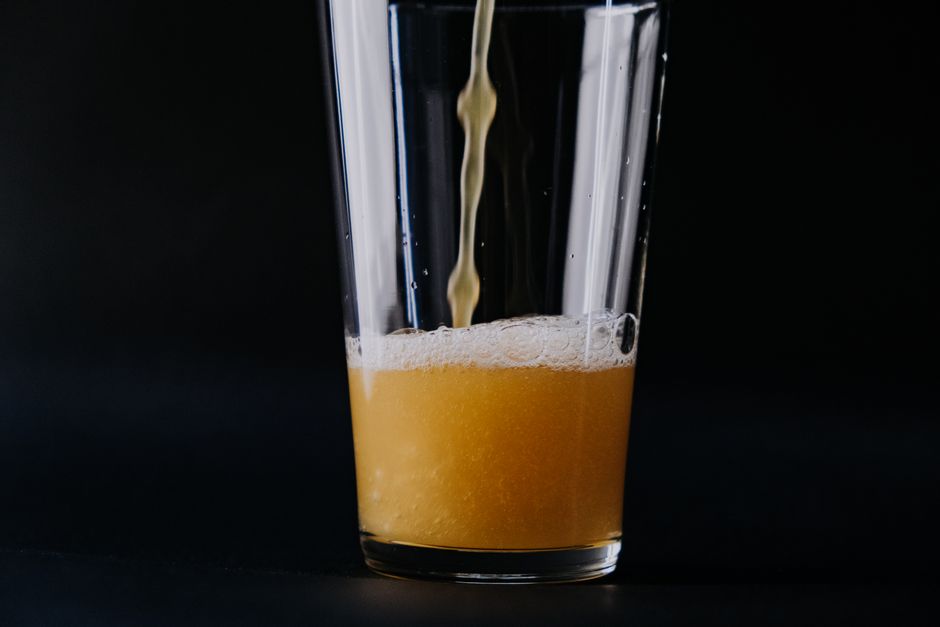
Stout is poured slowly over a spoon or down the side of the glass so its slightly lower carbonation and gentler pour let it settle on top of the denser pale ale instead of crashing through it, giving you the two-tone look without stirring or mixing.
- Prep
- 5 min
- Cook
- 0 min
- Total
- 5 min
- Servings
- 1
Ingredients
- 8 fl oz pale ale (such as Bass)
- 8 fl oz stout (such as Guinness)
Nutrition per serving
- Calories
- 160
- Protein
- 2g
- Carbs
- 13g
- Fat
- 0g
Based on the recipe as written, one serving. Recalculates if you swap an ingredient above. An estimate only, exact values depend on the specific ingredients used.
Need different units or a different yield? Try our Conversion Calculator →
Instructions
- 1Chill both the pale ale and the stout thoroughly; cold beer holds carbonation better and layers more cleanly than warm beer.
- 2Fill a clean pint glass about halfway with the pale ale, pouring straight down the middle to build a normal head.
- 3Hold a bar spoon or regular tablespoon upside down (bowl facing up) just above the surface of the pale ale, angled slightly, resting the tip against the inside of the glass.
- 4Pour the stout very slowly over the back of the spoon so it spreads out and drips down the inside of the glass instead of plunging into the pale ale below.
- 5Continue pouring until the glass is full and a distinct dark layer sits on top of the lighter beer, then remove the spoon and serve immediately.
Tips & variations
- Guinness works especially well for the top layer because its nitrogen carbonation makes it lighter-bodied and easier to float than a CO2-carbonated stout.
- A half and half swaps the stout for a second pale ale or lager, while a black and blue uses a fruit lambic instead of pale ale on the bottom.
- Use a glass with a slight taper or straight sides rather than a rounded pint glass; a wider bowl shape makes it harder for the layers to hold.
- If the layers mix on the first attempt, don't worry, it still tastes fine; just pour more slowly and use less force on the second glass.
Storage & reheating
This drink has no make-ahead version; pour and serve immediately, since the layered effect starts to fade within a couple of minutes as the beers naturally begin to mix.
Tips from the Tulo kitchen
- Tilting the glass slightly while pouring the stout, then straightening it as the glass fills, keeps the stream running down the side rather than dropping straight in.
- Using very cold, freshly opened beer with good carbonation gives a cleaner separation than beer that's gone flat or warmed up.
FAQ
What beers are traditionally used in a black and tan?
The classic version uses Bass pale ale on the bottom and Guinness stout on top, though any pale ale and any stout will work as long as the stout is lighter-bodied than a heavy imperial stout.
Why do the two beers stay separated instead of mixing?
Guinness and similar stouts are nitrogen-carbonated, which makes them less dense and gives them smaller, more stable bubbles than the CO2-carbonated pale ale underneath, so a slow pour lets it rest on top rather than sink.
Do I need a special spoon to make one?
No, a regular tablespoon works fine. What matters is holding it upside down just above the surface of the beer so the stout spreads out and loses speed before it touches the layer below.
Can I make a black and tan with two of the same beer?
Not really, the layering depends on a density and carbonation difference between the two beers; two identical beers will just combine into one glass with no visible layers.