Boudin
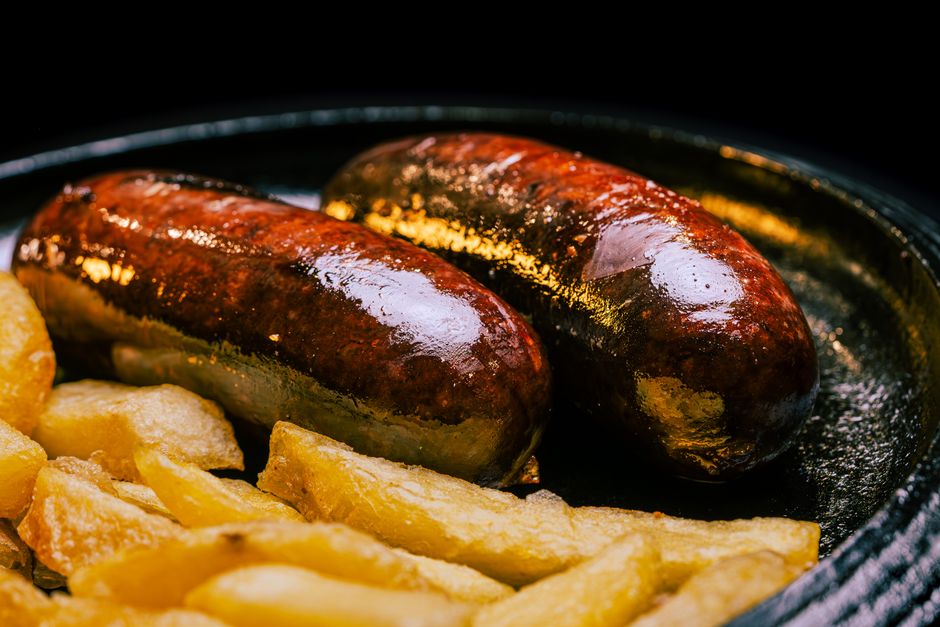
Simmering the pork and liver together in a well-seasoned stock, then working the cooking liquid back into the rice, is what keeps boudin moist and spreadable instead of dry and crumbly the way a drier sausage would turn out.
- Prep
- 45 min
- Cook
- 1 hr 30 min
- Total
- 2 hr 15 min
- Servings
- 8
Ingredients
- 2 lb pork shoulder, cut into 2-inch chunks
- 1/2 lb pork liver, cut into 1-inch chunks
- 2 medium yellow onion, chopped, divided
- 1 medium green bell pepper, chopped
- 2 stalks celery, chopped
- 6 cloves garlic, smashed
- 3 cups long-grain white rice, cooked
- 1 bunch green onions, sliced thin
- 1/2 cup flat-leaf parsley, chopped
- 1 1/2 tsp cayenne pepper
- 1 tbsp black pepper, coarsely ground
- 1 tbsp kosher salt
- 2 tbsp cajun seasoning blend
- 2 cups pork or chicken stock, for cooking liquid and moistening
- 10 ft hog casings, rinsed and soaked
Nutrition per serving
- Calories
- 616
- Protein
- 33g
- Carbs
- 64g
- Fat
- 25g
Based on the recipe as written, one serving. Recalculates if you swap an ingredient above. An estimate only, exact values depend on the specific ingredients used.
Need different units or a different yield? Try our Conversion Calculator →
Instructions
- 1Place the pork shoulder, liver, half the chopped onion, bell pepper, celery, and garlic in a large pot. Add enough water to cover by 2 inches, along with the salt and half the black pepper.
- 2Bring to a boil, then reduce to a bare simmer and cook uncovered for 60-75 minutes, until the pork is fork-tender. Add the liver during the last 15 minutes of cooking so it doesn't turn grainy.
- 3Strain the pork, liver, and vegetables, reserving the cooking liquid. Let everything cool slightly, then run it through a food processor or meat grinder fitted with a coarse plate, pulsing just until finely chopped, not pureed.
- 4In a large bowl, combine the ground meat mixture with the cooked rice, remaining raw onion, green onions, parsley, cayenne, remaining black pepper, and cajun seasoning.
- 5Add the reserved cooking liquid a half cup at a time, mixing with your hands, until the filling is loose and moist enough to hold together when squeezed but still falls apart easily on a fork. You'll likely use most or all of the 2 cups.
- 6Taste the filling and adjust salt and cayenne; it should taste slightly overseasoned raw, since the casing and steaming step will mellow it.
- 7Slide the soaked casing onto a sausage stuffer tube or a wide funnel. Pack the filling in gently, twisting off into 6- to 8-inch links and tying or twisting the casing between each one. Prick each link a few times with a needle or skewer to release trapped air.
- 8Bring a large pot of water to a bare simmer (not a boil) and add the links. Poach for 15-20 minutes, until the casing is firm and the filling reaches 165°F (74°C) on a thermometer inserted into the center.USDA safe minimum for poultry: 165°F (74°C)
- 9Lift the links out carefully and let them rest for 5 minutes before serving warm, straight from the casing.
Tips & variations
- No sausage stuffer? Skip the casing entirely and serve the filling as boudin balls, rolled and either steamed in a covered basket or pan-fried until golden.
- Swap up to half the pork liver for chicken livers for a milder flavor if you're new to boudin.
- Some Cajun cooks add a few tablespoons of the pork drippings or a splash of hot sauce directly into the filling for extra richness.
- If the casing splits while poaching, don't panic, just fish out any escaped filling with a slotted spoon and keep cooking; the link will still taste right even if it looks a little rough.
Storage & reheating
Refrigerate cooked links in an airtight container for up to 4 days. Reheat by steaming for 5-8 minutes or simmering gently in water until warmed through; microwaving tends to make the casing tough. Boudin also freezes well for up to 2 months, thaw overnight in the fridge before reheating.
Tips from the Tulo kitchen
- Boudin is traditionally eaten by biting into the casing and squeezing or sucking the filling out, then discarding the casing itself, though the casing is edible and some people eat the whole link.
- If hog casings are hard to find locally, many butcher counters and Cajun grocers will sell them by the pound and can order them ahead if asked.
FAQ
What's the difference between boudin and regular sausage?
Boudin is built around cooked rice rather than being mostly meat, and it's meant to be soft and spreadable rather than sliceable, most other sausages have little to no rice and a firmer, denser texture.
Do I have to eat the casing?
No. The casing is edible but many people just bite it open and squeeze or eat out the filling, discarding the casing afterward.
Can boudin be grilled instead of steamed?
Yes, lightly grilling or pan-searing pre-cooked boudin links crisps the casing and is a common way to serve leftovers, but the initial cook should still be a gentle poach or steam so the filling sets without the casing splitting.
Why is my boudin filling dry after cooking?
This usually means not enough cooking liquid was mixed back into the rice and meat before stuffing; the rice keeps absorbing moisture during cooking, so the raw filling needs to be noticeably loose and wet going into the casing.