California Roll Recipe
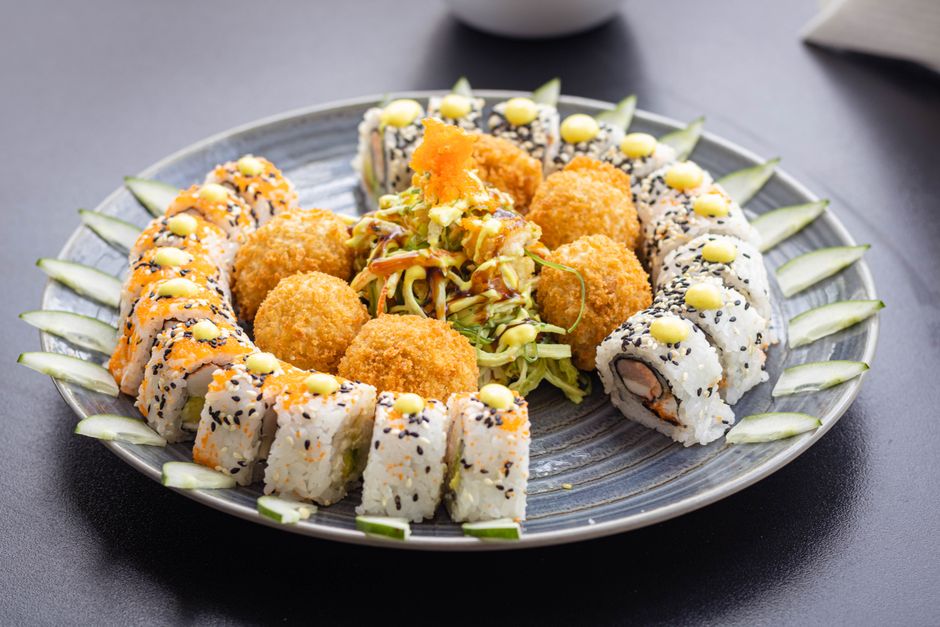
Cooking the rice with the right vinegar-sugar-salt ratio and cooling it properly gives the grains the sticky-but-distinct texture sushi rice needs, and rolling rice-side out with sesame seeds pressed into it is what makes a California roll instantly recognizable and easier to eat than a traditional nori-out roll.
- Prep
- 45 min
- Cook
- 20 min
- Total
- 1 hr 5 min
- Servings
- 4
Ingredients
- 2 cups sushi rice, uncooked
- 3 tbsp rice vinegar
- 2 tbsp granulated sugar
- 1 tsp salt
- 4 sheets nori sheets
- 8 oz imitation crab (surimi), flaked
- 2 medium avocado, sliced
- 1 cup English cucumber, cut into matchsticks
- 2 tbsp mayonnaise
- 2 tbsp toasted sesame seeds
- 1/4 cup soy sauce, for serving
Nutrition per serving
- Calories
- 630
- Protein
- 19g
- Carbs
- 96g
- Fat
- 19g
Based on the recipe as written, one serving. Recalculates if you swap an ingredient above. An estimate only, exact values depend on the specific ingredients used.
Need different units or a different yield? Try our Conversion Calculator →
Instructions
- 1Rinse the sushi rice in a fine-mesh sieve under cold water, swirling with your hand, until the water runs mostly clear, about 3-4 minutes.
- 2Cook the rice with 2 1/4 cups (540ml) water according to package directions, or in a rice cooker, then let it rest covered for 10 minutes off the heat.
- 3While the rice cooks, whisk the rice vinegar, sugar, and salt in a small bowl until the sugar fully dissolves.
- 4Transfer the hot rice to a wide, shallow non-metal bowl. Drizzle the vinegar mixture over it and fold gently with a rice paddle, fanning the rice as you go, until it cools to room temperature and looks glossy, about 10-15 minutes.
- 5Combine the flaked imitation crab with 1 tablespoon of the mayonnaise in a small bowl.
- 6Lay a bamboo rolling mat on the counter and cover it completely with plastic wrap. Place a sheet of nori shiny side down on the mat, positioned lengthwise.
- 7Wet your hands with water to prevent sticking, then spread about 3/4 cup of rice evenly over the nori in a thin layer, leaving a 1-inch border along the top edge. Scatter a pinch of sesame seeds over the rice.
- 8Carefully flip the nori over so the rice sits directly on the plastic wrap and the bare nori faces up.
- 9Arrange a strip of the crab mixture, a few avocado slices, and a few cucumber matchsticks in a line across the lower third of the nori.
- 10Using the mat and plastic wrap together, lift the near edge and roll tightly away from you, pressing gently but firmly as you go to compact the roll, then pull the plastic away as you finish.
- 11Repeat with the remaining nori, rice, and filling to make 4 rolls total.
- 12Wet a sharp knife and slice each roll into 8 pieces, wiping and re-wetting the blade between cuts to keep the edges clean.
- 13Serve immediately with soy sauce, pickled ginger, and wasabi on the side.
Tips & variations
- Swap the imitation crab for lump cooked crabmeat or chopped cooked shrimp for a more upscale version of the same roll.
- Mix a teaspoon of sriracha into the mayonnaise before combining it with the crab for a spicier filling.
- If the rice sticks to your hands while spreading it, keep a small bowl of water with a splash of rice vinegar nearby to re-wet your fingers.
- Press extra sesame seeds or a light coating of tobiko onto the outside of the roll right after rolling, while the rice is still tacky, so it adheres.
Storage & reheating
California rolls are best eaten within a few hours of rolling. Sushi rice hardens and turns chalky in the refrigerator, so if you must store leftovers, wrap them tightly in plastic and keep at cool room temperature for up to a few hours rather than refrigerating; refrigerated rolls should be brought back toward room temperature before eating, though the texture won't fully recover.
Tips from the Tulo kitchen
- Cutting the avocado into thin, even slices rather than chunks makes the roll easier to close and slice cleanly.
- Keeping a small bowl of vinegar water nearby for your hands and knife makes the whole rolling process much less sticky.
FAQ
What are the traditional ingredients in a California roll?
A classic California roll contains sushi rice, nori, imitation crab (or crab mixed with mayonnaise), avocado, and cucumber, rolled inside-out with the rice on the outside and often coated in sesame seeds or tobiko.
Does a California roll contain raw fish?
No. It's one of the few sushi rolls made without raw fish, using imitation crab or cooked crab instead, which is part of why it became a popular introduction to sushi in the West.
Why is the rice on the outside of a California roll?
This inside-out style, called uramaki, was developed to hide the nori inside the roll, since some early Western diners found the look and texture of exposed seaweed off-putting.
Can I make a California roll without a bamboo mat?
A thick, clean kitchen towel wrapped in plastic wrap can substitute in a pinch, but a bamboo mat gives much more even pressure and a tighter, cleaner roll.