
Charcuterie Board Ideas
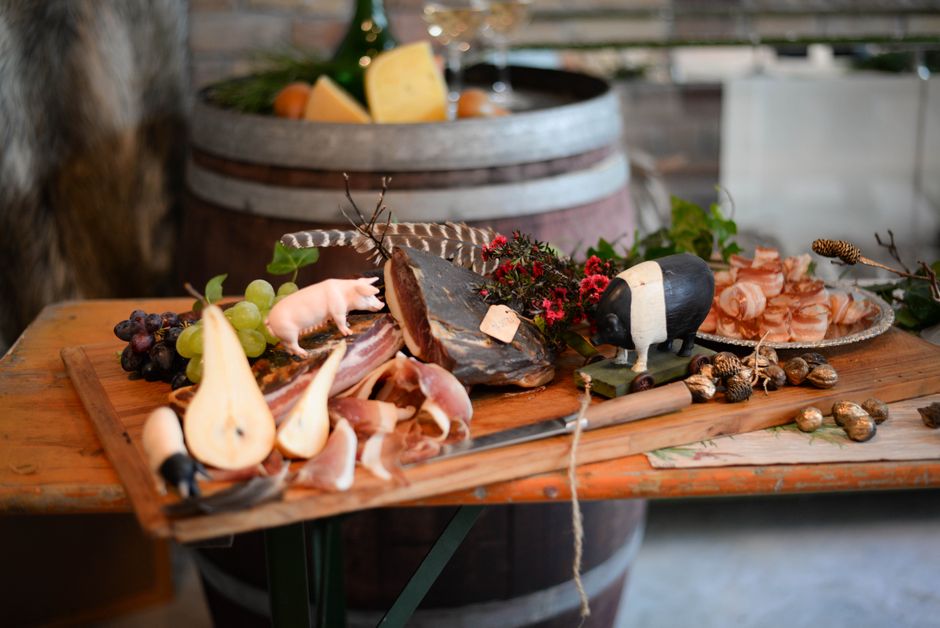
Balancing salty cured meats, rich cheese, something sweet, and something crunchy or acidic in roughly equal portions means every bite has contrast, and grouping items by color and shape before filling gaps with small bites makes the board look full without any real cooking.
- Prep
- 30 min
- Cook
- 0 min
- Total
- 30 min
- Servings
- 8
Ingredients
- 4 oz prosciutto, thinly sliced
- 4 oz salami, sliced
- 6 oz soft cheese, such as brie
- 6 oz aged cheese, such as manchego or cheddar
- 1/2 cup marcona almonds
- 1/2 cup dried apricots
- 1 cup fresh grapes
- 1/2 cup cornichons or small pickles
- 2 tbsp honey
- 8 oz assorted crackers and sliced baguette
Nutrition per serving
- Calories
- 440
- Protein
- 20g
- Carbs
- 34g
- Fat
- 25g
Based on the recipe as written, one serving. Recalculates if you swap an ingredient above. An estimate only, exact values depend on the specific ingredients used.
Need different units or a different yield? Try our Conversion Calculator →
Instructions
- 1About 30 minutes before serving, pull the cheeses out of the fridge so they come to room temperature; cold cheese tastes muted and firm.
- 2Set out small bowls first for honey, mustard, and pickles, and place them at different points on the board so they anchor the layout.
- 3Fold or roll the sliced meats instead of stacking them flat; folded prosciutto and rolled salami take up more visual space and are easier to pick up.
- 4Cut the soft cheese into a wedge and the firm cheese into cubes or thin slices, then set both near their matching bowl of honey or pickles.
- 5Fill any remaining gaps with almonds, dried apricots, and grapes in small clusters, tucking them between the meat and cheese rather than off to one side.
- 6Finish by leaning crackers and baguette slices in a fan or small stack near the edge of the board, and serve within an hour of assembling.
Tips & variations
- Build in odd numbers, three meats, three cheeses, three or four bites, rather than even pairs; boards read as more full and less rigid this way.
- For a firm cheese, cut into cubes so guests can grab a piece without needing a knife; for a soft cheese, leave it as a whole wedge with its own small spreader.
- If serving more than 8 people, use two smaller boards instead of one giant one, it keeps lines moving and avoids one crowded corner getting picked clean first.
- Swap the honey for fig jam or whole-grain mustard if the meats are heavily salted or smoked, the sweetness needs to be strong enough to cut through.
- Skip anything that needs a fork. Everything on the board should be liftable with fingers or a small cracker.
Storage & reheating
Charcuterie boards aren't meant to sit out longer than about 2 hours at room temperature. Wrap leftover meats and cheeses separately in plastic wrap or wax paper and refrigerate for up to 5 days; keep cut fruit and nuts in separate containers so moisture from the fruit doesn't soften the nuts. Bread and crackers are best eaten the same day or stored airtight at room temperature.
Tips from the Tulo kitchen
- Slice the aged cheese ahead of time and press plastic wrap directly against the cut surface until serving, this stops it from drying out at the edges.
- A few drops of olive oil brushed over the cut side of soft cheese keeps it glossy and prevents a dull skin from forming while it sits out.
FAQ
How much meat and cheese do I need per person?
Plan on about 2 to 3 ounces of cured meat and 2 to 3 ounces of cheese per person for a board that's part of a spread, or double that if it's the main food at the gathering.
What order should I put things on the board?
Place the cheeses down first since they're the largest, bulkiest items, then the folded meats, then bowls of condiments, and fill every remaining gap last with nuts, fruit, and small pickles.
Can I make a charcuterie board ahead of time?
Slice the cheese and prep the fruit and nuts up to a day ahead and store them separately in the fridge, but don't arrange the full board more than an hour before serving or the cut edges will dry out and the bread will go stale.
What's a good cheese variety for a board that appeals to most people?
One soft cheese like brie, one firm aged cheese like manchego or aged cheddar, and one blue or goat cheese covers the range most guests expect without overwhelming anyone who dislikes strong flavors.