
Dairy-Free Butter Recipe
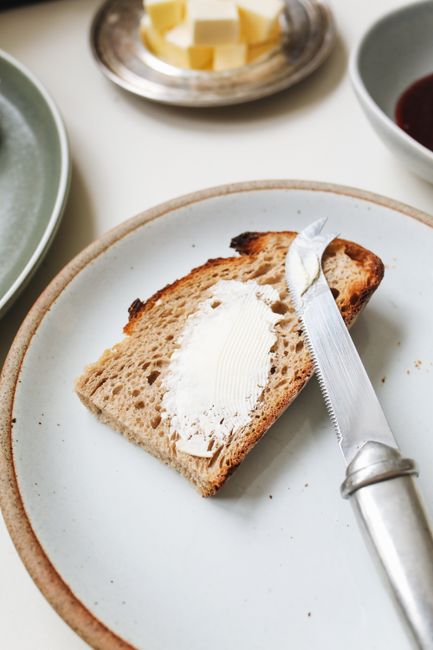
Blending melted coconut oil with a liquid neutral oil keeps the butter solid enough to slice cold but soft enough to spread straight from the fridge, and the natural lecithin in soy milk emulsifies the fats into water so the finished butter doesn't separate or weep.
- Prep
- 10 min
- Cook
- 5 min
- Total
- 195 min
- Servings
- 16
Ingredients
- 1 cup refined coconut oil, melted
- 1/2 cup neutral oil (avocado or grapeseed)
- 1/3 cup unsweetened plain soy milk, room temperature
- 1 tsp apple cider vinegar
- 3/4 tsp fine salt
- 1/8 tsp ground turmeric (for color, optional)
- 1 tsp nutritional yeast (optional, for a savory note)
Nutrition per serving
- Calories
- 149
- Protein
- 0g
- Carbs
- 0g
- Fat
- 17g
Based on the recipe as written, one serving. Recalculates if you swap an ingredient above. An estimate only, exact values depend on the specific ingredients used.
Need different units or a different yield? Try our Conversion Calculator →
Instructions
- 1Melt the coconut oil gently (microwave in 20-second bursts or a small saucepan over low heat) until fully liquid but not hot, it should feel just warm to the touch.
- 2In a tall narrow container (a wide-mouth jar or the cup that came with an immersion blender works well), combine the melted coconut oil, neutral oil, soy milk, apple cider vinegar, salt, and turmeric if using.
- 3Blend with an immersion blender on high for 30-45 seconds, moving the blender up and down, until the mixture turns pale, opaque, and noticeably thicker, this is the emulsion forming.
- 4Stir in the nutritional yeast, if using, with a spoon (blending it in can make the color muddy).
- 5Pour the mixture into a small container, silicone mold, or lined loaf pan, and refrigerate uncovered until fully solid, 3 to 4 hours.
- 6Once firm, cover the container or pop the butter out of the mold, and keep refrigerated.
Tips & variations
- For a soy-free version, swap the soy milk for the same amount of unsweetened oat milk plus 1/4 teaspoon sunflower lecithin, since oat milk alone doesn't emulsify as reliably.
- Press finely chopped fresh herbs, roasted garlic, or lemon zest into the butter right after pouring for a compound butter variation.
- If the butter turns out too soft to slice, the ratio of liquid oil to coconut oil was too high; next batch, increase the coconut oil slightly.
- A silicone ice cube tray with large cavities makes convenient pre-portioned pats for cooking.
Storage & reheating
Keep the butter covered in the refrigerator for up to 3 weeks. For longer storage, wrap tightly and freeze for up to 3 months; thaw in the refrigerator overnight. Let a portion sit at room temperature for 10-15 minutes before spreading, since it firms up more than dairy butter does straight from the fridge.
Tips from the Tulo kitchen
- Room-temperature soy milk blends into the oils more smoothly than cold milk straight from the fridge, which can cause the coconut oil to seize into small clumps before it emulsifies.
- A narrow, tall container gives the immersion blender enough depth to fully incorporate the liquid without splashing everywhere.
FAQ
Can I make this without an immersion blender?
A regular blender works if it has a small-batch cup attachment; a whisk alone usually isn't vigorous enough to fully emulsify the fat and liquid, and the butter may separate once chilled.
Why did my dairy-free butter turn out oily or grainy?
This usually means the emulsion didn't fully form, either the mixture wasn't blended long enough, or the coconut oil had cooled and re-solidified into small bits before blending. Remelt gently and re-blend.
Can I use only coconut oil and skip the neutral oil?
Yes, but the butter will be noticeably harder straight from the fridge and less spreadable, since coconut oil alone is solid at room temperature; the liquid oil is what keeps it soft.
Is this butter good for baking?
Yes, it works as a 1:1 swap in most baking recipes that call for solid butter, including creaming for cookies, though it melts slightly faster in the oven than dairy butter.