
Does Honey Go Bad? How to Tell and How to Revive Crystallized Honey
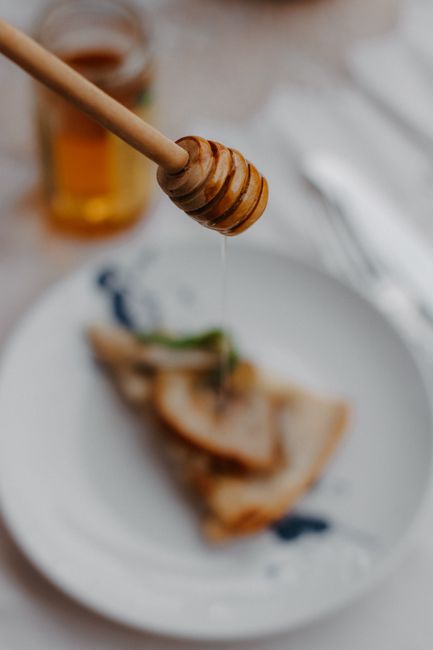
Honey's very low moisture content and acidic pH create an environment where bacteria and mold can't survive, which is why sealed honey doesn't spoil the way most foods do. What looks like 'bad' honey is almost always harmless crystallization, and a gentle warm water bath reverses it without cooking off the flavor.
- Prep
- 5 min
- Cook
- 15 min
- Total
- 20 min
- Servings
- 8
Ingredients
- 2 cups raw or crystallized honey
- 4 cups water, for the warm water bath
Nutrition per serving
- Calories
- 256
- Protein
- 0g
- Carbs
- 70g
- Fat
- 0g
Based on the recipe as written, one serving. Recalculates if you swap an ingredient above. An estimate only, exact values depend on the specific ingredients used.
Need different units or a different yield? Try our Conversion Calculator →
Instructions
- 1Inspect the honey first. A sour, boozy, or fermented smell, visible mold, or bubbling and fizzing inside the jar are the real signs of spoiled honey; any of these mean the jar should be tossed.
- 2If the honey has simply turned cloudy, grainy, or fully solid, that's crystallization, not spoilage, and it's still safe to eat as-is or to soften back to liquid.
- 3Remove the lid and set the open jar into a saucepan filled with water heated to about 100-110°F (38-43°C), so the water comes about two-thirds up the side of the jar.
- 4Let the jar sit in the warm water for 10-20 minutes, stirring the honey occasionally, until it's fully liquid again.
- 5Keep the water below about 140°F (60°C) the whole time; hotter water can scorch the honey and dull its aroma and flavor.
- 6Once liquefied, let the jar cool slightly, wipe it dry, and reseal tightly. Store at room temperature in a dry spot away from direct sunlight.
Tips & variations
- Raw, unfiltered honey crystallizes faster than heavily filtered supermarket honey because it still contains pollen and fine glucose particles that give crystals something to form around.
- Refrigerating honey speeds up crystallization instead of preventing it; a cool, dry pantry shelf around 70°F is the best storage spot.
- Always dip a clean, dry spoon into the jar. Introducing food particles or moisture is the most common way honey actually spoils.
- A microwave works in a pinch: transfer the honey to a microwave-safe container and heat in 20-30 second bursts, stirring between each, until it's liquid again.
- Comb honey and creamed honey behave differently: comb honey is best left alone since heating melts the wax, and creamed honey is intentionally crystallized in a controlled way, so it won't liquefy the same.
Storage & reheating
Store honey tightly sealed at room temperature in a dry cabinet, away from stovetop heat and direct sunlight; kept this way, it has no real expiration date. If it crystallizes, warm it in a 100-110°F water bath for 10-20 minutes to bring it back to liquid, and repeat as needed since crystallizing and reliquefying doesn't damage the honey.
Tips from the Tulo kitchen
- Honey that's been mixed with something else, like a honey-cinnamon blend or honey infused with fruit, doesn't follow the same rules and can spoil since the added ingredient introduces moisture and nutrients bacteria can use.
- If only part of a jar has crystallized, there's no need to melt the whole thing; warming just brings the crystals back into solution and any remaining liquid honey is unaffected.
FAQ
Does honey actually expire?
Properly sealed honey doesn't spoil in the way most foods do because its low moisture content and acidic pH prevent bacteria and mold from growing; sealed jars found decades old have still tested safe to eat.
Is crystallized honey safe to eat?
Yes. Crystallization is a natural physical change where glucose separates out and forms crystals; it doesn't affect safety, only texture, and it's fully reversible with gentle heat.
What does actual spoiled honey look like?
True spoilage is rare and shows up as bubbling or fizzing in the jar, a sour or alcoholic smell, or visible mold, usually caused by water getting into the honey and allowing wild yeast to ferment it.
Why did my honey turn cloudy or grainy?
Cloudiness and graininess are early stages of crystallization, which happens faster in raw or cooler-stored honey; it's not a sign the honey has gone bad.
Can I just microwave honey to fix crystallization?
Yes, in short bursts of 20-30 seconds with stirring in between works, but a warm water bath gives more even, controlled heating and less risk of scorching a small area of the jar.
Should honey be refrigerated to make it last longer?
No. Refrigeration actually speeds up crystallization; honey lasts longest and stays easiest to use when stored at room temperature in a sealed container.