
Fried Sweet Plantains (Maduros) Recipe
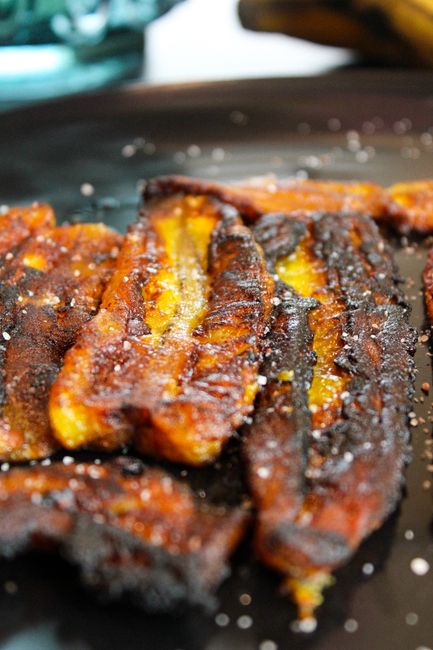
Very ripe plantains already carry a high sugar content, so a hot skillet does the rest of the work, caramelizing the cut surfaces into a dark, almost candy-like crust while the interior stays soft and custardy.
- Prep
- 10 min
- Cook
- 10 min
- Total
- 20 min
- Servings
- 4
Ingredients
- 3 medium ripe plantains (yellow skin with black spots, or fully black)
- 1/4 cup vegetable oil
- 1/4 tsp salt
Nutrition per serving
- Calories
- 284
- Protein
- 2g
- Carbs
- 43g
- Fat
- 14g
Based on the recipe as written, one serving. Recalculates if you swap an ingredient above. An estimate only, exact values depend on the specific ingredients used.
Need different units or a different yield? Try our Conversion Calculator →
Instructions
- 1Choose ripe plantains: the skin should be mostly yellow with black spots, or fully black, and the fruit should give slightly under gentle pressure. Green or barely-yellow plantains are starchy, not sweet, and won't caramelize the same way.
- 2Trim off both ends of each plantain with a paring knife. Run the knife lengthwise along one of the ridges, scoring just through the peel without cutting into the flesh underneath.
- 3Slide your fingers or the knife tip under the scored edge and peel the skin away in strips; on a very ripe plantain it should pull off easily.
- 4Slice the peeled plantain on a diagonal into pieces about 1/2 inch thick. Cutting on an angle gives more surface area for browning than straight rounds.
- 5Heat the vegetable oil in a large skillet over medium heat until it shimmers and a test slice sizzles immediately on contact.
- 6Arrange the plantain slices in a single layer without crowding the pan; fry in batches if needed. Cook for 2-3 minutes per side, until deep golden brown with caramelized dark edges.
- 7Transfer the fried slices to a paper-towel-lined plate and sprinkle with salt while still hot.
- 8Serve warm, on their own or alongside rice, beans, or grilled meat.
Tips & variations
- The blacker the peel, the sweeter the plantain will taste once fried; don't discard plantains just because the skin has gone mostly black.
- If only green or just-turning plantains are available, boil or steam them instead of frying since they lack the sugar content needed to caramelize well.
- For tostones instead of maduros, use green plantains, fry once, flatten each piece with the bottom of a glass, and fry a second time until crisp.
- A sprinkle of cinnamon and a pinch of sugar turns fried plantains into a dessert-style side.
- Brushing slices with oil and baking at 400°F (200°C) for about 20 minutes, flipping halfway, is a lower-oil alternative to pan-frying.
Storage & reheating
Store leftover fried plantains in an airtight container in the refrigerator for up to 3 days. Reheat in a dry skillet over medium heat for 2-3 minutes per side to restore the crisp edges; microwaving works but leaves them softer.
Tips from the Tulo kitchen
- Slicing on a steep diagonal rather than straight across gives noticeably more caramelized surface per piece.
- If the peel resists pulling away, the plantain isn't ripe enough yet; give it another day or two at room temperature.
FAQ
How do you know when a plantain is ripe enough to fry?
Look for skin that's mostly yellow with black spots or has turned fully black, and press gently; ripe plantains yield slightly, similar to a ripe avocado. Fully green plantains are too starchy for sweet frying.
What's the difference between preparing a plantain and a banana?
Plantains have thicker, tougher skin that doesn't peel with a simple snap at the stem; scoring the peel lengthwise with a knife before pulling it off is the reliable method, especially on less-ripe fruit.
Can plantains be eaten raw?
Raw plantains are starchy and firm even at full ripeness, closer to a raw potato in texture, and are almost never eaten uncooked; they're meant to be boiled, fried, or baked.
What's the best oil for frying plantains?
A neutral, high-smoke-point oil like vegetable, canola, or peanut oil works best, since it won't compete with the plantain's natural caramelized sweetness.
Do green and ripe plantains need to be prepared differently?
Yes. Green plantains are firmer and harder to peel by hand, often requiring a knife to help lift the skin, and they're usually boiled or fried twice (tostones) rather than pan-fried once like ripe plantains.