Garam Masala Chicken Curry Recipe
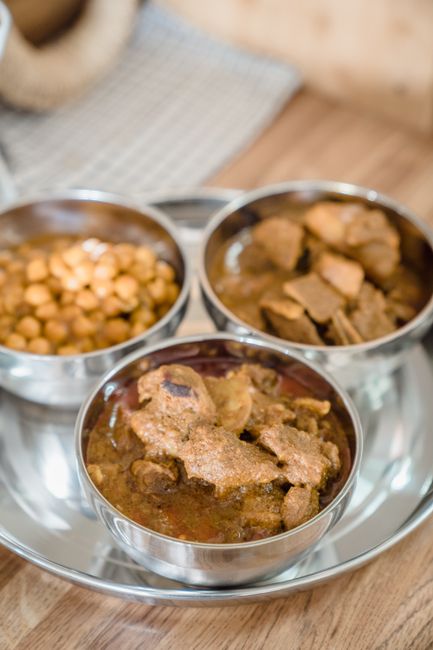
Toasting the garam masala briefly in hot oil with the onions wakes up its essential oils before the liquid goes in, so the finished gravy tastes deep and rounded instead of dusty; bone-in thighs simmer low and slow, feeding gelatin and flavor back into the sauce as they cook.
- Prep
- 20 min
- Cook
- 35 min
- Total
- 55 min
- Servings
- 5
Ingredients
- 2 lb bone-in, skin-off chicken thighs
- 1 large yellow onion, finely chopped
- 4 cloves garlic, minced
- 1 tablespoon fresh ginger, grated
- 1/2 cup plain whole-milk yogurt
- 1 cup crushed tomatoes
- 2 tablespoons garam masala
- 1/2 teaspoon ground turmeric
- 1 teaspoon ground cumin
- 1/2 teaspoon cayenne or red chile powder
- 3 tablespoons neutral oil or ghee
- 1 teaspoon salt
- 1/4 cup fresh cilantro, chopped, for garnish
Nutrition per serving
- Calories
- 183
- Protein
- 10g
- Carbs
- 6g
- Fat
- 14g
Based on the recipe as written, one serving. Recalculates if you swap an ingredient above. An estimate only, exact values depend on the specific ingredients used.
Need different units or a different yield? Try our Conversion Calculator →
Instructions
- 1Pat the chicken thighs dry and season lightly with salt. Set aside at room temperature while prepping the aromatics.
- 2Heat the oil or ghee in a heavy-bottomed pot or Dutch oven over medium heat. Add the chopped onion and cook, stirring often, for 8-10 minutes until soft and deeply golden.
- 3Stir in the garlic and ginger and cook for 1 minute until fragrant.
- 4Add the garam masala, turmeric, cumin, and cayenne directly to the oil and stir constantly for 30-45 seconds, just until the spices smell toasted, not scorched.
- 5Add the crushed tomatoes and cook for 4-5 minutes, stirring occasionally, until the raw tomato smell cooks off and the mixture thickens slightly.
- 6Reduce the heat to low and whisk in the yogurt one spoonful at a time, stirring constantly, until fully incorporated and smooth.
- 7Add the chicken thighs and turn to coat in the gravy. Pour in 3/4 cup water, cover, and simmer on low for 25-30 minutes, until the chicken is tender and reaches an internal temperature of 165°F (74°C).USDA safe minimum for poultry: 165°F (74°C)
- 8Uncover and simmer for 5 more minutes to thicken the gravy to a consistency that coats the back of a spoon. Taste and adjust salt.
- 9Remove from heat, stir in half the cilantro, and top with the rest before serving with rice or warm flatbread.
Tips & variations
- Toast whole cumin or coriander seeds in the oil before the onions go in for an extra layer of texture and a more restaurant-style aroma.
- Swap chicken thighs for a firm white fish like tilapia added in the last 8 minutes of simmering, since fish falls apart if it cooks the full 30.
- Stir in a splash of heavy cream at the end instead of extra yogurt for a richer, milder gravy closer to a butter chicken style.
- For a vegetarian version, replace the chicken with two cans of drained chickpeas and simmer only 12-15 minutes, just long enough to heat through and absorb the gravy.
Storage & reheating
Refrigerate the curry in an airtight container for up to 4 days; the flavor actually deepens overnight. Reheat gently on the stovetop over low heat with a splash of water to loosen the gravy, since microwaving can make the yogurt-based sauce separate slightly. Freeze in a sealed container for up to 3 months and thaw overnight in the refrigerator before reheating.
Tips from the Tulo kitchen
- Full-fat yogurt is far less likely to curdle in the hot gravy than low-fat or nonfat; if only low-fat is on hand, temper it with a spoonful of the hot sauce before adding it in.
- Letting the seasoned chicken sit at room temperature for 15-20 minutes before it hits the pot helps it cook more evenly and reach 165°F without the outside overcooking.
FAQ
What exactly is garam masala, and can I make my own?
Garam masala is a warming spice blend, typically built from cumin, coriander, cardamom, cinnamon, cloves, and black pepper, though exact ratios vary by region and household. Store-bought blends work fine here, but toasting and grinding your own whole spices gives a noticeably fresher, more fragrant result.
Why does the recipe add garam masala with the oil instead of at the end?
Blooming ground spices in hot fat releases their aromatic oils into the dish; adding garam masala only as a finishing sprinkle leaves the curry tasting one-dimensional, since many of its aromatic compounds need heat and fat to fully bloom.
My gravy looks grainy or split. What went wrong?
This almost always means the yogurt was added too quickly or over heat that was too high. Stir it in off the heat, a spoonful at a time, and keep the burner on low once it's in.
Can I use boneless, skinless chicken breast instead of thighs?
Yes, but reduce the simmer time to about 15-18 minutes and check the temperature early, since lean breast meat overcooks and turns dry much faster than bone-in thighs in a long simmer.