
Homemade Gluten-Free Cereal Recipe
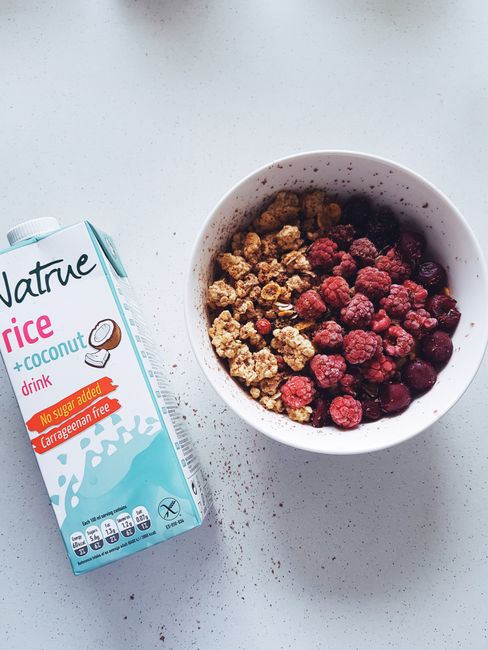
Pressing the oat mixture firmly into the pan before baking, then letting it cool completely and undisturbed, is what turns a loose granola into sturdy, poppable cereal clusters instead of crumbs. Using certified gluten-free oats and rice cereal keeps the whole batch reliably free of cross-contact, which matters more for cereal than for almost any other pantry staple since standard oats are routinely processed on shared lines with wheat.
- Prep
- 10 min
- Cook
- 30 min
- Total
- 40 min
- Servings
- 12
Ingredients
- 3 cups certified gluten-free rolled oats
- 1 cup gluten-free crisp rice cereal
- 1 cup raw almonds, chopped
- 1 tsp ground cinnamon
- 1/2 tsp fine sea salt
- 1/2 cup honey
- 1/3 cup coconut oil, melted
- 1 tsp vanilla extract
Nutrition per serving
- Calories
- 268
- Protein
- 9g
- Carbs
- 34g
- Fat
- 11g
Based on the recipe as written, one serving. Recalculates if you swap an ingredient above. An estimate only, exact values depend on the specific ingredients used.
Need different units or a different yield? Try our Conversion Calculator →
Instructions
- 1Preheat the oven to 325°F (165°C). Line a large rimmed baking sheet with parchment paper.
- 2In a large bowl, combine the gluten-free rolled oats, rice cereal, chopped almonds, cinnamon, and salt.
- 3In a small saucepan or microwave-safe bowl, warm the honey and coconut oil together until the coconut oil melts and the mixture pours easily, then stir in the vanilla extract.
- 4Pour the honey mixture over the dry ingredients and stir until every piece of oat and cereal is evenly coated and slightly sticky.
- 5Spread the mixture onto the prepared baking sheet in an even layer, then press down firmly with the back of a spatula or measuring cup to compact it into a solid slab.
- 6Bake for 25-30 minutes, until deep golden brown at the edges, rotating the pan once halfway through but not stirring the mixture.
- 7Remove from the oven and let the slab cool completely on the pan, at least 45 minutes, without touching or breaking it.
- 8Once fully cooled, break the slab into bite-size clusters with your hands. Discard any very fine crumbs or save them for topping yogurt.
Tips & variations
- Check the oat and rice cereal packaging for a certified gluten-free label specifically, not just 'whole grain oats,' since standard oats are frequently processed on equipment shared with wheat.
- Swap the almonds for pumpkin seeds or sunflower seeds for a nut-free version.
- Add 1/2 cup dried fruit like raisins or chopped dried apricots after baking, not before, so they stay chewy instead of hardening in the oven.
- For extra-large clusters, resist stirring the slab at all during baking and let it cool a full hour before breaking it apart.
Storage & reheating
Store the cooled cereal in an airtight container or zip-top bag at room temperature for up to 2 weeks. Skip the refrigerator, since condensation will soften the clusters. If it loses crunch, spread it back on a baking sheet and warm in a 300°F (150°C) oven for 5-8 minutes, then cool completely before resealing.
Tips from the Tulo kitchen
- Weighing the honey and coconut oil instead of measuring by volume makes the coating more consistent from batch to batch, since both can vary a lot depending on temperature.
- A metal spatula works better than a spoon for pressing the mixture flat; it distributes pressure more evenly than the back of a spoon.
FAQ
Are oats naturally gluten-free?
Yes, oats contain no gluten on their own, but most conventional oats are grown, transported, or milled alongside wheat, barley, or rye and pick up cross-contact. Look for a package labeled 'certified gluten-free' to be sure the batch was tested below 20 ppm.
Can I use quick oats instead of rolled oats?
Quick oats will work but produce a finer, less chewy texture and can burn faster since they're thinner. If using them, start checking the pan at the 20-minute mark.
Why did my cereal turn out crumbly instead of in clusters?
This almost always comes down to two things: not pressing the mixture firmly enough into a compact layer before baking, or breaking it apart before it's fully cooled. Both steps matter more than the recipe ratios themselves.
Is this cereal a good store-bought cereal substitute for celiac disease?
It can be, as long as every ingredient, including the oats and rice cereal, carries a certified gluten-free label, since cross-contact rather than the ingredients themselves is the usual risk with homemade granola-style cereals.