
Homemade Peanut Butter Recipe
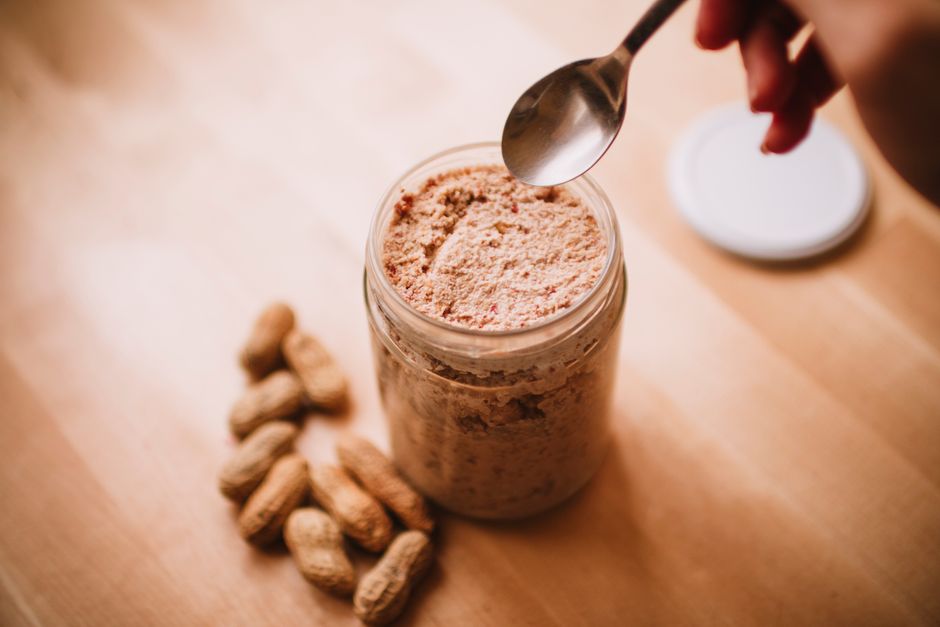
Roasted peanuts blended low and slow release their natural oils gradually, so the mixture goes from crumbly meal to a smooth, pourable butter without needing any added oil, though a small splash speeds things up and makes the texture silkier.
- Prep
- 5 min
- Cook
- 10 min
- Total
- 25 min
- Servings
- 24
Ingredients
- 2 cups roasted unsalted peanuts
- 1/2 tsp salt
- 1 tbsp peanut oil or neutral oil (optional)
- 1 tbsp honey (optional)
Nutrition per serving
- Calories
- 77
- Protein
- 3g
- Carbs
- 3g
- Fat
- 6g
Based on the recipe as written, one serving. Recalculates if you swap an ingredient above. An estimate only, exact values depend on the specific ingredients used.
Need different units or a different yield? Try our Conversion Calculator →
Instructions
- 1If starting with raw peanuts, spread them on a baking sheet and roast at 350°F (175°C) for 8-10 minutes, stirring once, until fragrant and lightly golden. Let cool for 10 minutes before processing (skip this step if using already-roasted peanuts).
- 2Add the peanuts and salt to a food processor fitted with the standard blade.
- 3Process continuously, stopping every minute to scrape down the sides. The peanuts will go through a coarse meal stage, then clump into a dense ball, then break down into a smooth, glossy butter, this whole process takes about 6-9 minutes total.
- 4Once the butter is smooth, drizzle in the oil and honey, if using, and process another 30-60 seconds until fully incorporated and pourable.
- 5Transfer to a clean jar and let cool completely before sealing with a lid.
Tips & variations
- For crunchy peanut butter, reserve 1/4 cup of roasted peanuts, pulse them coarsely, and stir them into the finished smooth butter by hand.
- A food processor works better than a standard blender for this, since a blender's narrow jar can trap the peanut ball around the blade instead of letting it circulate.
- Add a pinch of cinnamon or a tablespoon of cocoa powder along with the salt for a flavored variation.
- Skip the oil entirely if the peanuts are fatty enough to blend smooth on their own, natural peanut butter doesn't need it, it's just there to speed up processing or loosen an older, drier batch of peanuts.
Storage & reheating
Store in an airtight jar in the refrigerator for up to 1 month. Natural oil separation is normal, stir well before each use. Let refrigerated peanut butter sit at room temperature for a few minutes if it's too firm to spread.
Tips from the Tulo kitchen
- An older or lower-powered food processor may take closer to 12-15 minutes to reach full smoothness, don't give up right after the clump stage.
- Letting the processor run in short bursts rather than nonstop keeps the motor from overheating during long processing times.
FAQ
Why is my homemade peanut butter not getting smooth?
It usually just needs more processing time; peanuts pass through a dry, crumbly stage and a dense clumped stage before the oils fully release and it turns liquid smooth, this can take up to 10-12 minutes in a standard food processor.
Can I use raw peanuts instead of roasted?
Yes, but roast them first at 350°F for 8-10 minutes. Raw, unroasted peanuts produce a flatter-tasting, less oily butter that's much harder to blend smooth.
How long does homemade peanut butter last?
About 1 month refrigerated in an airtight container. Because it has no preservatives, it spoils faster than commercial peanut butter, which is shelf-stable for months.
Why does the oil separate on top?
Homemade peanut butter has no added stabilizers like hydrogenated oil, so the natural peanut oil rises to the top over time. Just stir it back in before using.