
Low Calorie Ice Cream Recipe
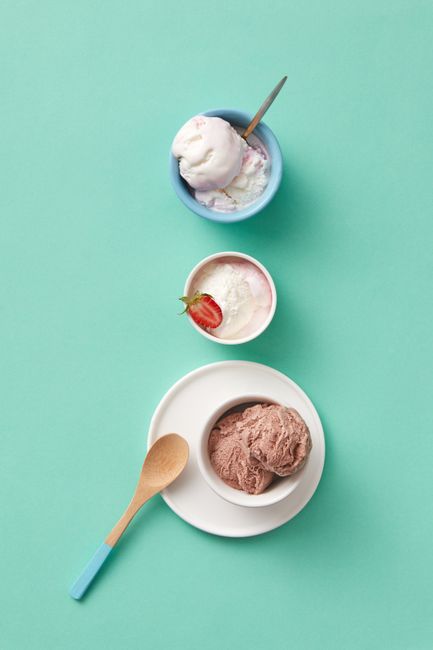
Nonfat Greek yogurt replaces most of the heavy cream and egg yolks in a traditional base, cutting fat and calories while a small amount of sugar and corn syrup still lowers the freezing point enough to keep the texture scoopable instead of icy.
- Prep
- 20 min
- Cook
- 25 min
- Total
- 285 min
- Servings
- 6
Ingredients
- 2 cups plain nonfat Greek yogurt
- 1/2 cup reduced-fat (2%) milk
- 1/3 cup granulated sugar
- 2 tablespoons light corn syrup
- 1 tablespoon vanilla extract
- 1/4 teaspoon fine sea salt
- 1/4 teaspoon xanthan gum (optional, for creaminess)
Nutrition per serving
- Calories
- 107
- Protein
- 6g
- Carbs
- 19g
- Fat
- 1g
Based on the recipe as written, one serving. Recalculates if you swap an ingredient above. An estimate only, exact values depend on the specific ingredients used.
Need different units or a different yield? Try our Conversion Calculator →
Instructions
- 1In a large bowl, whisk together the Greek yogurt, milk, sugar, corn syrup, vanilla extract, salt, and xanthan gum (if using) until the sugar is mostly dissolved, about 2 minutes.
- 2Cover and refrigerate the mixture for at least 30 minutes, or until it's thoroughly chilled to 40°F (4°C) or colder.
- 3Pour the chilled mixture into an ice cream maker and churn according to the manufacturer's instructions, about 20-25 minutes, until it reaches a soft-serve consistency and holds its shape when the paddle is lifted.
- 4Transfer the churned ice cream to an airtight, freezer-safe container, pressing a piece of parchment or plastic wrap directly onto the surface to prevent ice crystals.
- 5Freeze for at least 4 hours, or until firm enough to scoop.
Tips & variations
- Full-fat Greek yogurt swaps in at a 1:1 ratio for a noticeably creamier texture, at the cost of extra calories and fat per serving.
- For a fruitier, even lower-calorie version, blend in 1 cup of frozen banana slices with the yogurt mixture before churning and reduce the sugar to 3 tablespoons.
- Allulose or monk fruit blends that measure like sugar work as substitutes and still help control ice crystal size, unlike stevia alone, which doesn't affect freezing point the same way.
- Stir in mix-ins like mini chocolate chips or crushed freeze-dried berries during the last minute of churning so they don't sink to the bottom.
Storage & reheating
Store in an airtight container in the back of the freezer (the most consistently cold spot) for up to 2 weeks. Because it has less fat and sugar than regular ice cream, it firms up harder in the freezer, so let it sit at room temperature for 5-10 minutes before scooping.
Tips from the Tulo kitchen
- A metal loaf pan chills faster and colder than a plastic tub, which helps the ice cream set with fewer ice crystals if it's headed straight to the freezer after churning.
- If the base tastes slightly less sweet than expected before churning, that's normal, cold temperatures mute perceived sweetness, so a mixture that tastes right at room temperature will taste under-sweetened once frozen.
FAQ
How many calories does this ice cream have per serving?
About 110 calories per half-cup serving, compared to roughly 250-300 calories for the same amount of regular full-fat vanilla ice cream.
Can I make this without an ice cream maker?
Yes. Pour the chilled base into a shallow metal pan and freeze, whisking vigorously or blending every 30-45 minutes for about 3 hours to break up ice crystals, until it's thick and scoopable.
Why is my low calorie ice cream icy instead of creamy?
This usually means the base didn't have enough sugar or corn syrup to depress the freezing point, or it wasn't churned long enough to incorporate air before freezing solid.
Can I use frozen yogurt instead of regular Greek yogurt?
No, plain refrigerated Greek yogurt is what gives this recipe its calorie count and protein content; pre-frozen yogurt products often have added sugars and stabilizers that change the nutrition and texture.