Oaxaca Cheese Quesadillas Recipe
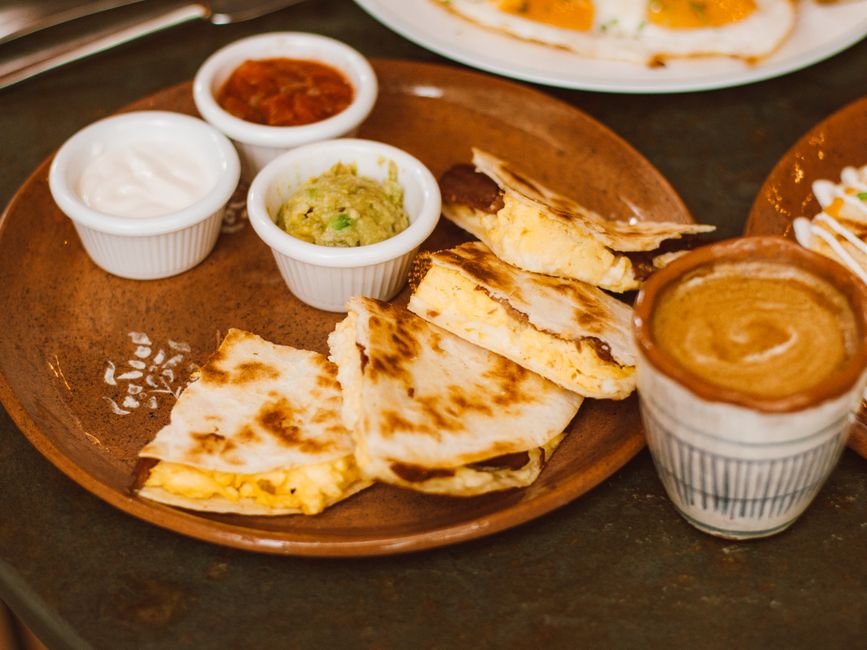
Oaxaca cheese is a semi-firm, low-moisture string cheese made in long ribbons wound into a ball, so it melts smoothly into gooey strands without turning greasy or oily the way higher-fat shredded cheeses can. Its mild, slightly salty flavor also stays out of the way of fillings like rajas or squash blossoms, and cooking the tortillas dry on a hot comal or skillet, rather than griddling them in a pool of oil, keeps the focus on that cheese pull.
- Prep
- 10 min
- Cook
- 15 min
- Total
- 25 min
- Servings
- 4
Ingredients
- 8 oz Oaxaca cheese, pulled into strings or shredded
- 8 tortillas corn tortillas (6-inch)
- 2 tbsp neutral oil or lard, for the pan
- 1/4 cup epazote or fresh cilantro leaves, roughly chopped
- 1 cup roasted poblano strips (rajas), optional
Nutrition per serving
- Calories
- 352
- Protein
- 15g
- Carbs
- 26g
- Fat
- 22g
Based on the recipe as written, one serving. Recalculates if you swap an ingredient above. An estimate only, exact values depend on the specific ingredients used.
Need different units or a different yield? Try our Conversion Calculator →
Instructions
- 1If working from a ball of Oaxaca cheese, unwind and pull it into thin strings by hand rather than shredding it on a box grater; the stringy texture is what makes the melted cheese pull apart in ropes when you bite in.
- 2Warm a comal, cast iron skillet, or heavy nonstick pan over medium heat until a drop of water sizzles and evaporates within a second or two.
- 3Place a tortilla directly in the dry pan. Scatter a small handful of cheese over one half, along with epazote or rajas if using, then fold the tortilla over to enclose the filling.
- 4Cook for 2 to 3 minutes per side, pressing down gently with a spatula, until the tortilla is lightly spotted and blistered and the cheese has fully melted.
- 5Wipe the pan and brush with a few drops of oil between batches so the tortillas crisp instead of steaming in an oily film.
- 6Repeat with the remaining tortillas and cheese, transferring finished quesadillas to a wire rack or loosely tented plate so steam doesn't soften them.
- 7Cut in half and serve immediately with salsa verde, crema, and lime wedges.
Tips & variations
- Look for Oaxaca cheese sold as a ball or braid (sometimes labeled quesillo) at Mexican grocers; pre-shredded bags exist but pull apart less dramatically.
- Corn tortillas are traditional, but flour tortillas work for a softer, Sonoran-style quesadilla, just extend the cook time by about a minute per side since flour tortillas are thicker.
- Sauteed mushrooms, squash blossoms (flor de calabaza), or huitlacoche are classic quesadilla fillings alongside the cheese.
- If the cheese won't melt through by the time the tortilla browns, lower the heat slightly and cover the pan for the last minute to trap warmth.
Storage & reheating
Leftover quesadillas keep in an airtight container in the refrigerator for up to 3 days. Reheat in a dry skillet over medium heat for 2 to 3 minutes per side to re-crisp the tortilla; microwaving works in a pinch but leaves the tortilla soft and slightly rubbery.
Tips from the Tulo kitchen
- Cheese that's been chilled straight from the fridge pulls into strings more easily by hand than cheese that's already softened to room temperature.
- A splash of water flicked onto the pan is a faster doneness check than a thermometer for judging if the comal is hot enough to start.
FAQ
What can I substitute for Oaxaca cheese?
Low-moisture mozzarella is the closest substitute for melting behavior and mild flavor, though it won't pull into strings quite as long. Monterey Jack also melts well but has a slightly different, sharper flavor.
Is Oaxaca cheese the same as string cheese?
They're made by a similar stretch-and-pull process, but Oaxaca cheese is unsalted or lightly salted, softer, and meant for melting, while packaged string cheese snacks are firmer and often more heavily salted for eating cold.
Should I use corn or flour tortillas for quesadillas?
Corn tortillas are the traditional choice in central and southern Mexico and give a firmer, more toastable bite; flour tortillas, more common in northern Mexico, turn softer and slightly chewy.
Why did my Oaxaca cheese turn rubbery instead of gooey?
Overcooking on too-high heat toughens the proteins in the cheese. Keep the pan at medium heat and pull the quesadilla off as soon as the cheese is fully melted rather than letting it sit over continued heat.